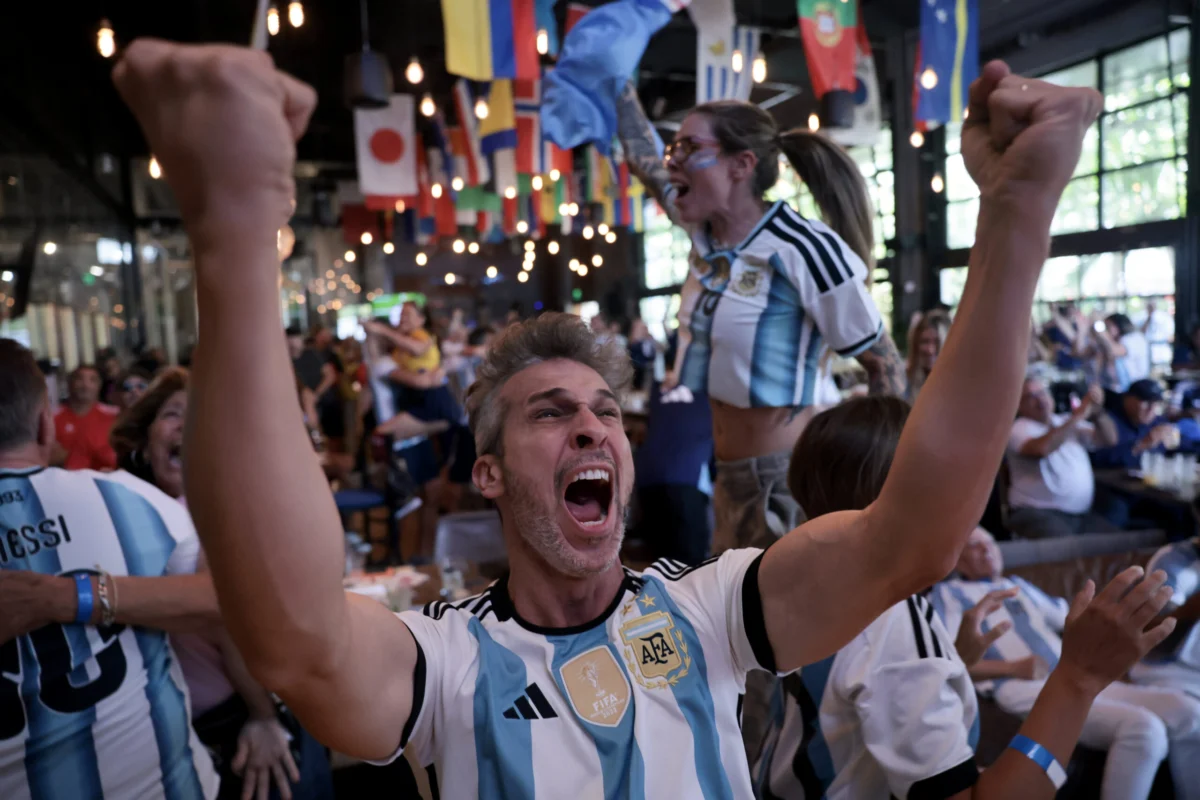
The intersection of global sport and high-stakes financial derivatives reached a fever pitch during the 2026 FIFA World Cup, serving as a transformative catalyst for the prediction market industry. Kalshi, a leading US-regulated exchange for event contracts, has emerged as a primary beneficiary of this sporting mania, reporting a staggering influx of three million new users over the course of the tournament. This surge represents more than just a momentary spike in traffic; it signals a fundamental shift in how retail participants engage with global events, moving from passive spectatorship to active financial positioning.
At the heart of this growth is a single, record-breaking market: the contract predicting the eventual winner of the World Cup. According to data shared by the company, more than $1.2 billion has been traded on this specific outcome alone. As Spain and Argentina prepare to face off in a highly anticipated final, the volume underscores the sheer scale of liquidity that major sporting events can inject into nascent financial platforms. For Kalshi, the tournament has functioned as a massive proof-of-concept for its "everything market" philosophy, demonstrating that the appetite for event-driven trading extends far beyond traditional interest rate hedges or political forecasting.
The economic engine behind this growth is the sheer scale of the "Total Addressable Market" (TAM) that soccer provides. Unlike localized sports leagues, the World Cup is a truly universal phenomenon. Academic experts note that the sport’s footprint covers virtually every nation on Earth, creating a demographic reach that is unparalleled in the world of marketing and finance. In the context of prediction markets, this translates to a diverse pool of participants whose collective sentiment creates a highly efficient, real-time price discovery mechanism for the outcome of the matches.
To capitalize on this global stage, Kalshi executed an aggressive and multifaceted marketing strategy that blended traditional celebrity endorsements with cutting-edge technological integrations. The company secured high-profile partnerships with some of the most recognizable figures in the sport, including legendary Croatian midfielder Luka Modrić and the iconic manager José Mourinho. Perhaps most significant was a strategic alliance with the Argentina national team, which culminated in a featured social media post by superstar Lionel Messi. For a financial exchange, achieving visibility on the Instagram feed of one of the world’s most-followed individuals represents a level of retail penetration rarely seen in the derivatives space.
Beyond the glitz of celebrity endorsements, Kalshi’s expansion was fueled by a strategic partnership with ADI Predictstreet, the official prediction market sponsor of the World Cup. This deal allowed for pervasive co-branded advertising within the stadiums themselves, placing the concept of event-based trading directly in front of millions of live spectators. Simultaneously, the company moved to integrate its data into the fabric of the modern information economy through a landmark deal with OpenAI. By featuring Kalshi’s real-time contract odds within ChatGPT search results, the exchange ensured that whenever a user inquired about tournament statistics or match previews, they were met with a market-implied probability rather than just a pundit’s opinion.
This integration highlights a broader trend in economic journalism and data consumption: the shift toward "market-implied" truth. As artificial intelligence becomes the primary interface for information, the real-time pricing of prediction markets offers a dynamic and quantifiable alternative to traditional polling or expert analysis. Kalshi CEO Tarek Mansour has championed this approach, emphasizing that the exchange’s volume is naturally tethered to the news cycle. Mansour’s philosophy centers on agility, exemplified by the company’s ability to conceive and deploy high-production advertisements—such as a recent spot featuring former professional stars in a scrimmage—within a 24-hour window.
However, the rapid ascent of sports-related contracts on prediction markets has not been without significant friction. The industry currently finds itself at the center of a complex regulatory tug-of-war between federal authorities and state governments. At the heart of the dispute is a fundamental question of classification: are these contracts legitimate financial derivatives, or are they a sophisticated form of sports betting?
State regulators, many of whom oversee lucrative and highly taxed sports gambling industries, argue that contracts based on athletic outcomes fall under their jurisdiction. They contend that these markets are functional equivalents to the bets placed at regulated sportsbooks. Conversely, Kalshi and several federal proponents argue that the Commodity Futures Trading Commission (CFTC) holds the sole authority to regulate these platforms as swaps and derivatives. The outcome of this legal debate will have profound implications for the economic landscape of event-based trading. If classified as gambling, these platforms could face a patchwork of state-level restrictions and higher tax burdens. If upheld as federal derivatives, they could continue to operate as a unified national market with the oversight of a major financial regulator.
Some legal experts suggest that the very marketing strategies driving Kalshi’s growth—specifically the heavy focus on sports stars—could inadvertently complicate their standing in the eyes of the court. While these campaigns are effective at acquiring users, they reinforce the public perception that the platform is a sports-centric venue. This "optics" challenge is something the company is actively trying to manage by diversifying its celebrity roster. In June, Kalshi released advertisements featuring actor Timothée Chalamet, and more recently, a spot with Colombian music sensation J Balvin. These moves are intended to signal that the platform’s utility is "ubiquitous," extending into entertainment, culture, and macroeconomics.
The platform’s broader utility was recently underscored by a $54 million lawsuit involving contracts related to geopolitical unrest in the Middle East. While the World Cup provides the volume, more serious geopolitical and economic contracts provide the platform with its identity as a sophisticated hedging tool. This duality is the core of Kalshi’s business model: using high-visibility events like the World Cup as a "top-of-funnel" acquisition tool to bring users into an ecosystem where they might eventually trade on inflation data, Federal Reserve decisions, or corporate earnings.
As the World Cup final approaches, the immediate challenge for Kalshi transitions from acquisition to retention. Historical data across the fintech sector suggests that user activity often experiences a "post-event hangover" once a major catalyst concludes. Trading volumes on non-match days during the tournament were notably lower, highlighting the platform’s current sensitivity to the sporting calendar.
Nevertheless, Mansour remains optimistic about the "permanence" of the new user base. He argues that the world is an inherently "event-driven" place and that there is always a new headline on the horizon to drive engagement. Whether it is a looming election, a sudden shift in climate policy, or a major technological breakthrough, the company’s goal is to position itself as the primary venue where the public can "put their money where their mouth is."
The economic impact of this shift is substantial. By democratizing access to derivatives that were once the province of institutional hedge funds, prediction markets are creating a new asset class for the retail investor. They provide a unique form of "information insurance," allowing individuals to hedge against outcomes that might negatively impact their personal finances or businesses. As the 2026 World Cup draws to a close, the $1.2 billion traded on Kalshi stands as a testament to the growing realization that in a volatile world, everything is tradable. The tournament may be ending, but the era of the event-driven economy is likely just beginning.