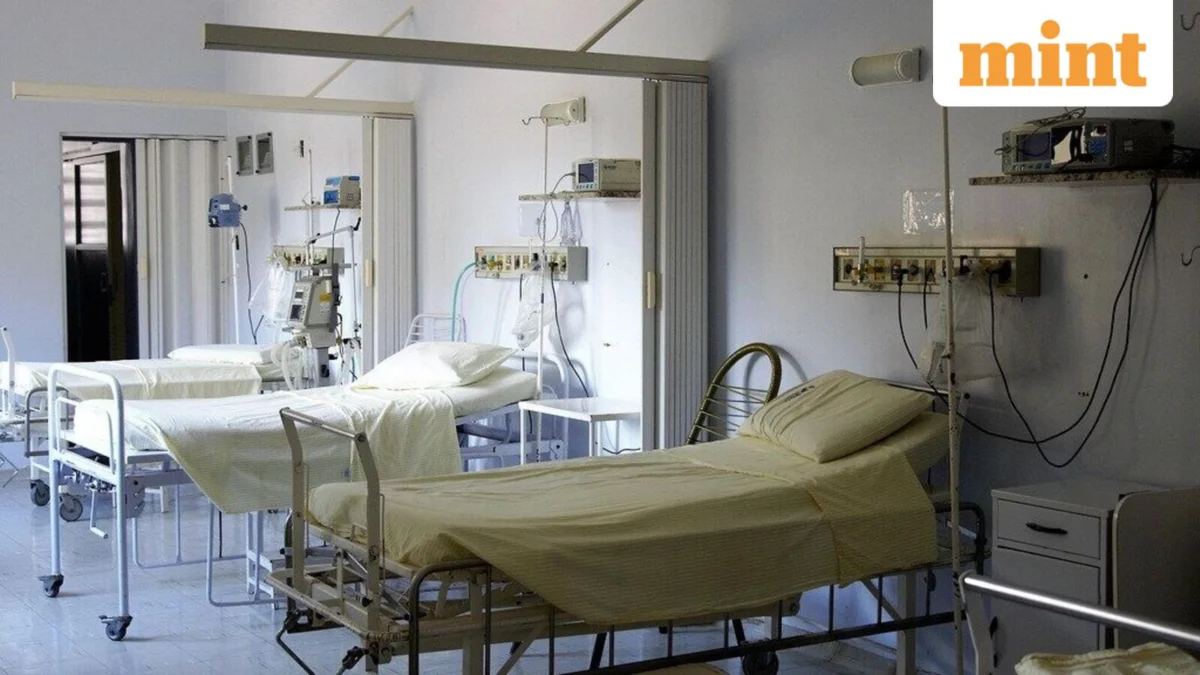
India’s National Health Authority (NHA) has intensified its battle against fraudulent practices within the Ayushman Bharat Pradhan Mantri Jan Arogya Yojana (AB PM-JAY), a monumental public health insurance scheme, by imposing significant penalties and blocking hundreds of crores in dubious claims. Over the past financial year, the NHA initiated stringent actions against 2,842 hospitals, levying penalties amounting to ₹114.06 crore and successfully preventing the disbursement of an astounding ₹678.47 crore in suspicious insurance claims. This decisive crackdown underscores a growing commitment to safeguard public funds and uphold the integrity of one of the world’s largest government-funded health initiatives.
The comprehensive enforcement drive, spearheaded by the NHA’s National Anti-Fraud Unit (NAFU), saw 2,003 healthcare facilities de-empanelled from the scheme’s network, while an additional 839 providers faced suspension for non-compliance and fraudulent activities. These measures highlight a proactive and technology-driven approach to policing a vast and complex healthcare ecosystem. The financial scale of the fraud detected, alongside the penalties imposed, reflects the significant economic drain that illicit practices can inflict on public welfare programs, diverting critical resources meant for the nation’s most vulnerable populations.
Ayushman Bharat PM-JAY, launched in 2018, stands as a cornerstone of India’s social security architecture, providing a cashless health cover of up to ₹500,000 per family per year for secondary and tertiary hospitalizations. Designed to alleviate catastrophic health expenditures for over 500 million beneficiaries, or approximately 40% of India’s population, the scheme operates through a sprawling network of 35,908 hospitals nationwide, comprising 19,472 public and 16,436 private facilities. Its ambitious scope, while transformative for millions, inherently presents challenges in oversight and fraud detection, making the NHA’s vigilance critical for its long-term sustainability and equitable impact.
To counter sophisticated fraudulent attempts, the NHA has strategically deployed an array of advanced technological solutions. Central to this arsenal is an auto-adjudication engine (AAE) integrated with system-generated validation alerts at the pre-authorisation stage. This intelligent system automatically flags discrepancies, such as mismatches between patient gender and medical packages, detects repeat claims for "once-in-a-lifetime" procedures, and scrutinizes newly issued cards within 24 hours based on predefined risk parameters. This proactive digital barrier aims to prevent illicit payments before they occur, a far more efficient and cost-effective approach than post-payment recovery.
Further bolstering its defensive capabilities, the NHA has operationalized a data-driven ‘Hospital Vulnerability Index Dashboard.’ This sophisticated analytical tool identifies high-risk and potentially fraudulent entities early, leveraging predictive analytics to pinpoint suspicious patterns that might not be immediately apparent through manual review. The deployment of special safeguards for specific treatments, such as mandatory biometric authentication for patients at each cycle of dialysis packages, exemplifies the targeted nature of these anti-fraud measures, directly addressing known vulnerabilities in high-value or frequently claimed procedures. This multi-layered technological approach positions India at the forefront of using digital innovation to secure public health programs.
Experts commend the NHA’s pioneering use of technology in this domain. Indu Bhushan, former founding chief executive of NHA and a senior associate at Johns Hopkins University, notes that since its inception, the NHA has effectively leveraged artificial intelligence (AI) and machine learning (ML) for fraud prevention and detection. Over 100 specialized algorithms are continuously refined through feedback, allowing the system to group suspicious transactions into distinct categories, from severe rule violations triggering immediate payment withholding to minor coding errors that prompt warnings. These algorithms delve into advanced data patterns and document anomalies, detecting "impossible" clinical scenarios—such as a cataract surgery billed for a third eye, hysterectomies for male patients, or a single surgeon performing 15 complex operations a day across different locations. The system also flags unusual volumes of patients originating from the same family or village, showcasing a deep understanding of potential collusion and organized fraud. Such capabilities demonstrate a robust, adaptive defense against evolving fraudulent tactics, protecting public funds and maintaining the integrity of Ayushman Bharat.
The economic implications of fraud in a scheme of Ayushman Bharat’s magnitude are substantial. Every rupee saved from embezzlement directly translates into increased capacity for genuine patient care, benefiting the economically vulnerable sections of the population. Dr. Rajeev Jayadevan, a public health expert and former president of the Indian Medical Association (IMA) Cochin chapter, emphasized that public funds are finite and largely taxpayer-funded. Detecting fraud pre-emptively, using advanced technology, prevents money from changing hands in the first place, reducing the complex and often difficult process of loss recovery. However, he also highlighted a critical challenge: a zero-tolerance policy towards fraudulent claims must be balanced with timely payments for genuine services. Many hospitals report unacceptable delays in payments, affecting their day-to-day operations and potentially forcing eligible patients to seek care elsewhere, thus undermining the scheme’s ultimate objective.
In a further move to enhance its analytical capabilities, the NHA has launched the Health Analytics and AI Unit (HAAU). This dedicated unit focuses on transforming vast datasets into actionable insights, tracking scheme trends, and flagging anomalies that could indicate emerging fraud patterns or operational inefficiencies. This continuous monitoring and data-driven strategy are crucial for adapting to new forms of fraud and optimizing the scheme’s performance. The NHA’s recent annual reports underscore the scheme’s impressive reach: over 11.93 crore hospital admissions have been authorized since its inception, amounting to a staggering ₹1.78 trillion in expenditure. In the past financial year alone, 3.26 crore new Ayushman cards were created, with ₹48,828 crore spent on treatments, illustrating the immense scale and impact of the program.
Beyond fraud prevention, the NHA is also committed to ensuring standardized quality of care across its network. The scheme has integrated 675 standard treatment guidelines (STGs) covering 1,671 procedures, ensuring uniformity and adherence to best practices. Concurrently, hospital quality checks have been significantly tightened under a robust certification program run in collaboration with the National Accreditation Board for Hospitals & Healthcare Providers (NABH) and the Quality Council of India (QCI). This program ensures that empanelled hospitals follow transparent protocols and maintain high standards of clinical care, reinforcing the overall integrity and trustworthiness of the Ayushman Bharat scheme as it scales up health assurance across the nation.
The ongoing battle against healthcare fraud in India’s flagship health insurance scheme serves as a critical case study for large-scale public welfare programs globally. While the scale of fraud detected and prevented is significant, the challenge remains dynamic. As technological safeguards evolve, so too do the methods of those attempting to exploit the system. The NHA’s comprehensive strategy—combining advanced AI, real-time analytics, and stringent enforcement—demonstrates a strong commitment to protecting public funds and ensuring that the benefits of Ayushman Bharat reach their intended beneficiaries. However, maintaining a delicate balance between rigorous fraud detection and ensuring smooth, timely operations for genuine healthcare providers will be crucial for the sustained success and public trust in this vital healthcare initiative.