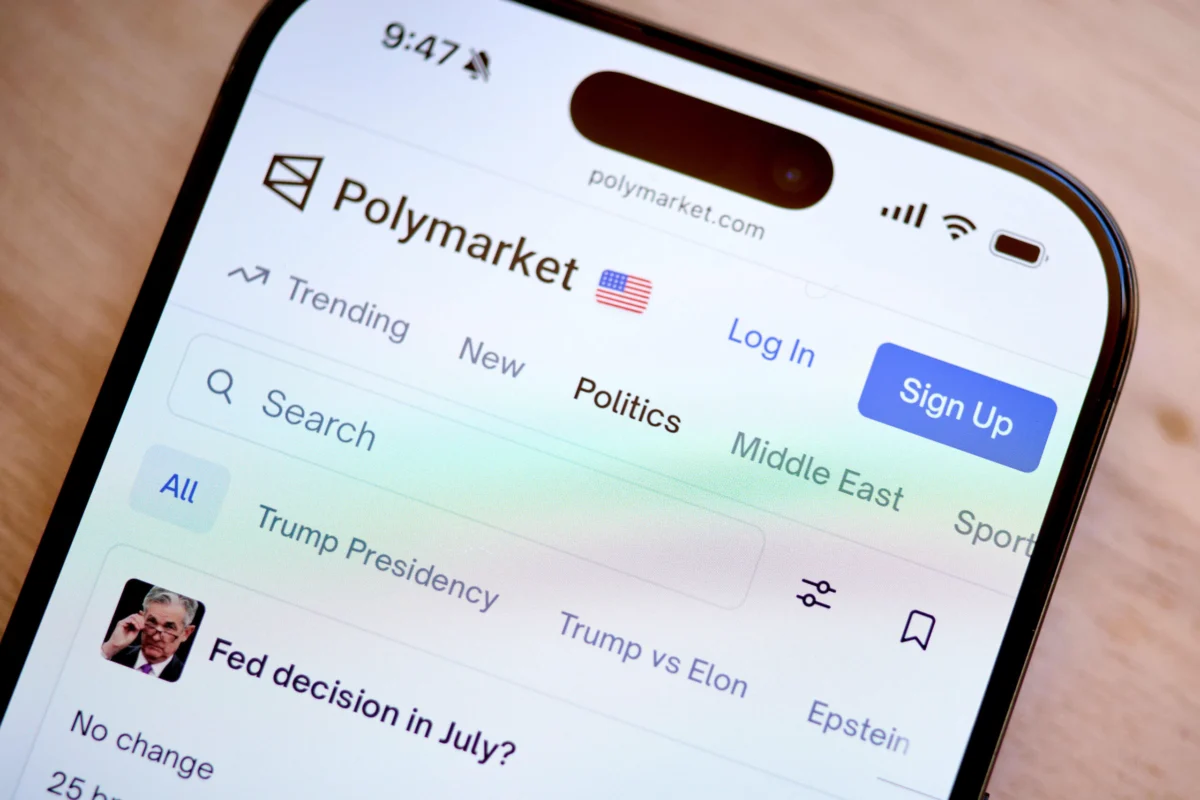
The rapid ascent of prediction markets, once a niche corner of the internet for political junkies and statisticians, has hit a wall of corporate and regulatory scrutiny as the threat of insider trading moves from the stock exchange to the "event contract." As these platforms evolve into multi-billion-dollar ecosystems where participants can bet on everything from Federal Reserve interest rate hikes to the release dates of artificial intelligence models, the world’s largest financial institutions are beginning to erect defensive barriers. Goldman Sachs recently became the most prominent bellwether for this shift, implementing a sweeping ban that prohibits its employees from trading on contracts tied to the bank’s specific operations, as well as broader categories including elections, macroeconomic indicators, and geopolitical events.
While the bank has declined to offer a public post-mortem on its internal policy shift, the move reflects a growing anxiety within the C-suite: the very information that makes an employee valuable to a firm could now make them a liability on a prediction market. Unlike traditional equity markets, where insider trading laws are well-established and monitored by the Securities and Exchange Commission (SEC), prediction markets occupy a more complex regulatory space governed largely by the Commodity Futures Trading Commission (CFTC). The ambiguity of this landscape is forcing a reckoning among compliance officers who must now decide if a "bet" on a company’s internal search data or a product launch is legally indistinguishable from trading on quarterly earnings.
The catalyst for this sudden urgency was a landmark enforcement action involving a private sector employee. In May, the CFTC and the Department of Justice filed charges against Michele Spagnuolo, a Google employee who allegedly operated under the pseudonym "AlphaRaccoon." According to federal complaints, Spagnuolo utilized material, nonpublic information regarding Google’s "Year in Search" lists to net approximately $1.2 million in profits on Polymarket. This case shattered the illusion that prediction markets were too obscure or fragmented for regulators to police. It also highlighted a unique vulnerability: because prediction markets allow for highly specific contracts—such as the exact headcount of a tech firm or the specific month of an AI tool’s release—the opportunities for employees to exploit "asymmetric information" are virtually limitless.
Legal experts warn that the variety of contracts available on platforms like Kalshi and Polymarket creates a "whack-a-mole" scenario for corporate legal departments. A pharmaceutical researcher might know the results of a clinical trial weeks before the public; a logistics manager might see data suggesting a supply chain disruption that will impact inflation figures; a junior staffer at a central bank might overhear a conversation about a pending rate decision. In each of these cases, the individual possesses "event-specific" knowledge that can be monetized with a few clicks on a smartphone. The challenge for companies is that many existing insider trading policies are written specifically with securities—stocks, bonds, and options—in mind, potentially leaving a loophole for "event contracts."
The financial sector, characterized by its robust compliance infrastructure, has been the first to react. Beyond Goldman Sachs, JPMorgan Chase has issued advisories to its workforce, urging extreme caution when engaging with prediction platforms, particularly regarding contracts that intersect with the financial industry. Morgan Stanley has integrated prediction market guidelines into its employee code of conduct, though the specific parameters remain confidential. Bank of America is reportedly in the process of formalizing a policy update that will provide explicit examples of prohibited activities on these platforms, aiming to close any gaps in interpretation for its global workforce.

However, the response across broader corporate America remains fragmented. In a recent survey of 50 major publicly traded and private companies, the vast majority—36 firms—offered no response regarding their stance on prediction market trading. This silence suggests that while Wall Street is on high alert, many tech, retail, and manufacturing giants may still be in the "discovery phase" of understanding the risks. Companies like United Airlines and OpenAI have pointed to broad, existing ethics policies that prohibit the use of confidential information for personal gain, but regulatory advisors argue that "blanket" policies may no longer be sufficient. In an era where a single employee’s trade can trigger a federal investigation, the lack of explicit language regarding event contracts could be viewed as a failure of oversight.
The platforms themselves are acutely aware that their long-term survival depends on maintaining market integrity and avoiding the "gambling" label that has historically invited heavy-handed regulation. Kalshi, which operates as a CFTC-regulated exchange, has moved aggressively to partner with compliance firms like StarCompliance. This partnership allows enterprise-level employers to monitor their employees’ trades on event contracts in much the same way they monitor brokerage accounts. Furthermore, Kalshi has implemented employment verification tools and partnered with market integrity firm Solidus Labs to detect suspicious patterns that might indicate the use of nonpublic information.
Polymarket, which operates on-chain and has seen explosive growth during recent election cycles, has similarly sought to bolster its defenses. By partnering with Chainalysis for on-chain enforcement and Palantir for monitoring sports-related and event-specific contracts, the platform is attempting to signal to regulators that it is not a "Wild West" for illicit activity. Yet, these technological safeguards only address half of the equation. As regulatory advisors note, the burden of education remains with the employer. Without clear training on what constitutes an "insider trade" in the context of an event contract, employees may inadvertently find themselves in the crosshairs of the Department of Justice.
The economic implications of this trend are significant. Prediction markets are often lauded by economists for their "price discovery" capabilities—the idea that the "wisdom of the crowd," backed by real money, provides a more accurate forecast than pundits or polls. However, if these markets become tainted by insider trading, the integrity of the data they produce is compromised. If a market on the Federal Reserve’s next move is moved by a few individuals with leaked information, the signal provided to the rest of the economy becomes distorted. This creates a paradox: the very insiders who make the market "accurate" are the ones whose participation threatens the market’s legal and ethical standing.
From a global perspective, the regulatory treatment of these markets varies wildly. In the European Union, the Markets in Crypto-Assets (MiCA) regulation and existing ESMA guidelines provide a more rigid framework for digital assets, but event contracts still fall into a grey area between financial instruments and gaming. In the United States, the CFTC’s "blank canvas" approach to prosecution means that the first few major cases will set the precedent for decades to come. There is a growing consensus among legal scholars that the CFTC will eventually seek to hold companies liable if they are found to have a "culture of negligence" regarding their employees’ participation in these markets.
For corporate leadership, the directive is becoming clear: the cost of inaction is rising. Management experts suggest that businesses should not only update their written policies but also consider technical restrictions, such as blocking prediction market URLs on corporate devices and banning trading during business hours. The goal is to move beyond "whack-a-mole" and toward a proactive stance that recognizes event contracts as a legitimate, albeit risky, financial frontier. As the "prediction economy" continues to grow—fueled by the desire for real-time data in an increasingly volatile world—the boundary between a smart forecast and a federal crime will only become more scrutinized. For the modern professional, the message from the corner office is increasingly firm: the stakes of the bet have never been higher, and the house is watching.