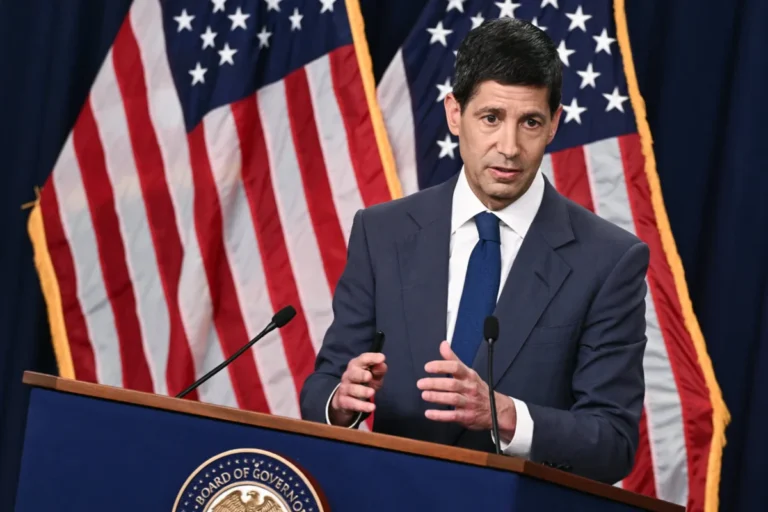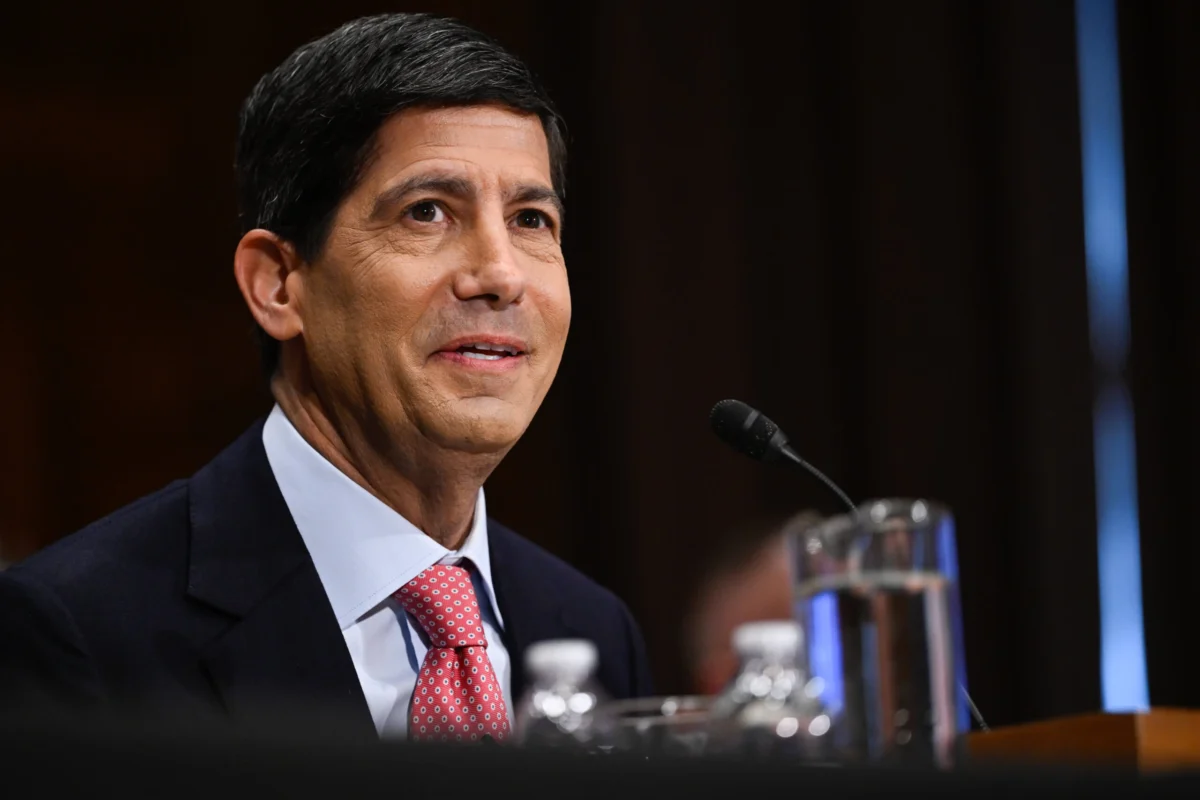
The mahogany-paneled hearing room of the Senate Banking Committee became the epicenter of global financial scrutiny on Wednesday as Federal Reserve Chairman Kevin Warsh delivered a high-stakes testimony that underscored a fundamental reorientation of American monetary policy. Following a rigorous appearance before the House Financial Services Committee just a day prior, Warsh’s presence on Capitol Hill signaled more than a routine update; it marked the solidification of a "regime change" aimed at dismantling the persistent inflationary pressures that have characterized the post-pandemic era. In a measured but firm delivery, the central bank leader articulated a vision where the "inflation tax" is permanently retired, replaced by a policy framework that leverages technological productivity and structural discipline.
Throughout the multi-hour session, Warsh navigated a gauntlet of inquiries ranging from the trajectory of the federal funds rate to the potential systemic risks posed by a rapidly evolving labor market. While legislators from both sides of the aisle attempted to draw the Chairman into the fractious arena of fiscal policy and partisan politics, Warsh remained tethered to the Federal Reserve’s dual mandate of price stability and maximum sustainable employment. His refusal to comment on legislative spending or the political climate served as a stark reminder of the central bank’s prized independence—a quality Warsh argued is essential for maintaining market credibility in an era of heightened volatility.
The centerpiece of the Chairman’s testimony was his conceptualization of a "regime change" in how the Fed approaches its 2% inflation target. For years, the central bank had been criticized for being "behind the curve," reacting to economic data with a lag that some argued exacerbated price volatility. Warsh, however, presented a more proactive stance, describing inflation not merely as a statistical metric but as a regressive tax on the American public that erodes purchasing power and stifles long-term capital investment. By framing price stability as a moral and economic imperative, he signaled that the era of "lower-for-longer" interest rates—which many economists believe fueled asset bubbles—is unlikely to return in the near future.
Central to this new policy direction is the Federal Reserve’s optimism regarding the ongoing artificial intelligence investment boom. Warsh noted that the surge in capital expenditure toward AI and high-performance computing is beginning to manifest in productivity gains that could redefine the economy’s non-inflationary growth potential. In economic terms, a significant rise in productivity allows for higher wage growth without a corresponding increase in the prices of goods and services. This "supply-side miracle," as some market analysts have dubbed it, provides the Federal Reserve with a unique window to maintain a restrictive monetary stance while the underlying economy remains resilient.
To better understand these technological shifts, Warsh highlighted his recent formation of specialized Federal Reserve task forces, which include unconventional voices from the private sector such as venture capitalist Marc Andreessen and Walmart CEO Doug McMillon. The inclusion of these figures suggests a departure from the Fed’s traditional reliance on academic economists, favoring instead real-time data from the frontiers of technology and retail. This "outside-in" approach is designed to provide the Federal Open Market Committee (FOMC) with a more granular view of supply chain dynamics and consumer behavior, potentially reducing the reliance on lagging indicators like the Consumer Price Index (CPI).
However, the path forward is far from unanimous within the walls of the Eccles Building. Warsh’s testimony hinted at what internal observers are calling a "family fight" over the future of interest rates. Minutes from recent FOMC meetings reveal a deepening divide among governors and regional presidents. One faction remains concerned that keeping rates elevated for too long could trigger an unnecessary recession, particularly as the "long and variable lags" of previous hikes continue to permeate the economy. Another faction, seemingly aligned with Warsh’s more hawkish leanings, argues that premature easing would risk a resurgence of inflation, similar to the "stop-go" policy errors of the 1970s.
This internal squabble has significant implications for global markets. As the U.S. dollar remains the world’s reserve currency, the Fed’s commitment to a "regime change" exerts immense pressure on other central banks. In Europe, the ECB is grappling with sluggish growth, while the Bank of Japan is cautiously moving away from its ultra-loose policy. A persistently hawkish Fed keeps the dollar strong, which, while beneficial for American consumers buying imports, creates a challenging environment for emerging markets burdened with dollar-denominated debt. Warsh acknowledged the global interconnectedness of the financial system but maintained that the Fed’s primary responsibility is the domestic price level.
Market data reflected the gravity of the Chairman’s remarks. Following his testimony, the yield on the 10-year Treasury note saw a slight uptick, as investors recalibrated their expectations for rate cuts in the latter half of the year. The consensus in the futures market, which had previously anticipated a more aggressive easing cycle, began to align with a "higher-for-longer" reality. Analysts noted that Warsh’s emphasis on the "inflation tax" suggests that the terminal rate—the level at which the Fed stops hiking—might remain well above the historical norms of the last decade.
The questioning from the Senate Banking Committee also touched upon the health of the banking sector itself. In the wake of regional banking stresses seen in previous years, senators pushed for clarity on capital requirement reforms. Warsh took a nuanced position, advocating for a banking system that is robust enough to withstand shocks but not so over-regulated that it ceases to provide credit to small businesses and entrepreneurs. He linked financial stability directly to monetary policy, noting that a stable price environment is the best safeguard against the "duration risk" that led to previous banking failures.
As the testimony drew to a close, the focus shifted to the broader economic outlook for 2026 and beyond. Despite the restrictive monetary environment, the American labor market has shown remarkable durability. Warsh attributed this to the structural shifts in the workforce and the aforementioned productivity gains. However, he warned against complacency. The "last mile" of returning inflation to the 2% target is often the most difficult, requiring a delicate balance between cooling demand and supporting the supply-side expansion of the economy.
The Chairman’s performance on Capitol Hill served as a definitive statement of intent. By refusing to be baited into political theater and instead focusing on the technical and structural components of the economy, Warsh reinforced the image of a Federal Reserve that is evolving. The integration of tech-sector insights via his new task forces and the unwavering focus on eradicating the "inflation tax" point toward a central bank that is attempting to modernize its toolkit for a digital age.
Ultimately, the "Warsh era" of the Federal Reserve appears defined by a rejection of the status quo. The transition from a reactive posture to a more strategically assertive one is intended to anchor inflation expectations for the next generation. Whether the AI-driven productivity boom will be enough to offset the headwinds of a high-interest-rate environment remains the central question for economists and investors alike. For now, the message from the Senate Banking Committee is clear: the Federal Reserve is committed to a fundamental regime change, and the era of easy money has been firmly relegated to the history books. As the "family fight" over rates continues behind closed doors, the global financial community will be watching closely to see if this new strategy can deliver the elusive "soft landing" or if the structural shifts described by Warsh will lead to a more turbulent economic transformation.