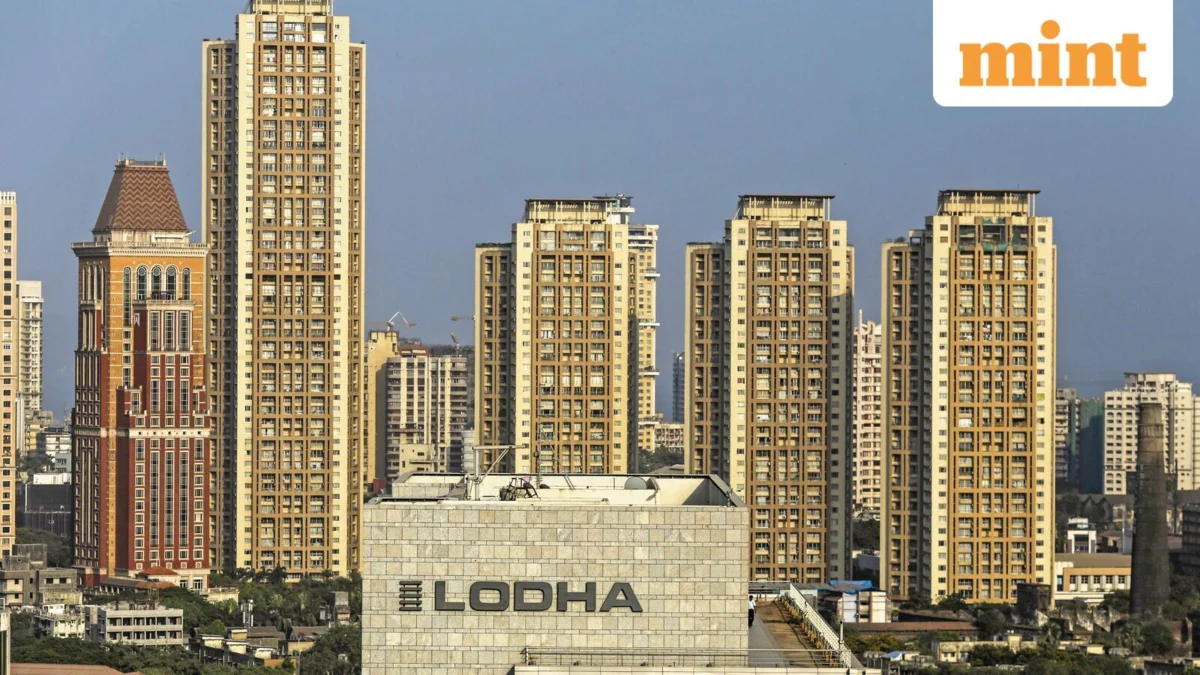
Lodha Developers Ltd, a bellwether in India’s dynamic real estate sector, has reported an extraordinary financial performance for the quarter ending June, underscoring the robust demand for housing and the accelerating consolidation benefiting established, tier-1 brands. The Mumbai-based developer announced a doubling of its net profit, reaching a substantial ₹1,373 crore, a testament to vigorous revenue growth and optimized cash flow management. This surge in profitability was underpinned by a formidable 43% year-on-year increase in revenue from operations, which climbed to ₹4,996.7 crore compared to the corresponding period in the previous fiscal year. Such figures not only highlight the company’s operational prowess but also reflect a broader narrative of resilience and resurgence within India’s real estate market, particularly at the premium end.
The strong quarterly results are not merely an isolated achievement but a strategic outcome of capitalizing on fundamental shifts in the housing market. Abhishek Lodha, managing director of Lodha Developers, articulated the company’s long-term vision, stating confidence in achieving a 20% Compound Annual Growth Rate (CAGR) in profit, driven by robust structural housing demand and the ongoing market consolidation favouring reputable developers. He emphasized the significant headroom for growth, noting the company’s current market share of approximately 3.5% in its target segment, which provides a long runway for expansion over the medium to long term. This outlook is particularly pertinent in the fragmented Indian real estate landscape, where financial strength, brand trust, and execution capabilities are increasingly becoming critical differentiators.
Despite a strategic decision to defer fresh project launches during the April-June quarter, a period marked by geopolitical uncertainties, the company registered an impressive 4% rise in pre-sales, reaching ₹4,629 crore. This performance, achieved without new inventory, speaks volumes about the sustained demand for Lodha’s existing portfolio and its strong brand equity. The developer has set an ambitious pre-sales target of ₹24,000 crore from housing projects for the current financial year, a significant jump from the ₹20,530 crore recorded in the preceding fiscal year (FY26). This aggressive target is supported by a robust project pipeline and an optimistic market assessment, particularly as the company prepares for a surge in new launches in the latter half of the year, including a strategic foray into new micro-markets like Bengaluru.
A crucial aspect of Lodha’s financial discipline and strategic strength has been its concerted effort to de-lever its balance sheet. During the quarter, net debt saw a commendable reduction of ₹446 crore, bringing the total net debt down to ₹4,931 crore. This consistent focus on debt reduction not only enhances the company’s financial stability but also improves its credit profile, making it more attractive to investors and lenders. Sushil Kumar Modi, Executive Director-Finance at Lodha Developers, reiterated the company’s holistic growth philosophy, aiming for a balanced expansion across net profit, pre-sales, cash flows, and, critically, annuity income. This multi-faceted approach signifies a mature understanding of sustainable growth in a capital-intensive sector.
The decision to delay new project launches in the first quarter, as explained by Modi, was a conscious strategic move influenced by prevailing geopolitical tensions and market uncertainties. This cautious approach allowed the company to consolidate its position and prepare for a more opportune launch schedule, with most new projects slated for the second half of the fiscal year. Indeed, the company has already initiated a new project in Bengaluru, signaling its readiness to tap into high-growth corridors. This agile response to market dynamics underscores the strategic flexibility of large developers compared to smaller, less capitalized players, further contributing to the market consolidation trend.
Lodha Developers stands among the elite quartet of India’s top-selling developers, alongside Prestige Estates Projects Ltd, DLF Ltd, and Godrej Properties Ltd. This group consistently demonstrates robust sales figures, even as the broader residential sector occasionally shows signs of plateauing or minor corrections. The consistent performance of these tier-1 brands can be attributed to several factors: their ability to command premium pricing, access to institutional financing, strong brand recall, a proven track record of timely delivery, and a diversified geographical presence. While the Indian residential market benefits from strong demographic tailwinds, including rapid urbanization, rising disposable incomes, and a growing middle class, the top developers are particularly adept at converting these macro trends into tangible sales.
Looking ahead, Lodha has outlined an impressive launch pipeline of ₹20,000 crore for FY27, a figure that could expand further as the company secures additional land parcels throughout the year. A significant strategic expansion includes its inaugural projects in Gurugram, a burgeoning economic hub in the National Capital Region (NCR), where it has already secured two land parcels for residential development. This move into Gurugram signifies a broader geographical diversification strategy beyond its traditional strongholds in the Mumbai Metropolitan Region (MMR), Pune, and Bengaluru, enabling the company to tap into new high-demand markets.
Beyond its core residential portfolio, Lodha Developers is strategically pivoting towards significantly scaling its annuity or rental income portfolio. This diversification includes expanding into office spaces, retail establishments, warehousing facilities, and data centers – sectors that promise stable, recurring revenue streams and long-term asset value appreciation. Sushil Kumar Modi projected a substantial increase in rental income, from ₹300 crore at the end of FY26 to approximately ₹3,000 crore within the next 5-6 years. This ten-fold growth target reflects a deliberate strategy to build a robust, diversified income base that can cushion the cyclical nature of the residential market and enhance overall enterprise value.
A tangible example of this strategic shift was the recent land sale to Digital Edge India – a joint venture between Digital Edge (Singapore) and National Investment and Infrastructure Fund (NIIF) – at its Green Data Center Park in Palava, Navi Mumbai. The transaction, valued at over ₹42 crore per acre, highlights the immense value locked in Lodha’s extensive land bank, particularly in strategic locations. The company has a history of opportunistic land sales, including a previous deal with Amazon Web Services in Palava. Furthermore, Lodha plans to develop and lease "powered shells" – bare, ready-to-use buildings equipped with essential infrastructure like power supply and cooling systems – with a capacity of approximately 1GW for data centers, catering to hyperscalers. This forward-looking approach positions Lodha at the forefront of India’s burgeoning digital infrastructure boom, transforming its land holdings into high-value, recurring revenue assets.
The broader economic implications of such strong performances by leading developers are significant. A thriving real estate sector acts as a powerful multiplier for the economy, stimulating growth in over 250 ancillary industries, including cement, steel, construction materials, interior design, and financial services. Increased construction activity translates into substantial job creation, both directly and indirectly, contributing to employment generation and poverty reduction. Furthermore, the robust financial health and debt reduction efforts of companies like Lodha enhance the stability of the financial system by reducing non-performing assets risk for banks and financial institutions. For international investors, the consistent growth and strategic diversification of Indian real estate giants present an attractive proposition, signaling a maturing market with strong underlying fundamentals and a clear growth trajectory. As India continues its rapid urbanization and economic expansion, companies like Lodha are well-positioned to capitalize on these mega-trends, shaping the urban landscape and driving national economic progress.