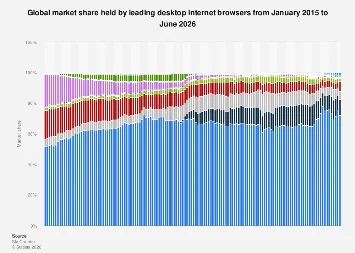
As of June 2026, Google Chrome is projected to maintain its dominant position in the global desktop internet browser market, commanding an estimated share of approximately 65% of users. This figure, representing a significant portion of the estimated half of the world’s population that regularly accesses the internet, underscores the browser’s entrenched presence in daily digital life. Web browsers act as the primary gateway to the vast digital realm, shaping how individuals interact with information, services, and each other. The ongoing evolution of internet usage, coupled with increasing user awareness of data privacy, is a critical factor influencing the competitive dynamics within this space.
The pervasive nature of web browsers makes them an integral part of modern infrastructure, facilitating everything from education and commerce to social interaction and entertainment. Google Chrome’s sustained leadership can be attributed to a confluence of factors, including its robust performance, extensive ecosystem of extensions and services, and continuous innovation. Its integration with Google’s suite of productivity tools, such as Gmail and Google Drive, provides a seamless experience for a large user base, further solidifying its market share.
However, the digital landscape is not static. The increasing concern over online privacy, amplified by high-profile data breaches and growing awareness of digital surveillance, is compelling users and developers alike to re-evaluate their approach to data security. A substantial segment of internet users is now actively concerned about how their personal information is collected, stored, and utilized online. This heightened awareness presents a significant challenge and opportunity for web browser developers. Those who can demonstrably prioritize and protect user privacy are poised to gain a competitive advantage and cultivate greater user loyalty.
Microsoft Edge, built on the Chromium engine, is anticipated to hold the second-largest share of the desktop browser market by mid-2026, with an estimated market share of around 13%. This represents a notable resurgence for Microsoft’s browser, a testament to its strategic shift towards a Chromium-based architecture. This move has allowed Edge to offer greater compatibility with web standards and a richer feature set, effectively competing with Chrome on performance and extensibility. The integration of Edge into the Windows operating system also provides a significant advantage, ensuring its pre-installation on a vast number of desktop devices worldwide. This embedded presence, combined with ongoing efforts to enhance its features and user experience, positions Edge as a formidable contender in the browser wars.
Apple’s Safari is expected to secure the third position, with an estimated market share of roughly 9% by June 2026. Primarily utilized within the Apple ecosystem, Safari benefits from deep integration with macOS and iOS, offering a streamlined and optimized browsing experience for Apple users. Its focus on performance, energy efficiency, and privacy features, such as Intelligent Tracking Prevention, appeals to a user base that values a curated and secure digital environment. While its market share is largely confined to Apple devices, its significant user base within this influential demographic makes it a key player in the global browser market.
Mozilla Firefox, a long-standing champion of open-source principles and user privacy, is projected to maintain a market share of approximately 7% by mid-2026. Firefox has historically distinguished itself through its commitment to user control and its robust privacy features, including advanced tracking protection and a commitment to not collecting extensive user data. Despite facing intense competition from Chromium-based browsers, Firefox continues to appeal to a dedicated user base that values its independence and its ethical stance on data privacy. The browser’s ongoing development efforts, focusing on speed, security, and user customization, aim to retain and attract users seeking an alternative to the dominant players.
The remaining market share will be distributed among a variety of other browsers, each catering to specific niches or regional preferences. Opera, known for its built-in VPN and ad-blocker, is expected to hold a modest share, appealing to users seeking enhanced privacy and efficiency features out-of-the-box. Chinese browsers such as 360 Safe Browser and QQ Browser, which have a significant user base within China, will continue to hold a notable presence in that specific market. Yandex Browser, popular in Russia and some neighboring countries, will also maintain its regional stronghold.
The broader implications of this market share distribution extend beyond user preferences. The dominance of Chromium-based browsers, primarily Chrome and Edge, raises questions about browser monoculture and the potential impact on web development and innovation. A diverse browser ecosystem fosters competition and encourages different approaches to web standards, security, and user experience. Conversely, a highly concentrated market could lead to a homogenization of web design and functionality, potentially stifling innovation and limiting user choice in the long run.
The economic impact of browser market share is multifaceted. For technology companies, it translates into significant advertising revenue, data collection opportunities, and influence over the digital advertising ecosystem. Companies that control dominant browser platforms can shape the development of web technologies, influence search engine algorithms, and dictate the terms of online commerce. This can create significant barriers to entry for new competitors and influence the competitive landscape for online services.
Furthermore, the browser market plays a crucial role in the digital economy by facilitating online transactions, enabling access to cloud services, and powering the vast array of web-based applications that underpin modern business operations. The efficiency, security, and user-friendliness of browsers directly impact productivity and economic activity. As the internet continues to evolve, the role of web browsers as the primary interface for accessing these digital resources will only become more critical.
The projected market share figures for 2026 highlight a mature and highly competitive market, characterized by the continued dominance of a few major players while still allowing for the presence of specialized and regionally popular alternatives. The ongoing tension between convenience, performance, and user privacy will likely remain a defining factor in shaping the future trajectory of desktop web browsers. As user awareness and demand for secure online experiences grow, browser developers will need to adapt and innovate to meet these evolving expectations, ensuring they can maintain user trust and loyalty in an increasingly data-conscious world. The ability of browsers to strike this balance will be paramount to their continued success and influence in the global digital economy.