Florence Nightingale, often romanticized as the compassionate "Lady with the Lamp," was in reality a formidable architect of disruptive innovation whose strategic foresight fundamentally reshaped public health and offers profound lessons for contemporary business leaders and policymakers. Her transformative impact, extending far beyond the bedside, stemmed from a meticulously executed three-pronged strategy: compelling, data-driven communication, the widespread dissemination of clear and accessible knowledge, and the establishment of rigorous, standardized professional training. This approach not only revolutionized healthcare practices but also laid groundwork for significant societal and economic advancements.
Born into affluence in Florence, Italy, in 1820, Nightingale defied prevailing societal norms by pursuing a career in nursing, a profession then largely associated with the lower classes and lacking formal recognition. Her family’s initial disapproval underscored the deep-seated prejudices she would confront and ultimately dismantle. Her formative education in nursing and related disciplines under figures like Theodor Fliedner in Germany provided her with a foundational understanding of patient care and institutional management, skills that would prove invaluable.
The crucible for Nightingale’s revolutionary work was the Crimean War, which erupted in 1853. In 1854, she arrived at the British military hospital in Scutari, Turkey, leading a contingent of 38 nurses. The conditions she encountered were horrifying: rampant infectious diseases, gross sanitation deficiencies, and a medical system overwhelmed by casualties and mismanagement. The conflict marked a pivotal moment in media history, with early telegraphy enabling near real-time reporting. John MacDonald of the London Times famously chronicled her tireless work, immortalizing her as "The Lady with the Lamp" and transforming her into one of the world’s first celebrity figures. This public adoration, evidenced by a dramatic spike in the naming of babies "Florence" in 1855, provided an unprecedented platform for her subsequent reforms.
However, Nightingale’s enduring legacy far outstrips her popular image. Her initial dispatches from Scutari, detailing the abysmal conditions and alarming mortality rates, spurred the British Prime Minister to dispatch a Sanitary Commission to the hospital. This intervention dramatically improved hygiene, leading to an immediate reduction in deaths. Upon her return to England in 1856, she leveraged her public standing and empirical observations to secure a meeting with Queen Victoria, advocating for a Royal Commission on the Health of the Army. This marked the formal commencement of her multi-front campaign to disrupt established medical practices and public health policy.

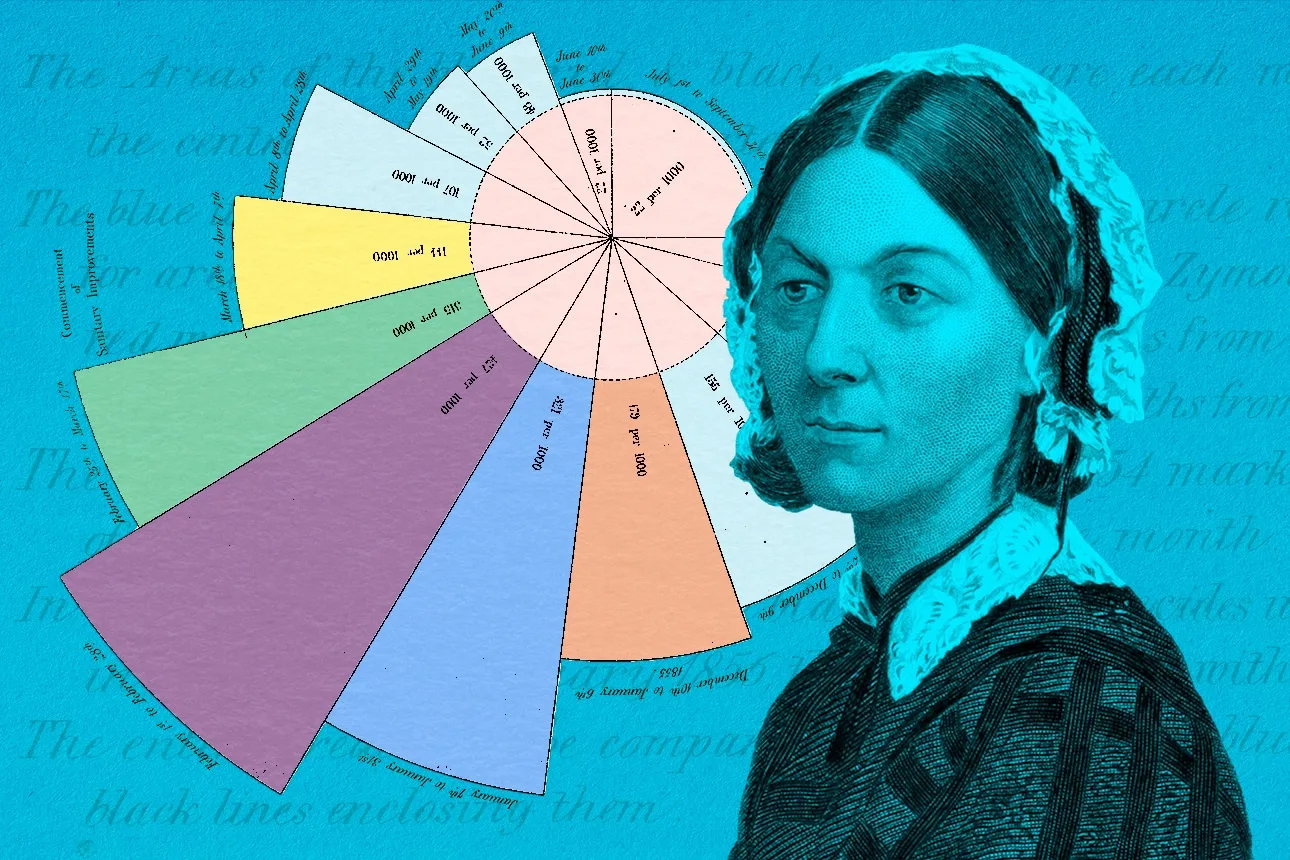
Nightingale’s strategic battle unfolded across three interconnected fronts, each demonstrating a profound understanding of systems change and human behavior. The first was her pioneering use of compelling, data-driven communication. In an era predating widespread acceptance of germ theory, persuading the public and powerful officials of the critical link between sanitation and health was an immense challenge. Nightingale recognized that raw statistics alone were insufficient; they needed to be presented in an emotionally resonant and easily digestible format. Collaborating with physician William Farr, a co-founder of the Statistical Society of London, she transformed complex mortality data into visually stunning and impactful representations. Her 1858 "Diagram of the Causes of Mortality in the Army in the East," a polar area chart now famously known as a "Nightingale rose diagram," vividly illustrated that infectious diseases, not battlefield wounds, were the primary cause of soldier deaths in 1854. The diagram powerfully demonstrated a precipitous drop in these deaths following the sanitary commission’s interventions. This innovative approach to data visualization, which one contemporary reporter described as showing "terrible death ‘wedges’ swell out," made an irrefutable case for reform, influencing policy makers and public opinion in a way that mere prose could not. Her use of evocative metaphors, such as comparing preventable military deaths to the deliberate shooting of 11,000 men annually on Salisbury Plain, further underscored the moral and practical urgency of her message. This foresight in utilizing data analytics and visualization mirrors modern business strategies focused on transparent, evidence-based decision-making and stakeholder communication.
The second pillar of her strategy involved the creation and widespread distribution of clear and accessible instruction. In 1859, Nightingale published Notes on Nursing: What It Is, and What It Is Not, a groundbreaking treatise that sold 15,000 copies in England within months and was swiftly translated and published internationally. Crucially, this book was not intended for professional nurses but for ordinary households, empowering laypeople to provide better care for the sick and to adopt preventive hygiene practices. Its chapters, covering practical topics such as "Taking Food," "Light," "Personal Cleanliness," and "Bed and Bedding," offered simple, actionable guidance. Nightingale emphasized prevention, stating, "One duty of every nurse is prevention." By democratizing essential health knowledge, she bypassed the rigid, often inaccessible medical establishment, effectively decentralizing healthcare information and promoting public health literacy on an unprecedented scale. This move represents a classic example of disruptive innovation, making what was once specialized and exclusive knowledge available to a broader, non-expert population, thereby enhancing overall societal well-being and reducing the burden on formal healthcare systems.
Finally, Nightingale spearheaded the establishment of standardized professional training. Recognizing that widespread knowledge needed to be complemented by a skilled workforce, she used funds from the Nightingale Fund, established in 1857 from public donations, to found the world’s first secular nursing school at St Thomas’s Hospital in London in 1860. Prior to this, nursing training was haphazard, largely informal, and lacked any consistent curriculum or professional standards. Virginia Dunbar, former dean of the Cornell University School of Nursing, noted the absence of formal nursing education before Nightingale’s efforts. The Nightingale Training School implemented a curriculum that blended theoretical knowledge in subjects like biology and physiology with extensive practical, hands-on experience. Graduates, affectionately known as "Nightingales," disseminated this new model of professional nursing globally, influencing healthcare systems from the United States to India. By formalizing and standardizing nursing education, Nightingale elevated the profession from a menial task to a respected scientific discipline, creating a reliable, skilled labor force essential for modern healthcare delivery. This professionalization had significant economic implications, creating new career pathways and ensuring a more efficient and effective utilization of human capital within the burgeoning healthcare sector.
The cumulative impact of Nightingale’s three-front strategy was profound and far-reaching. Her efforts contributed directly to the passage of Britain’s Public Health Act of 1875, which mandated crucial infrastructure improvements such as well-built sewers, clean running water, and regulated building codes. The subsequent half-century witnessed a remarkable transformation: life expectancy in the United Kingdom, which had stagnated at around 40 years for centuries, surged by an impressive 38%. This increase in human capital, coupled with a healthier workforce, had tangible economic benefits, boosting productivity and reducing the societal costs associated with illness and premature death. Her principles of sanitation, ventilation, and patient observation became global benchmarks, fundamentally altering hospital design, medical protocols, and public health campaigns worldwide.
For today’s business leaders, Nightingale’s story offers three critical, timely lessons. First, true disruptive innovation often stems from doing things fundamentally differently, rather than merely incrementally better. By empowering a broader population with essential health knowledge and professionalizing nursing, she decentralized healthcare delivery and knowledge, challenging existing power structures and creating new pathways for care. This echoes modern disruptive models that prioritize accessibility, affordability, and user empowerment. Second, significant impact does not inherently require sophisticated technology. While Nightingale utilized rudimentary adding machines for her statistical analysis, the sheer ingenuity of her data visualization and the simplicity of her instructional methods underscore that strategic thinking, clarity, and persistence can drive monumental change, even with limited technological resources. Modern innovators should remember that elegant solutions often trump complex ones. Third, disruptive success is not solely the domain of larger-than-life figures with "superpowers." Nightingale’s enduring qualities—her relentless curiosity, her capacity for collaborative action (with Farr, with the Queen, with her nurses), and her unwavering persistence in the face of entrenched opposition—are universal leadership traits. Organizations seeking to foster innovation would do well to cultivate these characteristics within their teams, empowering individuals to identify problems, gather evidence, communicate compellingly, and implement systematic solutions. Florence Nightingale’s legacy is a testament to the power of strategic vision, empathetic leadership, and an unyielding commitment to data-driven reform, offering an enduring blueprint for any entity seeking to catalyze transformative change in complex systems.