The relentless march of artificial intelligence into the global economy is instigating a profound paradigm shift in labor markets, compelling individuals and organizations alike to confront the imperative of professional reinvention. As tech giants like Amazon, PwC, and Microsoft strategically integrate AI efficiencies into their operations, resulting in workforce adjustments, the ripple effects are palpable across industries. Surveys indicate that a significant proportion of the global workforce, upwards of 60% in some regions, expresses apprehension regarding AI’s potential to displace their current roles. While corporate restructurings can be multifaceted, AI’s disruptive capacity is undeniable, impacting not only entry-level positions but also established functions in areas such as human resources, project management, and even creative design. Amidst this unprecedented wave of technological transformation, a unique perspective emerges from an unexpected source: the pages of a classic children’s book, Mike Mulligan and His Steam Shovel, offering a timeless allegory for navigating periods of profound technological disruption.
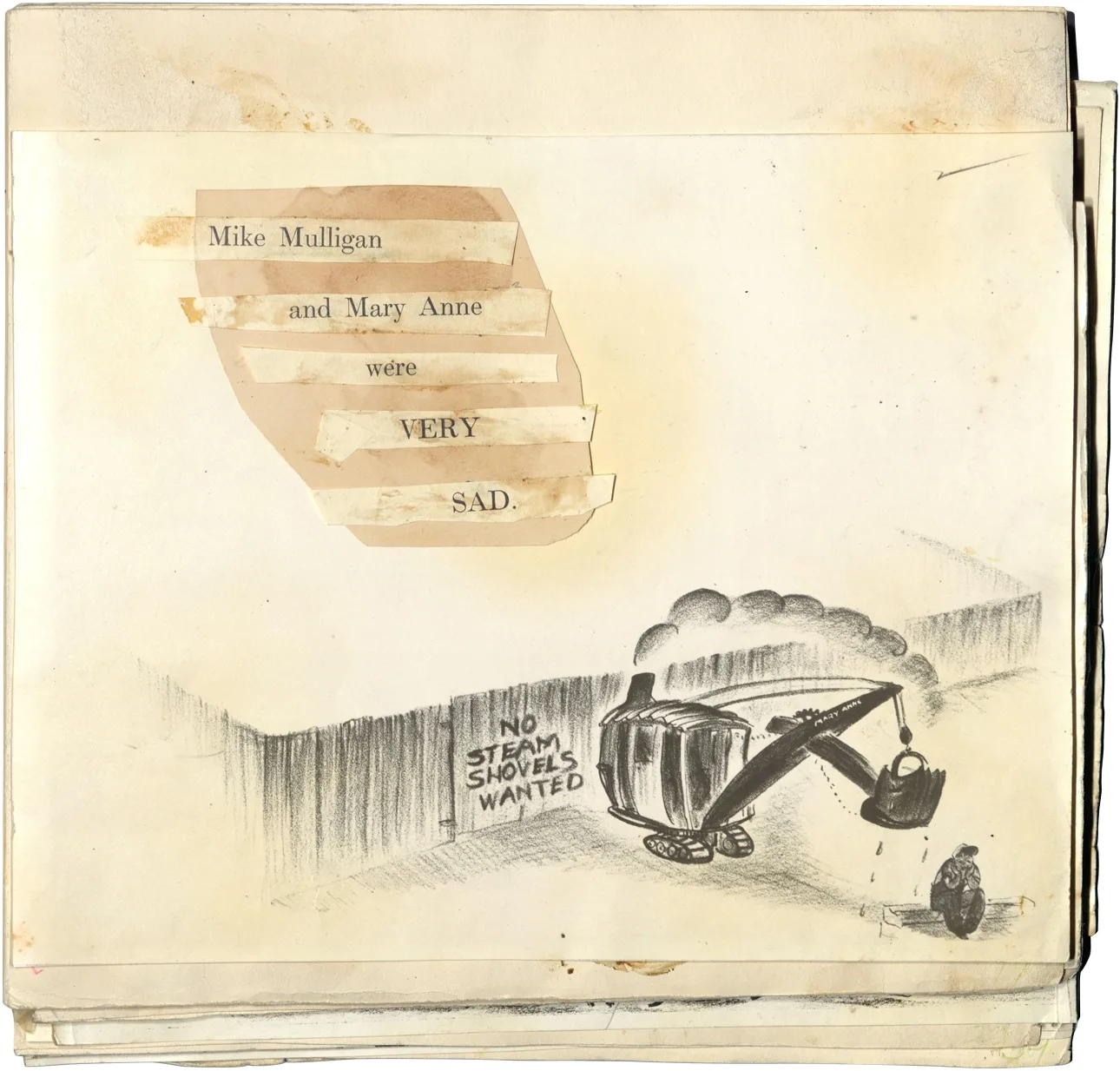
Published in 1939 by Virginia Lee Burton, Mike Mulligan and His Steam Shovel captures a historical period eerily resonant with today’s challenges. Set against the backdrop of the post-Great Depression era, the story unfolds during a time of immense mechanization, standardization, and mass production in the U.S. economy. Mike Mulligan, a dedicated steam shovel operator, and his beloved machine, Mary Anne, represent the epitome of industrial efficiency. Together, they laid the foundations for burgeoning cities, carved out waterways, leveled ground for highways, and prepared airfields, embodying the engine of progress. Their story, however, is one of eventual obsolescence, as newer, more advanced machinery emerges, rendering their once-unparalleled capabilities less competitive. This narrative of a skilled worker and a powerful machine confronting the limits of their traditional utility provides a compelling lens through which to examine the contemporary challenges posed by AI.
The core lesson from Mike Mulligan lies in understanding the evolving nature of value. In his prime, Mike’s value was intrinsically linked to Mary Anne’s raw power and his skill in operating her. As technology advanced, the market no longer simply sought brute digging force; it demanded greater speed, efficiency, and versatility. Similarly, today’s AI-driven economy is shifting the demand curve for labor. Routine, repetitive, and data-intensive tasks are increasingly being automated, challenging the traditional value propositions of many roles. For instance, administrative tasks that once required extensive human oversight are now managed by AI-powered tools, and even complex data analysis, a cornerstone of many professional services, is being augmented or performed autonomously by algorithms. Workers, therefore, must pivot from defining their value by the tools they operate or the processes they execute, to identifying the underlying problems they solve and the unique human attributes they bring to those solutions.

This shift necessitates a re-evaluation of professional identity, a crucial step Mike Mulligan implicitly undertakes. Faced with the prospect of Mary Anne being sent to a scrap heap, Mike doesn’t lament the loss of his specific job title as a "steam shovel operator." Instead, he redefines his purpose, seeking a new challenge where his combined expertise and Mary Anne’s capabilities could still make a difference. He takes on the seemingly impossible task of digging the foundation for the new Popperville Town Hall in a single day, not just digging, but completing the entire excavation in a way that perfectly serves the town’s specific need. This act highlights the importance of transitioning from a task-oriented mindset to a problem-solving or service-oriented one. Modern professionals must similarly analyze their core competencies—not just "I can write code" or "I can manage projects," but "I can innovate solutions," "I can foster collaboration," or "I can interpret complex data to derive strategic insights."
The story also underscores the enduring significance of human-centric skills. While Mary Anne was a powerful machine, it was Mike’s ingenuity, his understanding of the terrain, his dedication, and his ability to work under pressure that ultimately led to their success in Popperville. In the AI era, these "soft skills" or "human skills" are becoming increasingly paramount. Creativity, critical thinking, emotional intelligence, complex problem-solving, collaboration, and adaptive learning are attributes that AI, despite its advancements, struggles to replicate authentically. The World Economic Forum’s Future of Jobs Report consistently identifies these skills as those with the highest growth trajectory, suggesting that the most resilient careers will be those that complement, rather than compete with, AI’s capabilities. For example, while AI can generate marketing copy or analyze customer data, human marketers will be needed to craft compelling narratives, understand nuanced consumer psychology, and build empathetic brand relationships.
Moreover, Mike’s journey illustrates the power of finding a niche and embracing community engagement. The Popperville project was unique; it wasn’t just about digging a hole, but about digging the right hole in the right way for that specific community. This speaks to the emerging importance of specialization within the broader economic landscape. As AI automates generalized tasks, human expertise can become more valuable in highly specialized domains requiring deep contextual understanding, nuanced judgment, or bespoke solutions. Furthermore, Mike and Mary Anne’s eventual role as the furnace and janitor for the town hall, a solution proposed by a child, highlights the value of adaptability and the willingness to accept new, perhaps unconventional, roles that serve a collective good. This mirrors the need for lifelong learning and continuous upskilling, with a focus on roles that leverage human creativity and social intelligence in conjunction with AI tools.
The broader economic implications of AI-driven job disruption are profound, extending beyond individual career paths to encompass national economies and global competitiveness. Governments worldwide are grappling with how to foster an adaptive workforce. In Europe, the focus is often on human-centric AI development and robust social safety nets, coupled with significant investment in vocational training and reskilling programs. In contrast, countries like China are pushing for rapid AI adoption alongside state-led initiatives to integrate AI education into curricula from an early age. The United States, largely driven by market forces, sees substantial private sector investment in AI, alongside growing calls for public-private partnerships to address workforce transitions. Effective policy responses will likely involve a combination of incentivizing corporate investment in employee reskilling, expanding access to quality education in AI-adjacent fields, and rethinking social support systems to buffer the impact of displacement.

For organizations, the lessons from Mike Mulligan translate into a strategic imperative to invest in their human capital. Companies that view AI merely as a cost-cutting tool risk alienating their workforce and squandering invaluable institutional knowledge. Instead, forward-thinking enterprises are exploring models of human-AI collaboration, where AI augments human capabilities, frees employees from mundane tasks, and allows them to focus on higher-value activities requiring judgment, creativity, and interpersonal skills. This requires fostering a culture of continuous learning, providing employees with opportunities to acquire new AI-literacy skills, and redesigning jobs to leverage the unique strengths of both humans and machines. The goal is not simply automation, but augmentation, creating a symbiotic relationship where human insight guides AI’s power.
Ultimately, the narrative of Mike Mulligan and his steam shovel serves as a powerful reminder that technological advancement, while disruptive, does not diminish the inherent value of human ingenuity and adaptability. Just as Mike found a new purpose for himself and Mary Anne by redefining their utility in a changing world, contemporary workers and leaders must embrace a proactive mindset. The challenge lies not in resisting the inevitable tide of AI, but in understanding its currents, identifying new shores, and charting a course that leverages human potential in concert with intelligent machines. The future of work in the AI age will be shaped by those who, like Mike Mulligan, are willing to reinvent their professional identities, cultivate enduring human skills, and find innovative ways to contribute value to a rapidly evolving economy.