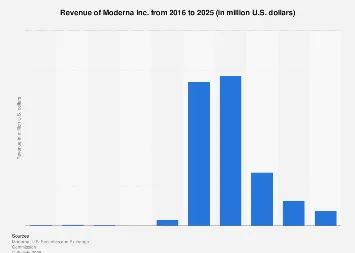
Moderna Inc. is projected to generate approximately two billion U.S. dollars in total revenue for the fiscal year 2025, a figure representing a substantial contraction from the unprecedented peaks experienced during the height of the COVID-19 pandemic. This anticipated decline is primarily attributable to the waning global demand for its flagship messenger RNA (mRNA) vaccine, Spikevax, as vaccination campaigns mature and public health priorities shift. The company’s financial performance now hinges on its ability to successfully translate its groundbreaking mRNA platform into a diverse pipeline of therapeutics and other vaccines, moving beyond its singular pandemic-era success.
The inherent business model of a clinical-stage biotechnology firm like Moderna involves significant, long-term investment in research and development (R&D). Unlike established pharmaceutical giants with diversified product portfolios, Moderna, like many of its peers in the biotech sector, relies heavily on the successful progression of its drug candidates through rigorous clinical trials and subsequent regulatory approvals. This necessitates substantial capital expenditure, with annual R&D costs consistently escalating as the company pursues multiple therapeutic avenues simultaneously. The company’s significant outlays in R&D are a testament to its ambition to establish a sustained revenue stream independent of its initial COVID-19 vaccine success, a critical factor for its long-term viability and investor confidence.
Moderna’s emergence as a pivotal player in the global fight against the novel coronavirus was nothing short of meteoric. In a remarkable feat of scientific and logistical coordination, the company, in collaboration with entities such as the U.S. National Institutes of Health (NIH) and the Coalition for Epidemic Preparedness Innovations (CEPI), was among the vanguard to develop and deploy a vaccine against COVID-19. The vaccine, internally designated mRNA-1273, was conceived and manufactured with astonishing speed, reportedly taking a mere 25 days from initial design to production readiness. This rapid development underscored the transformative potential of mRNA technology, offering a novel approach to infectious disease prevention.
The journey of mRNA-1273 through the intricate phases of clinical development was a testament to its efficacy and safety profile. Following successful completion of all necessary clinical trials, it swiftly garnered regulatory approval for widespread use. By late 2020, it stood as the second vaccine to receive such authorization for broad public administration, following closely on the heels of the Biontech/Pfizer collaboration. This early success not only cemented Moderna’s reputation as an innovator but also provided a critical revenue stream that propelled the company into a new echelon of pharmaceutical and biotechnology enterprises.
However, the post-pandemic reality presents a complex strategic challenge for Moderna. The substantial revenues generated from Spikevax, while instrumental in funding future R&D, were inherently tied to a unique global health crisis. As the world transitions to endemic management of COVID-19, and as booster campaigns become more targeted, the demand for initial vaccine doses has naturally diminished. This necessitates a strategic pivot, with a keen focus on diversifying the company’s product pipeline. Moderna’s future growth trajectory is contingent upon its ability to replicate the success of Spikevax across a spectrum of diseases, leveraging its mRNA platform for indications ranging from influenza and respiratory syncytial virus (RSV) to oncology and rare genetic disorders.
The global vaccine market, while significantly bolstered by the pandemic, is also evolving. Post-COVID, governments and healthcare systems are re-evaluating their procurement strategies, emphasizing long-term preparedness and the integration of new vaccine technologies into routine immunization schedules. Moderna’s ability to secure market share in these evolving landscapes will depend not only on the scientific merit of its pipeline candidates but also on its commercialization strategies, pricing models, and its capacity to navigate complex global regulatory frameworks and distribution networks. The company’s success in securing further approvals for its existing pipeline, particularly in areas like pediatric vaccines and seasonal flu shots, will be critical indicators of its post-pandemic resilience.
Market analysis suggests that while the immediate revenue surge from COVID-19 vaccines is a historical anomaly, the underlying demand for innovative vaccine solutions remains robust. The global vaccine market, excluding COVID-19 specific products, is projected to continue its steady growth, driven by factors such as increasing global population, rising disposable incomes in emerging markets, and the ongoing threat of infectious diseases. Moderna’s challenge lies in capturing a significant portion of this growth by demonstrating the superiority or unique advantages of its mRNA-based alternatives to existing vaccines, or by addressing unmet medical needs with novel mRNA therapeutics.
The economic impact of Moderna’s transition extends beyond its own balance sheet. The company’s investment in R&D fuels innovation within the broader life sciences ecosystem, creating high-skilled jobs and fostering collaboration with academic institutions and contract research organizations. Its success or struggles can influence investor sentiment towards the entire mRNA sector, potentially impacting the funding availability for other early-stage biotech companies. Furthermore, the development of new therapeutics and vaccines can have profound public health and economic benefits, reducing disease burden, improving productivity, and alleviating healthcare costs.
Looking ahead, Moderna’s strategic imperative is to cultivate its pipeline into a diversified engine of revenue generation. This involves not only advancing its vaccine candidates for other infectious diseases but also exploring the vast potential of mRNA technology in therapeutic applications. The company has signaled its intent to pursue treatments for cancer, autoimmune diseases, and cardiovascular conditions, areas where mRNA’s ability to instruct cells to produce specific proteins could offer novel therapeutic modalities. The successful commercialization of even one or two of these pipeline assets, akin to a "blockbuster" drug in traditional pharmaceuticals, would significantly de-risk Moderna’s business model and secure its long-term financial health.
The competitive landscape for mRNA technology is also intensifying. Other pharmaceutical giants and emerging biotech firms are investing heavily in mRNA research, seeking to replicate or even surpass Moderna’s achievements. This competitive pressure necessitates continuous innovation and a relentless pursuit of scientific excellence. Moderna’s ability to maintain its technological edge, secure intellectual property, and effectively bring new products to market will be paramount in navigating this dynamic environment. The company’s strategic partnerships and licensing agreements will also play a crucial role in its ability to access new markets and accelerate product development.
In conclusion, Moderna’s projected revenue of two billion U.S. dollars in 2025 marks a significant recalibration following the extraordinary financial performance driven by its COVID-19 vaccine. This period of transition underscores the inherent risks and rewards of the biotechnology sector. While the company has demonstrated its capacity for groundbreaking scientific achievement, its future prosperity will be defined by its ability to diversify its product portfolio, successfully commercialize its R&D pipeline, and adapt to the evolving global healthcare and economic landscape. The quest for its next "blockbuster" is not merely a financial objective but a strategic imperative for sustained growth and continued impact on global health.