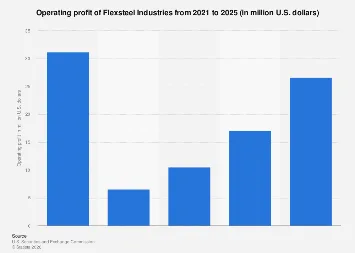
Flexsteel Industries, a prominent player in the North American furniture manufacturing sector, is poised to navigate a complex economic landscape as it looks toward its 2025 fiscal year. While specific operating profit figures for 2025 are not publicly disseminated in advance by the company, an analysis of its historical performance, current industry trends, and forward-looking statements provides a crucial lens through which to assess its potential profitability. The furniture market, intrinsically linked to consumer confidence and housing sector activity, faces a confluence of challenges and opportunities, from fluctuating material costs and supply chain disruptions to evolving consumer preferences and the persistent influence of e-commerce.
The company’s operational performance is inherently tied to broader macroeconomic indicators. In the United States, where Flexsteel derives a significant portion of its revenue, interest rate hikes aimed at curbing inflation can dampen consumer spending on discretionary items like furniture. Similarly, fluctuations in the housing market, including new home sales and existing home renovations, directly impact demand for home furnishings. According to the U.S. Census Bureau, new single-family home sales have experienced volatility, reflecting a sensitivity to mortgage rates and overall economic sentiment. This cyclicality underscores the importance of Flexsteel’s ability to adapt its production and marketing strategies to prevailing market conditions.
Material costs represent another critical variable influencing Flexsteel’s operating profit. The company relies on a diverse range of raw materials, including lumber, foam, fabric, and metal components. Global supply chain snarls, geopolitical events, and increased demand from competing industries can all contribute to price volatility. For instance, disruptions in timber harvesting or manufacturing of synthetic fabrics can lead to increased input costs, directly squeezing profit margins if these increases cannot be effectively passed on to consumers. Recent analyses from industry research firms have highlighted persistent upward pressures on commodity prices, even as some supply chain bottlenecks begin to ease. Flexsteel’s strategic sourcing, inventory management, and its ability to secure favorable long-term contracts with suppliers will be paramount in mitigating these cost pressures.
Furthermore, the competitive landscape within the furniture industry is intensifying. Flexsteel competes with a broad spectrum of manufacturers, ranging from large, vertically integrated corporations to smaller, specialized firms. The rise of direct-to-consumer (DTC) brands, often leveraging online sales channels and innovative marketing, has also reshaped consumer purchasing habits. This competitive pressure necessitates continuous investment in product innovation, design, and marketing to maintain market share and attract new customers. Flexsteel’s commitment to its established dealer network, coupled with its strategic expansion into e-commerce and digital engagement, will be key to its success in this evolving retail environment.
Consumer preferences are also in constant flux, influenced by design trends, sustainability concerns, and the desire for functional, adaptable furniture. The post-pandemic emphasis on home comfort and multi-functional living spaces continues to shape product development. Flexsteel’s ability to anticipate and respond to these shifts through its product portfolio—offering a blend of classic designs and contemporary styles, while potentially incorporating more sustainable materials and manufacturing processes—will be a significant determinant of its sales volume and, consequently, its profitability. Market research indicates a growing consumer appetite for customizable options and furniture that can adapt to smaller living spaces, trends that Flexsteel is likely incorporating into its product development pipeline.
Looking ahead to 2025, Flexsteel’s strategic initiatives will play a pivotal role in shaping its financial outcomes. The company has historically focused on operational efficiency, cost control, and market diversification. Investments in advanced manufacturing technologies, automation, and lean production principles can enhance productivity and reduce labor costs, thereby bolstering operating margins. Moreover, exploring new geographic markets or expanding its presence in underserved segments within its existing markets could provide avenues for revenue growth that are less susceptible to the cyclicality of specific regions or product categories. The company’s recent strategic reviews and capital allocation plans, as outlined in its investor relations communications, often point to a deliberate approach to reinvestment in areas that promise sustainable growth and improved profitability.
The furniture sector’s reliance on consumer discretionary spending means that economic downturns can have a pronounced impact. However, resilient companies like Flexsteel often demonstrate an ability to weather these storms through prudent financial management, a strong brand reputation, and a diversified customer base. The company’s balance sheet strength, including its debt levels and cash reserves, will be crucial in navigating periods of economic uncertainty and capitalizing on opportunities that may arise. Analysts often scrutinize companies’ debt-to-equity ratios and their ability to generate free cash flow as indicators of financial health and operational resilience.
Moreover, the global economic outlook for 2025, with its attendant inflation rates, employment figures, and consumer confidence indices, will cast a long shadow over Flexsteel’s performance. International economic forecasts suggest a complex environment, with varying degrees of growth and inflation across major economies. For a company operating within a globalized supply chain and serving a market influenced by international economic trends, understanding these macro-economic currents is indispensable for accurate forecasting and strategic planning.
In summary, while specific 2025 operating profit projections for Flexsteel Industries are proprietary, the company’s path to profitability will be shaped by its strategic response to a dynamic interplay of economic forces. Its success will hinge on its agility in managing material costs, its capacity for product innovation that aligns with evolving consumer tastes, its effectiveness in navigating a competitive marketplace, and its overall financial discipline in the face of macroeconomic uncertainties. The company’s historical performance and ongoing strategic investments provide a foundation for anticipating its trajectory, but the ultimate realization of its profit potential will be a testament to its adaptive capabilities in the year ahead.