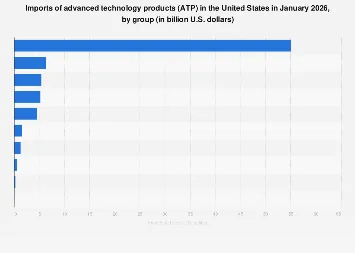
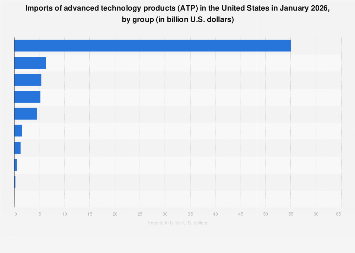
The United States’ reliance on global supply chains for advanced technology products (ATPs) remains a defining feature of its economic landscape, with the information and communications technology (ICT) sector unequivocally leading the charge in import value. In January 2026, the sheer volume of imported ATPs within this category underscored its critical role in powering American innovation, industry, and daily life. While precise figures for specific sub-categories within ICT remain proprietary, preliminary data indicates that imports in this segment alone were valued in the tens of billions of U.S. dollars, far surpassing other ATP classifications.
This substantial import figure for ICT products reflects a complex interplay of factors. The globalized nature of electronics manufacturing, where specialized components and assembly processes are often concentrated in specific regions, necessitates significant inbound shipments. Countries like Taiwan, South Korea, China, and Vietnam are pivotal hubs for the production of semiconductors, printed circuit boards, and finished electronic devices that are essential to the U.S. economy. The insatiable demand for smartphones, personal computers, data center equipment, and sophisticated telecommunications infrastructure ensures a continuous flow of these goods across U.S. borders.
In stark contrast, the electronics segment, while still a major contributor to ATP imports, registered a considerably lower import value compared to the broader ICT category. This segment likely encompasses a range of electronic components and finished goods that are not as centrally integrated into the core information and communication infrastructure. The distinction suggests a nuanced understanding of how different technological products contribute to the national economic machinery. While electronics are vital, the pervasive nature and foundational role of ICT in virtually every aspect of modern commerce and society appear to drive a significantly higher import valuation.
The economic implications of this import dynamic are profound. For the U.S., a robust flow of ICT ATPs is essential for maintaining technological competitiveness, fostering economic growth, and ensuring national security. The availability of advanced computing, networking, and telecommunications equipment directly impacts productivity across all sectors, from manufacturing and healthcare to finance and education. Furthermore, these imports enable American consumers to access cutting-edge devices and services that enhance their quality of life and facilitate digital participation.
However, this reliance also presents strategic challenges. Dependence on foreign sources for critical technological components can create vulnerabilities in supply chains, as evidenced by recent global disruptions. Geopolitical tensions, trade disputes, and unforeseen events such as pandemics can significantly impact the availability and cost of these essential goods. This has spurred ongoing discussions and policy initiatives within the U.S. aimed at strengthening domestic manufacturing capabilities, diversifying supply sources, and fostering greater resilience in the technology sector.
The broader context of global ATP trade reveals that the U.S. is not alone in its intricate relationship with international technology markets. Developed economies worldwide exhibit similar patterns of high demand for ICT products and specialized electronic components. Trade data from the European Union, Japan, and other advanced economies often mirrors the U.S. trend, highlighting a shared global reliance on a concentrated set of manufacturing powerhouses. This global interdependence underscores the importance of international cooperation and stable trade relations for the continued advancement of technology.
Analyzing the specific categories within ATPs, beyond the broad ICT and electronics classifications, would offer a more granular understanding of import drivers. For instance, imports related to advanced materials, biotechnology, aerospace, and other high-tech fields, while perhaps smaller in aggregate value compared to ICT, represent crucial areas for national strategic interests and future economic development. The U.S. Department of Commerce and other governmental bodies closely monitor these import trends to inform industrial policy, research and development investments, and trade negotiations.
The sourcing of these ATPs is also a critical consideration. While China has historically been a dominant player in the global manufacturing of many electronic components and finished goods, shifts in trade policy and evolving geopolitical landscapes have prompted companies to explore alternative manufacturing bases. This has led to increased investment and production in countries like Vietnam, India, and Mexico, potentially altering the import patterns in the years to come. The U.S. strategy of encouraging "friend-shoring" and "near-shoring" aims to mitigate risks associated with concentrated production and foster more secure and reliable supply chains.
Furthermore, the nature of the imported goods themselves is evolving. The increasing sophistication of AI, the expansion of 5G networks, and the burgeoning Internet of Things (IoT) ecosystem all demand increasingly complex and specialized ATPs. This continuous innovation cycle means that the composition and value of imported technologies will likely shift, requiring ongoing adaptation from policymakers, businesses, and researchers.
The economic impact analysis extends beyond direct trade figures. The import of ATPs facilitates domestic innovation by providing access to essential tools and components that enable U.S. companies to develop new products and services. It also contributes to job creation in sectors that utilize these technologies, such as software development, data analytics, and advanced manufacturing. Conversely, an over-reliance on imports without corresponding domestic capacity development can pose challenges for long-term economic self-sufficiency and national competitiveness.
In conclusion, the January 2026 data on U.S. advanced technology product imports paints a clear picture of the nation’s technological dependencies and strategic priorities. The overwhelming dominance of the information and communications sector in import value highlights its indispensable role in the contemporary economy. While this reliance fuels innovation and economic activity, it also necessitates a continuous evaluation of supply chain resilience, geopolitical risks, and the strategic importance of fostering domestic technological capabilities to ensure sustained prosperity and security in an increasingly interconnected and competitive global landscape.