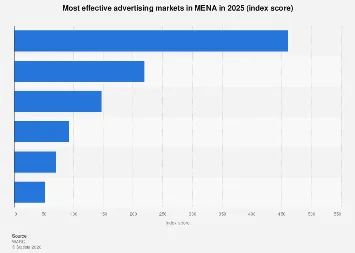
The Middle East and North Africa (MENA) region’s advertising landscape in 2025 is characterized by the standout performance of Turkey, which secured the top position as the most effective advertising market, followed closely by the United Arab Emirates. This assessment is based on a comprehensive ranking that evaluates advertising effectiveness, with Turkey achieving a leading index score and the UAE demonstrating significant market strength. While the specific numerical scores remain proprietary, the relative positioning highlights key economic and cultural drivers influencing advertising success across this dynamic region.
The methodology behind such rankings, often drawing from prestigious industry awards and campaign performance data, aims to identify markets where advertising efforts yield the greatest impact. This "effectiveness" can be measured through various lenses, including return on investment (ROI), brand recall, consumer engagement, and overall market penetration. The WARC Effective 100, for instance, a well-regarded industry benchmark, compiles results from major award shows that celebrate campaigns demonstrating tangible business results. Such accolades are typically awarded based on campaigns that ran in the preceding year, meaning the 2025 rankings reflect the successes of advertising efforts in 2024.
Turkey’s prominence in the 2025 rankings suggests a mature and sophisticated advertising ecosystem, capable of producing campaigns that resonate with both domestic and potentially international audiences. This effectiveness likely stems from a combination of factors: a robust creative industry, increasing digital penetration, a large and engaged consumer base, and strategic investment in marketing by both local and multinational corporations. The country’s unique position bridging Europe and Asia also offers a diverse cultural palette that advertisers can leverage. Economically, Turkey has a significant consumer market, and its advertising sector plays a crucial role in driving consumption and brand building. The increasing digitalization of Turkish society, with high smartphone adoption and internet usage, further amplifies the reach and impact of advertising campaigns, particularly in the digital sphere.
The United Arab Emirates, consistently a hub for regional commerce and innovation, solidifies its position as the second most effective advertising market. The UAE’s strength is often attributed to its status as a global business and tourism destination, attracting significant investment in marketing and advertising. Its cosmopolitan population, high disposable incomes, and a strong appetite for global brands create a fertile ground for impactful advertising. The UAE’s advertising market is characterized by a high degree of sophistication, with significant spending on digital marketing, experiential campaigns, and high-profile sponsorships. The government’s strategic vision to position Dubai and Abu Dhabi as global centers for business and creativity further bolsters the advertising sector. Moreover, the UAE’s media infrastructure is highly developed, with leading television networks, digital platforms, and outdoor advertising opportunities, all contributing to its effectiveness.
Beyond these two frontrunners, the broader MENA region presents a varied yet promising outlook for advertisers. Countries like Saudi Arabia, Egypt, and Qatar also represent significant advertising markets, each with its unique characteristics and growth trajectories. Saudi Arabia, for example, is undergoing rapid economic and social transformation, driven by its Vision 2030 initiative. This presents immense opportunities for advertisers to tap into a burgeoning consumer market eager for new products and experiences. Increased disposable incomes, a young demographic, and a growing focus on entertainment and leisure are fueling advertising expenditure. The Kingdom’s efforts to diversify its economy away from oil are also leading to substantial investments in sectors like tourism, retail, and technology, all of which are heavily reliant on effective marketing.
Egypt, with its large population and deeply rooted cultural heritage, offers a vast consumer base. Advertising effectiveness here often depends on understanding local nuances, cultural sensitivities, and the increasing adoption of digital channels by a younger demographic. The country’s media landscape is diverse, with a strong traditional media presence complemented by a rapidly growing digital audience. Advertisers who can connect with the Egyptian consumer on a personal and relatable level often see significant returns.
Qatar, while smaller in population, is a wealthy nation with a high per capita income and a significant global presence, particularly in sports and media. Its advertising market benefits from substantial investment in mega-events and a sophisticated consumer base with access to global trends. The country’s focus on developing its non-oil economy, including tourism and media, further enhances the advertising environment.
The effectiveness of advertising in the MENA region is increasingly influenced by the ongoing digital transformation. Mobile advertising, social media marketing, and programmatic advertising are becoming indispensable tools for reaching target audiences. The high penetration of smartphones across most MENA countries means that digital channels offer unparalleled reach and the ability to deliver highly targeted messages. Data analytics and AI are further refining these capabilities, allowing advertisers to optimize campaigns for maximum impact and ROI.
However, challenges remain. Economic volatility, geopolitical uncertainties, and varying levels of regulatory frameworks across different countries can impact advertising spend and effectiveness. Furthermore, cultural sensitivities and the need for localized messaging are crucial considerations for any brand operating in the diverse MENA region. Advertisers must navigate a complex tapestry of languages, traditions, and consumer behaviors to achieve genuine connection and drive desired outcomes.
The growth of the e-commerce sector across the MENA region is also a significant driver for advertising effectiveness. As more consumers shop online, brands are increasingly investing in digital advertising to drive traffic to their e-commerce platforms and convert sales. This has led to a surge in demand for performance marketing expertise and a greater emphasis on measurable results.
Looking ahead, the MENA advertising market is poised for continued growth, driven by economic diversification, demographic shifts, and technological advancements. The success of markets like Turkey and the UAE underscores the potential for robust advertising performance when supported by strong economies, innovative strategies, and a deep understanding of consumer behavior. As the region continues to evolve, advertisers who can adapt to changing trends, embrace digital innovation, and craft culturally resonant messages will be best positioned to capitalize on the opportunities that lie ahead. The ongoing evolution of media consumption habits, particularly among younger demographics, will continue to shape the strategies and channels that define advertising effectiveness in the coming years.