In an era defined by relentless technological advancement and shifting market dynamics, large corporations, universities, and government organizations are increasingly seeking innovative frameworks to foster new growth. Among these, the venture studio model has emerged as a potent, albeit resource-intensive, mechanism for systematically incubating and scaling new ventures, promising to unlock significant value creation. This structured approach to innovation, pioneered by tech giants and now proliferating across diverse sectors, offers a compelling alternative to traditional R&D, corporate venture capital, and accelerator programs, presenting both immense opportunities and significant strategic considerations.
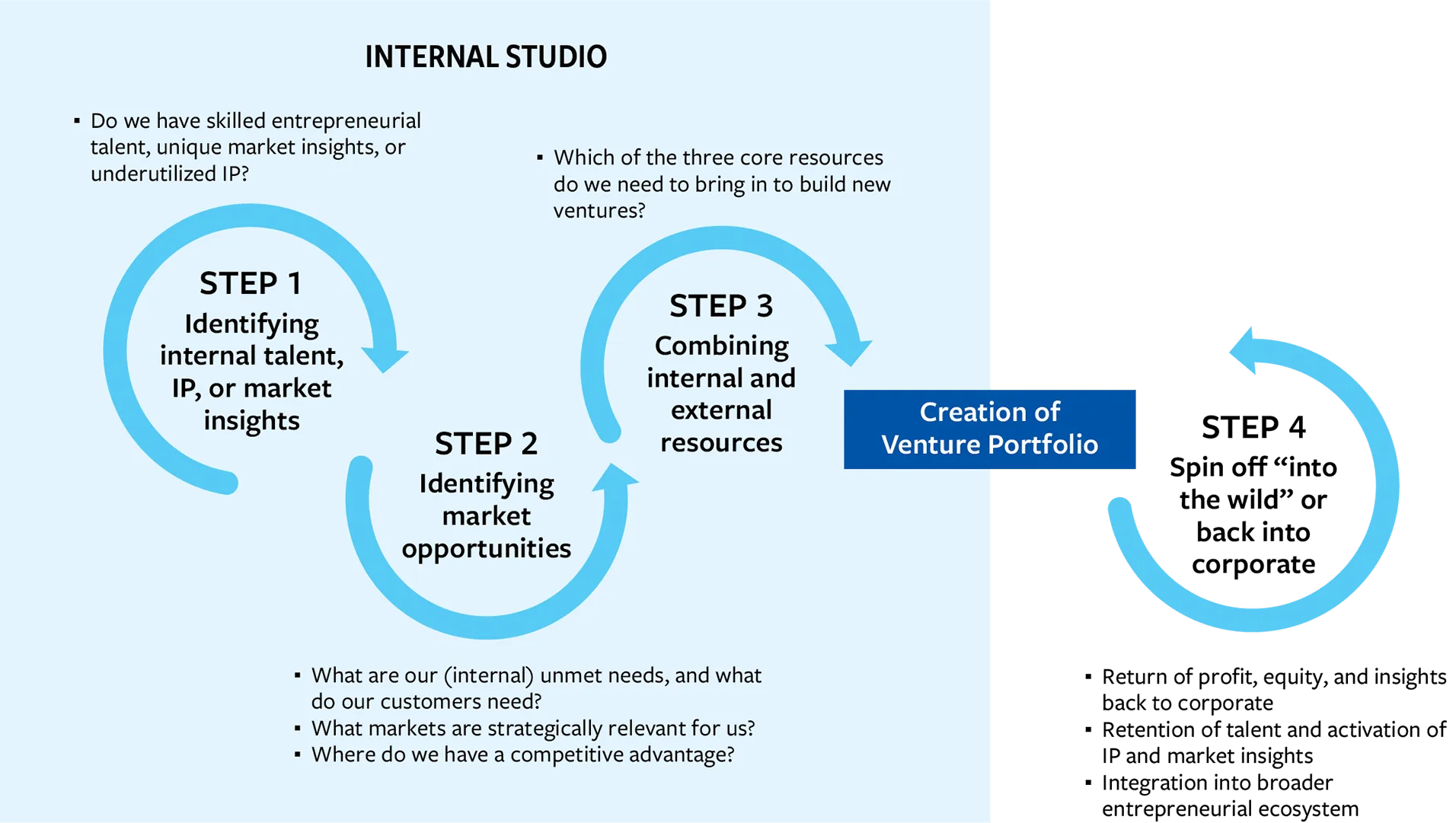
At its core, a venture studio systematically assembles ideas, talent, and resources to build multiple new companies in parallel. Unlike typical accelerators that support external startups or corporate venture arms that invest in existing ones, studios are actively involved in the co-creation and operational development of ventures from inception. Their teams typically begin by identifying and rigorously validating promising opportunity spaces, often leveraging internal expertise and market insights. Following this, they recruit entrepreneurial talent to co-found ventures, typically taking a substantial equity stake, and then provide comprehensive operational support, shared services, and strategic guidance through structured experimentation and iteration. This "factory model" of venture creation aims to de-risk the startup process by providing a stable foundation and access to an ecosystem of shared capabilities, from legal and finance to product development and marketing. The global landscape of venture studios has witnessed remarkable expansion, with the number of both independent and in-house studios doubling between 2018 and 2023, reaching an estimated 870 entities, underscoring its growing appeal as a strategic innovation vehicle.
The appeal of the venture studio model lies in its potential to generate innovation at scale, transforming nascent ideas into viable businesses. For large enterprises, it offers a pathway to explore adjacent markets, disrupt existing industries, or even create entirely new ones, all while mitigating some of the inherent risks of internal innovation. By systematically incubating multiple ventures, organizations can cast a wider net for disruptive ideas, leveraging a portfolio approach to innovation that diversifies risk and increases the probability of hitting a "moonshot." The economic impact extends beyond direct revenue, fostering an entrepreneurial culture within the parent organization, attracting top talent, and contributing to the broader innovation ecosystem through new job creation and technological advancements. Success stories, such as Google X’s incubation of Waymo, now valued at over $100 billion, or SC Ventures’ development of Mox, Hong Kong’s rapidly expanding digital bank, vividly illustrate the transformative potential of this model when executed effectively.
However, the venture studio model is not without its formidable challenges. The deep operational involvement and significant equity stakes often maintained by studios can, paradoxically, deter highly competent founders and external investors. Entrepreneurs seeking full autonomy or investors looking for clear ownership structures might shy away from models where a studio retains substantial control or a large percentage of equity, potentially limiting access to crucial follow-on funding rounds. Furthermore, the simultaneous support of multiple ventures, each requiring substantial investment before any returns materialize, creates considerable capital requirements. Without stringent and continuous down-selection processes, the pipeline can become diluted, weakening the core funnel logic necessary for efficient venture development and successful scaling. This demands a sophisticated financial strategy and a clear understanding of risk tolerance.
For internal venture studios embedded within large corporations, additional complexities arise. While they benefit from access to the parent company’s resources, brand, and market reach, they often face formidable bureaucratic hurdles. Corporate legal, risk, and compliance functions, designed for stability and established operations, can inadvertently stifle the agility and rapid iteration essential for new venture creation. These internal studios are also inherently vulnerable to shifts in corporate priorities or leadership changes, which can lead to abrupt funding cuts or even outright closure, regardless of a venture’s potential. This highlights the critical need for a delicate balance between leveraging corporate strengths and shielding ventures from organizational inertia.

To navigate these complexities and truly succeed, organizations must critically assess four fundamental conditions before embarking on the venture studio journey.
Firstly, the availability of specialized talent, a robust internal intellectual property (IP) portfolio, or profound market insights is paramount. A venture studio thrives on a constant influx of high-potential ideas and the capabilities to execute them. This could manifest as a deep bench of experienced serial entrepreneurs within the organization, a rich repository of patented technologies ripe for commercialization, or unique access to proprietary market data that reveals unmet customer needs. For instance, a pharmaceutical company might leverage its extensive drug discovery IP and scientific talent, while a financial institution could capitalize on its deep understanding of regulatory landscapes and customer behavior. Without a strong foundation in at least one of these areas, the studio risks becoming a mere idea generator without the proprietary advantage needed for market differentiation.
Secondly, success hinges on a strategic combination of internal assets and external capabilities. While internal resources—such as existing infrastructure, brand recognition, and established distribution channels—provide significant advantages, relying solely on them can lead to insular thinking. The most successful venture studios actively seek to integrate external capabilities, whether through partnerships with specialized tech firms, collaborations with academic institutions for cutting-edge research, or by bringing in external entrepreneurial talent with diverse experiences. This hybrid approach allows the studio to benefit from the parent company’s stability and resources while injecting the agility, fresh perspectives, and market-savvy often found in external startup ecosystems. This ensures ventures remain competitive and relevant in fast-evolving markets.
Thirdly, the establishment of the right governance mechanisms is non-negotiable. This involves creating a framework that balances oversight with autonomy, protecting the nascent ventures from corporate bureaucracy while ensuring alignment with strategic objectives. Effective governance for a venture studio often means establishing a dedicated decision-making body with clear mandates, streamlined approval processes, and a degree of operational independence from the parent company’s daily operations. This might involve creating separate legal entities, distinct reporting lines, and incentive structures that reward entrepreneurial success rather than adherence to traditional corporate metrics. A well-designed governance model fosters speed, experimentation, and accountability, crucial for the rapid iteration cycles inherent in venture building.
Finally, a long-term commitment of both time and financial resources is absolutely critical. Venture creation is an inherently uncertain and protracted process. Unlike short-term projects, ventures require sustained investment over several years before they can achieve profitability or significant market traction. Organizations must enter the venture studio model with a clear understanding that initial returns will be slow, and a significant portion of ventures may fail. This necessitates a patient capital approach, shielded from quarterly earnings pressures, and a strategic vision that extends far beyond immediate fiscal cycles. Without this unwavering commitment, studios risk prematurely pulling the plug on promising ventures or failing to provide the sustained support necessary for their growth, ultimately undermining the entire investment.
In conclusion, the venture studio represents a sophisticated and powerful tool for organizational innovation, capable of fostering disruptive growth and securing future market positions. Its systematic approach to parallel venture creation, coupled with dedicated resources and operational support, offers a compelling pathway to diversify revenue streams and enhance strategic agility. However, its successful implementation demands a meticulous assessment of an organization’s internal capabilities, a willingness to integrate external expertise, the foresight to establish robust yet flexible governance structures, and, most importantly, an unwavering, long-term commitment to nurturing innovation. For those organizations prepared to meet these conditions, the venture studio model promises not just new ventures, but a renewed capacity for continuous reinvention in the global economy.