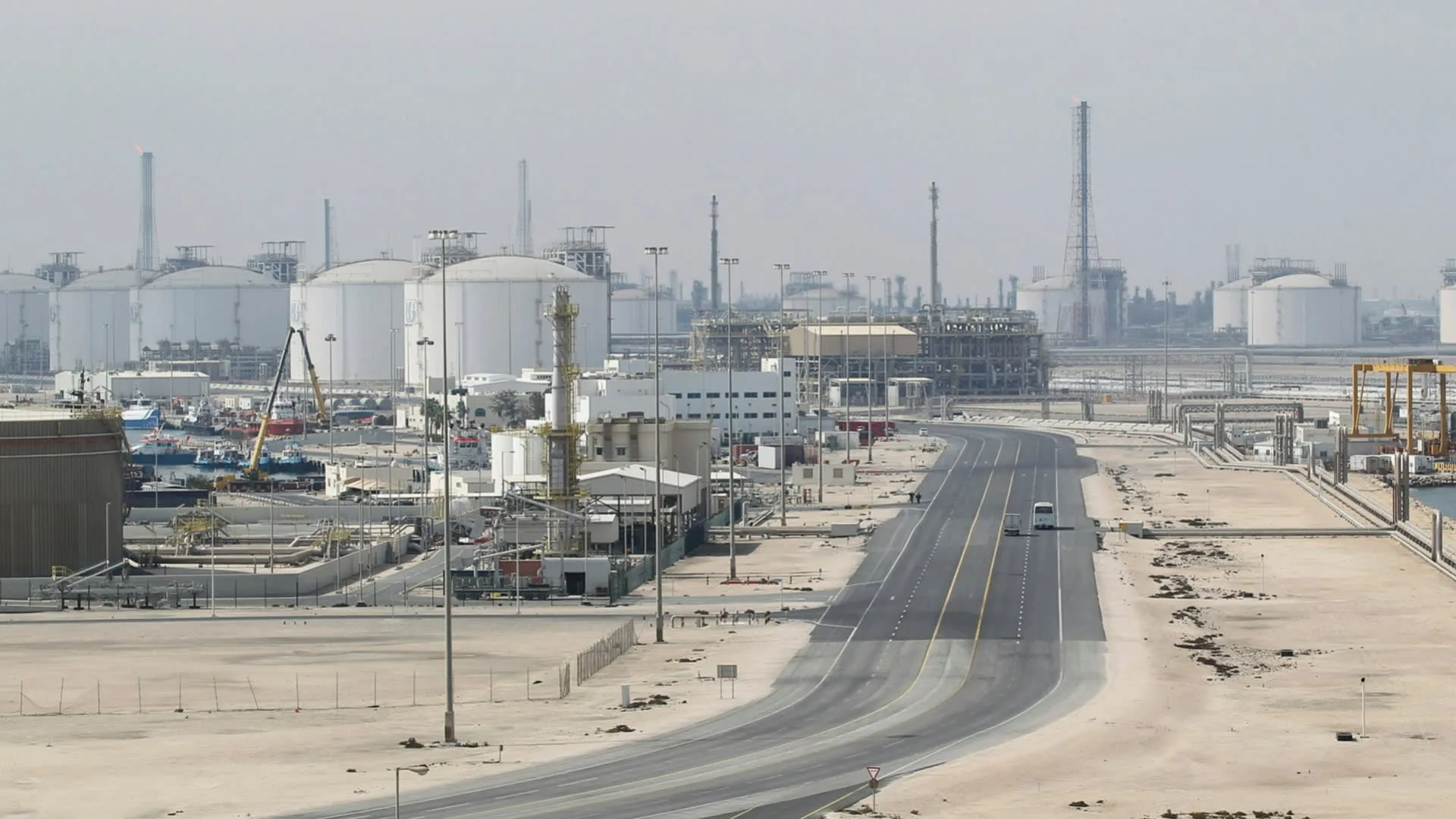
The global energy landscape faced a seismic shock this week as reports emerged of significant damage to the Ras Laffan Industrial City in Qatar, the world’s most critical hub for liquefied natural gas (LNG) production. While details regarding the specific nature of the kinetic action remain subject to military censorship and ongoing assessments, the implications of a direct strike on Qatari soil—allegedly orchestrated by Iranian interests—mark a dangerous inflection point in regional stability. For a world economy still grappling with the aftershocks of the Russia-Ukraine conflict and the resulting pivot away from Siberian pipeline gas, any disruption to Qatari exports represents a systemic threat to both European heating security and Asian industrial productivity.
The facility at the heart of this crisis is more than just an industrial site; it is the central nervous system of the global gas trade. Qatar, which shares the massive North Field—the world’s largest non-associated gas field—with Iran’s South Pars, has spent decades and hundreds of billions of dollars transforming itself into the premier exporter of LNG. The North Field expansion project, currently underway, aims to boost the nation’s liquefaction capacity from 77 million tonnes per annum (mtpa) to a staggering 126 mtpa by 2027. An attack of this magnitude does not merely damage physical infrastructure; it shatters the long-held assumption that Qatar’s unique diplomatic positioning—acting as a mediator between Western powers and regional actors—served as an invisible shield for its energy assets.
Market reactions were instantaneous and volatile. In the hours following the news, the Dutch Title Transfer Facility (TTF) price, the European benchmark for natural gas, surged by nearly 18%, reflecting fears of a prolonged supply vacuum. In Asia, the Japan-Korea Marker (JKM) saw a similar spike, as buyers in Tokyo, Seoul, and Beijing scrambled to secure spot cargoes to hedge against potential delivery failures. Market analysts warn that if the "extensive damage" reported results in the prolonged shutdown of even a single liquefaction train, the global supply-demand balance could tilt into a deficit that would take years to rectify.
The economic impact of such a disruption extends far beyond the immediate price of gas. LNG is the primary feedstock for a vast array of industrial processes, including fertilizer production and chemical manufacturing. High energy costs in 2022 led to the widespread closure of European industrial plants; a repeat of that scenario, driven by Middle Eastern instability, could trigger a renewed inflationary cycle. Furthermore, the maritime insurance industry has already begun re-evaluating risk premiums for vessels traversing the Persian Gulf. War-risk surcharges for LNG carriers, which are among the most expensive commercial vessels to build and operate, are expected to climb, adding further overhead to every million British Thermal Units (mmBtu) delivered to market.
Geopolitically, the strike signals a collapse in the delicate "shared resource" diplomacy between Doha and Tehran. The North Field and South Pars are part of the same geological structure, and while the two nations have historically maintained a pragmatic working relationship to manage the reservoir, the disparity in their ability to monetize the resource has long been a point of friction. Under heavy international sanctions, Iran has struggled to develop its side of the field to the same technical standard as Qatar, which partners with global majors such as ExxonMobil, Shell, and TotalEnergies. Analysts suggest that the strike may be an attempt by Tehran to leverage its "veto power" over regional stability, signaling that if its own energy exports are constrained by Western sanctions, no neighbor’s exports are truly safe.
The technical challenges of repairing an LNG facility are immense. Unlike traditional oil refineries, LNG "trains" involve highly specialized cryogenic equipment designed to cool gas to minus 162 degrees Celsius. These components, including massive heat exchangers and turbines, often have lead times of 12 to 24 months for manufacturing. If the damage to Ras Laffan involves these critical path items, the "extensive" nature of the damage could translate into a multi-year reduction in global supply. This comes at a time when the United States, the other major player in the LNG market, is facing its own internal debates regarding export pauses and regulatory hurdles, leaving the global market with zero margin for error.
The ripple effects are particularly acute for the European Union. Since the invasion of Ukraine, the EU has relied on Qatari LNG to fill the void left by Gazprom. Long-term contracts signed with QatarEnergy were intended to be the bedrock of Europe’s energy transition, providing a "bridge fuel" as the continent moves toward renewables. A compromised Qatari supply chain forces Europe back into a desperate competition with Asian buyers for a shrinking pool of available spot market cargoes. This competition inevitably drives prices higher, disproportionately affecting developing economies in South Asia, such as Pakistan and Bangladesh, which have already struggled to outbid wealthy European nations for energy shipments in recent years.
Security experts are also focusing on the vulnerability of the Strait of Hormuz, the narrow waterway through which nearly 20% of the world’s LNG passes. While the damage occurred at the production site, the threat of further escalations effectively places a blockade on the mindsets of global shipping firms. The prospect of "gray zone" warfare—using drones, cyberattacks, or deniable proxy forces to strike high-value economic targets—presents a nightmare scenario for energy security. Traditional naval deterrence is often ill-equipped to prevent low-cost, high-impact strikes on sprawling industrial complexes that were built for efficiency rather than fortification.
The diplomatic fallout is expected to be equally complex. Qatar has long served as a vital intermediary, hosting the political office of groups like Hamas and maintaining ties with the Taliban, while simultaneously hosting the largest U.S. airbase in the region at Al-Udeid. This attack forces Doha into a corner, potentially necessitating a closer alignment with Western security architectures and moving away from its traditional role as a neutral arbiter. For the United States and its allies, the incident underscores the fragility of the global energy transition, which remains heavily dependent on a handful of geographically concentrated hubs.
From a broader economic perspective, the incident at Ras Laffan may accelerate the global shift toward energy sovereignty. Nations that have been hesitant to invest in domestic nuclear power or aggressive renewable infrastructure may now view these options not just through an environmental lens, but as essential components of national security. The "just-in-time" model of global energy delivery is proving increasingly incompatible with a world defined by fragmented geopolitics and the return of state-on-state competition.
As satellite imagery continues to be analyzed and damage assessments are finalized, the energy world remains on a knife-edge. The immediate priority for QatarEnergy and its international partners will be to maintain the integrity of unaffected production lines and reassure global markets of their ability to meet contractual obligations. However, the psychological barrier has been broken. The world’s largest LNG facility is no longer an untouchable sanctuary of global commerce. It is now a front line in a broader regional struggle, and the cost of that transition will be felt in every electricity bill and industrial output report across the globe for the foreseeable future.
In the coming weeks, the focus will shift to the resilience of the global supply chain. If Qatar can demonstrate a rapid recovery, the risk premium may begin to subside. However, if the "extensive damage" proves to be a structural blow to the North Field’s export capability, the world may find itself entering a new era of energy scarcity. For an international community already weary of volatility, the strike on Ras Laffan is a stark reminder that in the modern economy, energy security is the foundation upon which all other stability rests—and that foundation is currently under fire.