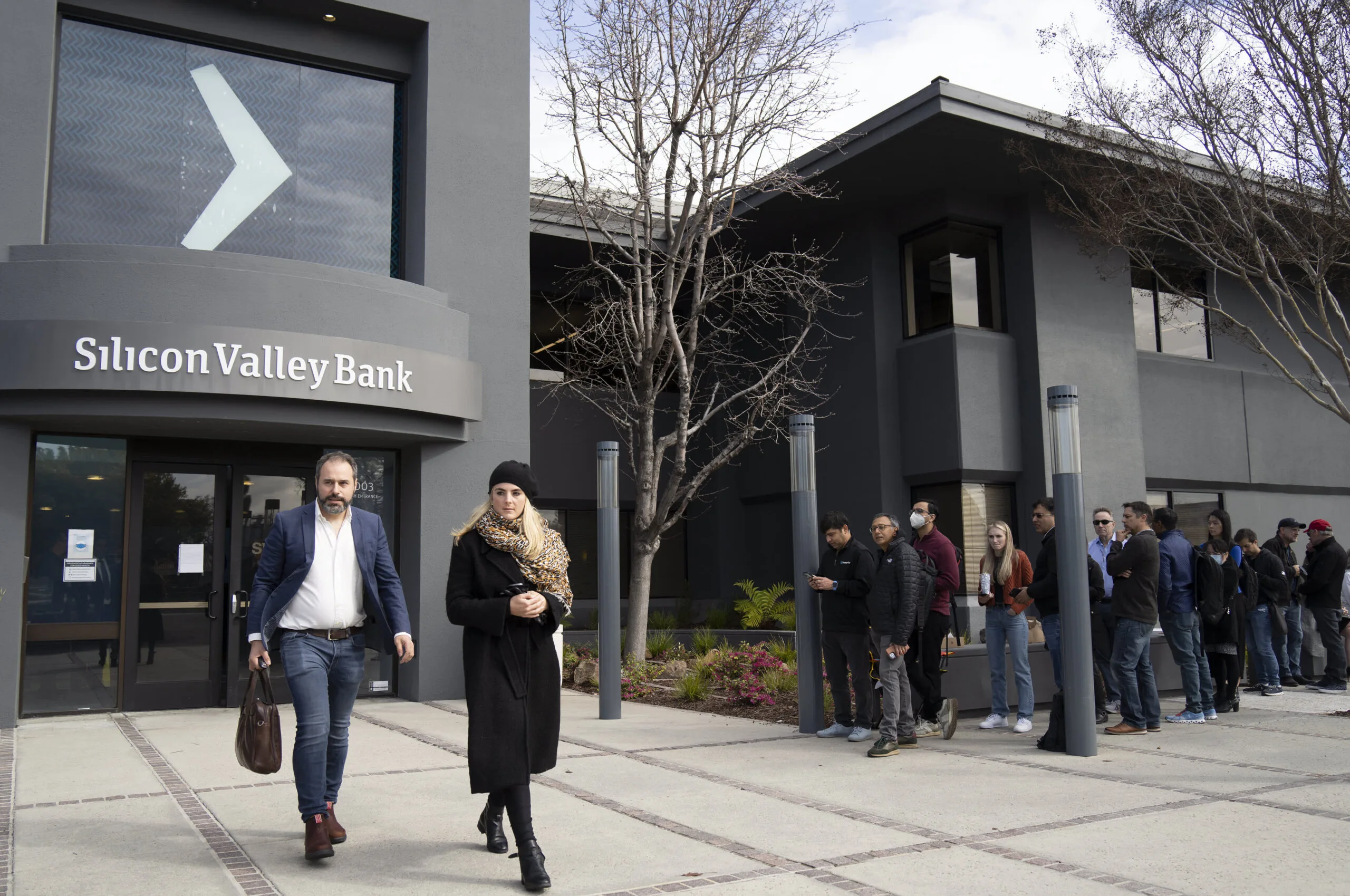
On the evening of March 9, 2023, the global financial landscape was on the precipice of a transformation that few could have predicted. In the midst of a retirement celebration for a colleague in New York City, Doug Petno, a senior executive at JPMorgan Chase, received a call that would fundamentally alter the bank’s strategic trajectory. On the other end of the line was Jamie Dimon, the Chairman and CEO of the world’s largest bank, with an urgent directive. Regulators were on the phone, and they had a pressing question: Was JPMorgan interested in acquiring Silicon Valley Bank (SVB)?
At that moment, SVB, the primary financial engine for the American startup ecosystem, was in the throes of a historic bank run. By the time California regulators shuttered the institution the following morning, it had hemorrhaged $42 billion in deposits in a single day. While Dimon and Petno ultimately declined to purchase the failing lender—calculating that the risk was too high and that the bank was already winning the "flight to safety"—the collapse created a vacuum. In a single weekend, JPMorgan onboarded three years’ worth of new clients, as desperate founders and venture capitalists sought the sanctuary of a "too-big-to-fail" balance sheet. This moment of crisis became the catalyst for JPMorgan’s most aggressive expansion into the innovation economy to date.
The strategic pivot represents a sophisticated evolution for JPMorgan Chase, a firm that has historically dominated both Main Street retail banking and Wall Street investment banking. By moving aggressively into the startup space, the bank is not merely seeking to grow its deposit base; it is positioning itself at the very source of the next generation of global corporate giants. For a firm that generated more than $180 billion in revenue last year, the startup sector offers a "dramatically higher" growth rate than traditional business lines, serving as a vital engine for future expansion.
Historically, the relationship between Tier 1 global banks and the startup community has been fraught with friction. Early-stage founders often viewed the "Big Four" banks as bureaucratic, slow, and ill-equipped to handle the unique needs of a fast-scaling technology company. For years, the consensus in Silicon Valley was that opening an account at a major New York bank was an arduous process involving physical branch visits and weeks of due diligence. In contrast, fintech challengers like Mercury, Brex, and Ramp offered digital-first experiences where an account could be opened in fifteen minutes.
JPMorgan recognized this deficiency. While the bank had established a startup-focused division in 2016, it initially targeted mature, late-stage companies with established revenue streams. The bank lacked the digital agility required to compete for the seed-stage and Series A founders who would eventually become the unicorns of tomorrow. The collapse of SVB provided the necessary impetus to bridge this gap. Petno and his team moved with uncharacteristic speed for a global behemoth, hiring key talent from the wreckage of SVB, including John China, the former president of SVB Capital. China now co-leads JPMorgan’s innovation economy business alongside Andrew Kresse, bringing decades of deep-rooted relationships with the venture capital community into the JPMorgan fold.
The acquisition of First Republic Bank in April 2023 further solidified this ambition. While First Republic was renowned for its high-net-worth private banking, it also held a significant share of the venture capital and startup market. By absorbing First Republic’s operations, JPMorgan effectively doubled its revenue from startup banking within a single year. Today, the bank serves nearly 12,000 clients in this sector, supported by a specialized workforce of 550 bankers stationed across the world’s major tech hubs.
Central to JPMorgan’s value proposition is the concept of a "one-stop shop" that a founder can never outgrow. The bank’s strategy is designed to capture a company at its inception and remain its primary financial partner through every stage of its lifecycle. A seed-stage startup can utilize the bank’s digital platform for basic treasury services; as it grows, it can access venture debt and commercial lending; and when it eventually prepares for an initial public offering (IPO) or a multi-billion dollar acquisition, JPMorgan’s world-class investment banking arm is already in place to lead the deal. This vertical integration creates a powerful moat against smaller fintech rivals who may offer a superior user interface but lack the balance sheet and global reach to support a "Magnificent 7" level of scale.
Beyond the immediate financial returns, JPMorgan’s deep dive into the startup world serves a critical dual purpose: technological intelligence. With an annual technology budget approaching $20 billion—a figure that exceeds the total revenue of many mid-sized banks—JPMorgan views its startup clients as a laboratory for innovation. By maintaining close ties with founders in fields such as cybersecurity, quantum computing, and artificial intelligence, the bank gains an early look at the technologies that will eventually reshape the financial services industry.
This feedback loop is particularly evident in the realm of Artificial Intelligence. Petno noted that when clients announce AI-driven restructuring or job cuts, JPMorgan often sends teams to investigate the practical implementation of these technologies. These investigations often reveal that the reality of AI adoption is more nuanced than public headlines suggest, with organizational efficiencies and process improvements playing as large a role as autonomous agents. This ground-level data allows JPMorgan to refine its own internal AI strategies, ensuring that its massive tech spend is directed toward proven solutions rather than hype.
However, the path to dominating the innovation economy is not without significant competition. While SVB’s assets were eventually acquired by First Citizens Bank, which remains a formidable player in the space, the fintech sector has continued to innovate. Companies like Ramp and Mercury have built loyal followings by focusing on the specific pain points of founders, such as automated expense management and seamless international transfers. Furthermore, the landscape of the industry continues to shift; in early 2024, Capital One announced its intention to acquire Brex for $5.15 billion, signaling that other major financial institutions are also eager to buy their way into the startup ecosystem.
To counter these threats, JPMorgan is currently developing a new digital banking project aimed at "leapfrogging" the current market leaders. The goal is to combine the agility of a fintech with the security and sophistication of a global powerhouse. The bank is also leveraging its vast retail network. In a modern twist on the "walk-in" business model, JPMorgan’s systems are now calibrated to identify when a large funding check is deposited into a standard Chase account. Such an event immediately triggers a referral to the specialized startup team, ensuring that high-potential founders are moved into a high-touch service environment before they can be courted by competitors.
The broader economic environment also plays into JPMorgan’s hands. The era of "easy money" and zero-percent interest rates, which fueled the rapid rise of many fintechs, has been replaced by a more disciplined capital environment. In a world of higher rates and market volatility, the stability of a fortress balance sheet becomes an increasingly attractive selling point for venture capitalists who are responsible for safeguarding billions in limited partner capital. For many VC firms, the events of March 2023 served as a permanent reminder that the plumbing of the financial system matters as much as the features of a banking app.
As JPMorgan Chase continues to scale its innovation economy business, the ultimate metric of success will be its ability to maintain the "small bank" feel that founders crave while delivering "big bank" results. By integrating the personal wealth management of the private bank, the lending power of the commercial bank, and the strategic advisory of the investment bank, JPMorgan is attempting to build a financial ecosystem that is as interconnected as the technology sector it serves. If successful, the bank will have done more than just replace Silicon Valley Bank; it will have redefined what it means to be a bank for the digital age, ensuring that from the seed round to the S-1 filing, all roads lead to 270 Park Avenue.