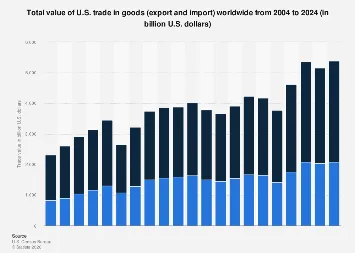
In 2024, the United States engaged in a robust global trade landscape, with the aggregate value of its trade in goods reaching an impressive approximately $5.4 trillion. This substantial figure underscores the indispensable role of international commerce in bolstering the U.S. economy. Within this colossal sum, the nation’s imports of goods from its international trading partners were valued at around $3.3 trillion. Conversely, the value of goods exported by the United States to other countries stood at approximately $2.1 trillion, revealing a significant trade deficit in goods.
The intricate web of international trade encompasses both the inflow and outflow of merchandise, each playing a distinct yet complementary role in the national economic machinery. Imports, by definition, refer to the goods brought into the United States from foreign shores. These are typically products that are grown, produced, or manufactured in other nations, serving a myriad of purposes from consumer goods to essential raw materials for domestic industries. Importantly, imports can also include goods of foreign origin that may have undergone some processing or value addition abroad before re-entering the U.S. market. Exports, on the other hand, represent the goods that the United States sells to the global marketplace. These are products that are cultivated, manufactured, or developed within the U.S. borders. The export category also extends to commodities of foreign origin that have been altered in the United States – either through further processing, manufacturing, or enhancement in value or condition – before being shipped to international buyers. This dynamic interplay of imports and exports shapes domestic supply chains, influences consumer prices, and drives economic growth through job creation and technological advancement.
Examining the principal conduits of this global exchange reveals a discernible pattern in the United States’ leading trade partners. In 2023, Mexico emerged as the preeminent source of goods imported into the United States, with the value of these imports approximating $475.6 billion. This substantial figure highlights the deeply integrated nature of the North American supply chains. Canada followed closely, ranking as the second-largest exporter of goods to the United States, further cementing the economic ties within the continent. On the export front, Canada also held a dominant position, serving as the leading destination for U.S. goods. In 2023, American trade goods valued at over $350 billion were exported to Canada, underscoring its importance as a key market for American products. Mexico also featured prominently on the list of importers of U.S. goods, demonstrating the robust two-way trade flows between these neighboring nations. China, despite geopolitical complexities and trade tensions, remains a significant player on both sides of the ledger, appearing high on the lists of both import sources and export destinations, reflecting its vast manufacturing capabilities and substantial consumer market.
The economic implications of these trade flows are far-reaching. A consistent trade deficit, as observed in the U.S. goods balance for 2024, can influence currency valuations, interest rates, and the national debt. While imports provide consumers with a wider variety of goods at potentially lower prices and supply businesses with necessary inputs, a persistent and widening deficit can raise concerns about domestic job creation, industrial competitiveness, and long-term economic stability. Conversely, robust exports drive demand for American-made products, foster innovation, and create employment opportunities across various sectors, from manufacturing and agriculture to technology and services. The composition of these trade flows also offers insights into the U.S. economy’s strengths and vulnerabilities. For instance, significant imports of manufactured goods might indicate a reliance on foreign production for certain categories, while high exports of technology or agricultural products would point to competitive advantages in those areas.
Global economic trends and geopolitical developments invariably cast a long shadow over a nation’s trade performance. Fluctuations in global demand, changes in commodity prices, trade policy shifts by major economies, and disruptions to global supply chains – such as those experienced during the COVID-19 pandemic – can all significantly impact import and export volumes and values. For the United States, its position as the world’s largest economy means its trade patterns are closely watched and have ripple effects across the globe. The ongoing evolution of trade agreements, the rise of protectionist sentiments in some regions, and the increasing focus on supply chain resilience are all factors that will continue to shape the contours of U.S. international trade in the years to come. The $5.4 trillion figure for 2024, therefore, represents not just a snapshot of economic activity but a dynamic indicator of the U.S. economy’s engagement with the intricate and ever-changing global marketplace. Understanding the nuances of these trade relationships, the specific goods exchanged, and the evolving partnerships is crucial for policymakers, businesses, and investors seeking to navigate the complexities of international commerce and its profound impact on economic prosperity. The consistent reliance on key North American partners for both imports and exports, coupled with the ongoing, albeit complex, trade relationship with China, paints a picture of a deeply interconnected global trading system where national economic fortunes are inextricably linked to the broader international landscape. The future trajectory of U.S. trade will undoubtedly be influenced by its ability to adapt to new technological paradigms, address evolving consumer demands, and strategically position itself within the dynamic geopolitical and economic environment.