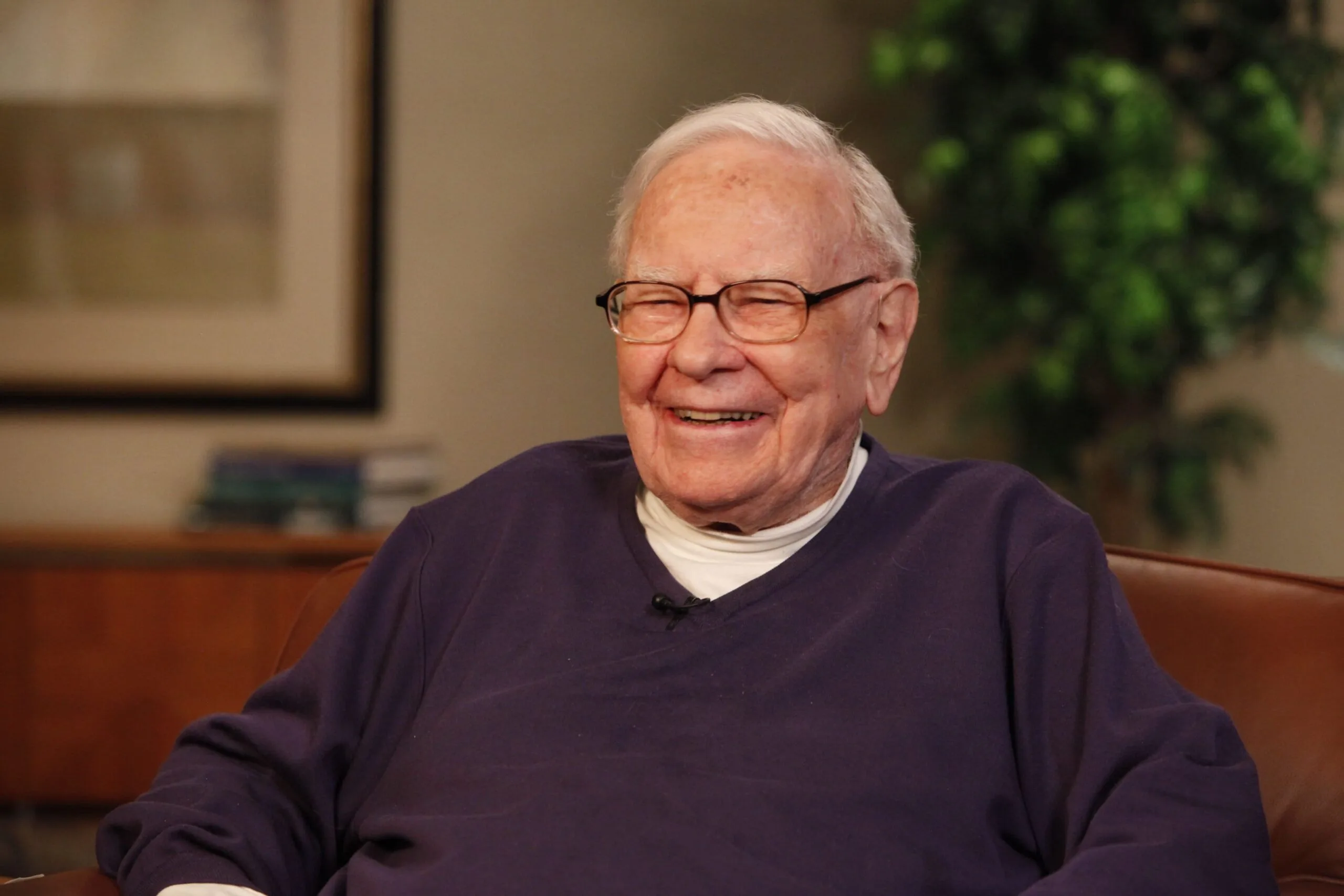
In the high-stakes theater of global finance, where algorithmic trading and artificial intelligence increasingly dictate the tempo of the markets, the most influential figure in modern investment history continues to rely on a remarkably analog routine. Warren Buffett, the 95-year-old chairman of Berkshire Hathaway, recently confirmed that despite his advancing age and the formalization of a succession plan, he remains the primary architect of the conglomerate’s capital allocation strategy. His daily presence at the firm’s Omaha headquarters serves as a bridge between the classic era of value investing and a modern economic landscape characterized by unprecedented liquidity and shifting geopolitical alliances.
The operational cadence at Berkshire Hathaway remains a study in disciplined simplicity. Buffett revealed that his mornings begin with a direct line of communication to Mark Millard, the company’s director of financial assets. From an office situated just twenty feet from Buffett’s own, Millard executes the trades that move the needle for one of the world’s largest corporate entities. This proximity is more than a logistical convenience; it represents the tight-knit, low-overhead management style that has become a hallmark of the Berkshire culture. While most firms of comparable size—Berkshire’s market capitalization fluctuates near the trillion-dollar mark—employ legions of analysts and committees to vet every move, Buffett’s process remains centralized and decisive.
This hands-on approach persists even as the firm prepares for its eventual transition to a new era of leadership. Greg Abel, currently the head of Berkshire’s non-insurance operations, is slated to take over as chief executive at the beginning of 2026. However, the current power dynamic is one of collaborative oversight rather than a clean break. Buffett noted that while he continues to initiate trades, he maintains a strict policy of transparency with his successor. Every investment decision is documented on a "daily sheet" provided to Abel, ensuring that the incoming CEO is never blindsided by the moves of the legendary founder. Buffett has emphasized that he would not proceed with an investment if Abel voiced a strong objection, signaling a profound level of trust and a desire for institutional continuity.
The scale of Berkshire’s current holdings is almost difficult to comprehend within the context of traditional corporate finance. As of the most recent year-end reporting, the firm held a staggering $370 billion in cash and cash equivalents. To put this into perspective, Berkshire’s cash hoard alone is larger than the total market capitalization of many of the world’s most prominent blue-chip companies, including Netflix or The Walt Disney Company. This mountain of liquidity has become a subject of intense speculation among market observers. For years, Buffett has been searching for an "elephant-sized" acquisition—a massive, transformative purchase that could significantly impact Berkshire’s earnings power. However, as equity valuations have remained stretched across much of the S&P 500, the "Oracle of Omaha" has largely opted to stay on the sidelines, waiting for a dislocation in the markets that offers a favorable margin of safety.
In the interim, Berkshire has become a dominant force in the short-term credit markets. Buffett disclosed that during a single weekly auction recently, the firm purchased $17 billion worth of U.S. Treasury bills. This strategy reflects a pragmatic response to the current interest rate environment. With the Federal Reserve maintaining higher-for-longer rates to combat stubborn inflationary pressures, the yield on short-term government debt has become an attractive alternative to overpriced equities. For a company with $370 billion in cash, even a 5% return on T-bills generates roughly $18.5 billion in annual pre-tax income—a figure that exceeds the total annual revenue of many Fortune 500 firms. By parking capital in the safest asset class in the world, Buffett is essentially getting paid to wait for a better opportunity.

Despite the massive scale of these Treasury operations, Buffett recently hinted at a more nuanced move in the equity markets, describing a "tiny" new purchase he made for the portfolio. In the lexicon of Berkshire Hathaway, "tiny" is a relative term; a position worth several hundred million dollars might be considered negligible given the firm’s total assets. While he declined to name the specific security, the mere mention of a new buy has sent ripples through the investment community. Analysts are scouring 13F filings for clues, looking for sectors that align with Buffett’s historical preferences: companies with strong brand moats, consistent cash flows, and shareholder-friendly management. Whether it is a niche energy firm, a specialized financial services provider, or a consumer staple with international growth potential, the mystery purchase suggests that Buffett still finds pockets of value even in a perceived "expensive" market.
Buffett’s perspective on market volatility remains one of his most significant contributions to economic thought. In an era where a 2% intraday drop in the Nasdaq can trigger a wave of panic selling, Buffett’s equanimity is jarring. He pointed out that since he took control of Berkshire in 1965, the company’s stock has experienced declines of more than 50% on at least three separate occasions. To him, the current market fluctuations are "nothing to get excited about." This long-term view is what allows Berkshire to act as a "lender of last resort" during financial crises. When the markets were in freefall in 2008, it was Buffett who stepped in with multi-billion dollar lifelines for Goldman Sachs and General Electric. His current massive cash position suggests he is preparing for a similar role should the global economy face another systemic shock.
The global economic implications of Berkshire’s strategy are profound. As a conglomerate that owns major railroads (BNSF), massive utilities (Berkshire Hathaway Energy), and the world’s leading insurance operations (GEICO), the company is often viewed as a proxy for the American economy. Buffett’s decision to stockpile cash rather than aggressively buy back shares or acquire new businesses could be interpreted as a cautious signal. If the most successful investor in history believes that the best use of $370 billion is lending it to the U.S. government at 5%, it suggests a lack of undervalued opportunities in the private sector. This serves as a sobering counter-narrative to the "soft landing" optimism that has dominated much of the recent financial discourse.
Furthermore, the relationship between Buffett and his deputies, Todd Combs and Ted Weschler, continues to evolve. While the two investment managers oversee a combined portfolio worth tens of billions, Buffett’s recent comments reaffirm that he is still the final arbiter of the firm’s largest bets. This centralized decision-making process is a double-edged sword. On one hand, it ensures that the "Buffett philosophy" is applied consistently across the firm’s massive capital base. On the other hand, it places an enormous amount of pressure on the transition period. The "tiny" purchase he mentioned may be a way of testing new waters or simply a result of his irrepressible curiosity about the markets, but it underscores a fundamental truth: Warren Buffett is not retired.
As the financial world looks toward 2026, the focus will increasingly shift toward Greg Abel’s ability to maintain this culture of disciplined patience. Abel will inherit a balance sheet that is essentially a fortress, but he will also inherit the challenge of deploying that capital in a way that generates market-beating returns. The current era of Berkshire Hathaway, defined by Buffett’s daily calls to Mark Millard and his massive T-bill auctions, is perhaps the final chapter of a legendary career. Yet, by staying active at 95, Buffett is doing more than just managing money; he is providing a masterclass in the psychological resilience required to navigate the complexities of global finance. His message to the world remains clear: the fundamentals of value do not change, regardless of how much noise the market generates. Whether he is buying $17 billion in Treasuries or making a "tiny" secret trade, the goal remains the same—to protect and grow capital with a focus on the decades to come, rather than the quarters behind.