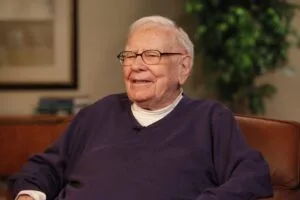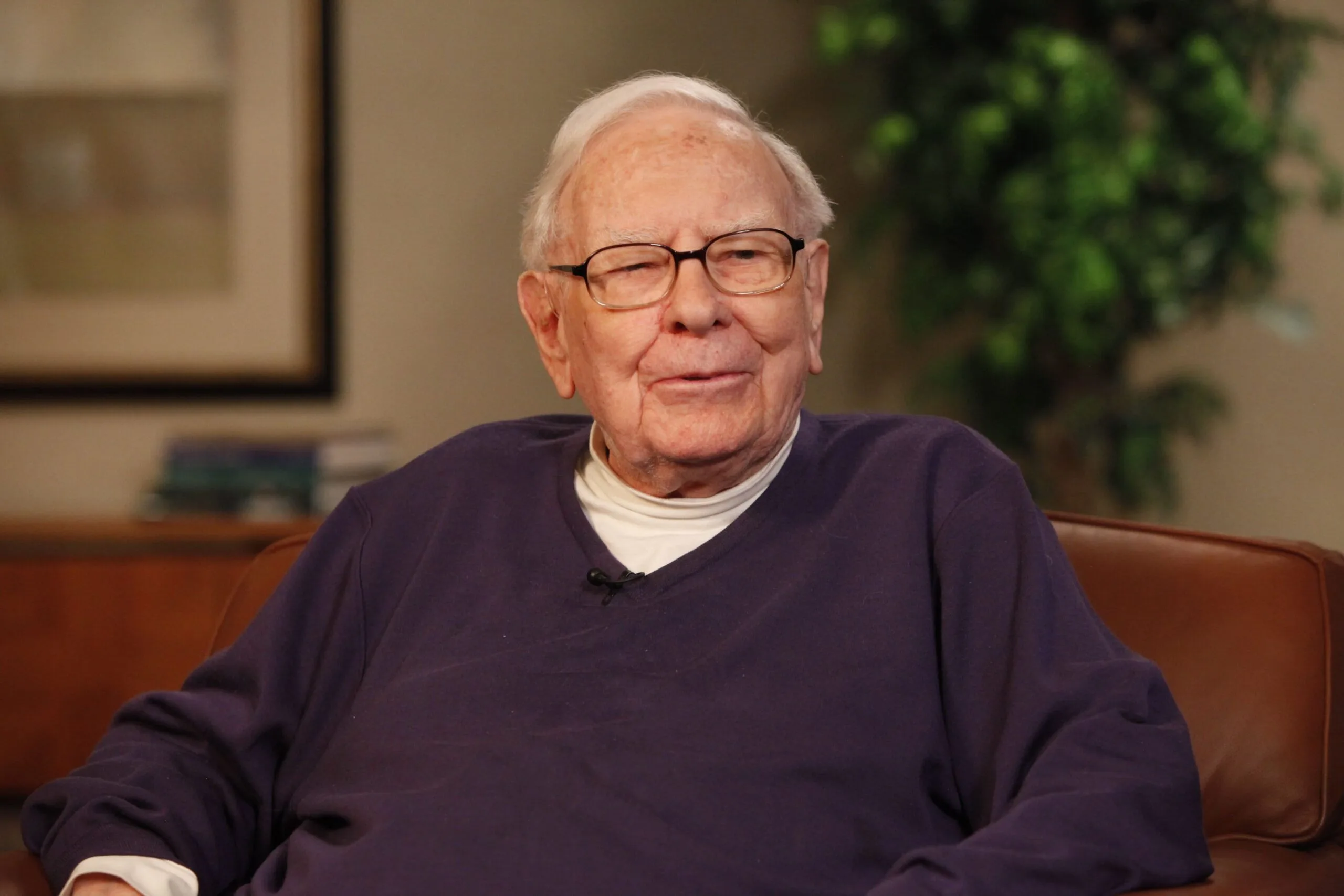
Warren Buffett, the legendary chairman of Berkshire Hathaway, recently admitted to a rare tactical misstep regarding his conglomerate’s massive stake in Apple, suggesting that he liquidated a portion of the position prematurely. While the Omaha-based investment giant remains the tech titan’s largest institutional shareholder, Buffett’s candid reflections provide a window into the disciplined, yet occasionally self-critical, methodology that governs one of the world’s most successful investment portfolios. Despite his admitted regret over the timing of recent sales, Buffett emphasized that he remains a steadfast believer in Apple’s long-term value proposition, though he is currently exercising patience before committing fresh capital to the stock in a volatile macroeconomic environment.
At the close of the most recent fiscal year, Berkshire Hathaway’s stake in Apple was valued at approximately $61.96 billion. While this figure represents a staggering sum, it reflects a calculated trimming of the position. Buffett’s admission that he "sold it too soon" underscores the perennial challenge facing even the most seasoned value investors: balancing the realization of historic gains with the enduring potential of a compounding "moat." Buffett noted that while he may have exited a portion of the holding earlier than ideal, his initial entry into the stock was timed with even greater precision, ensuring that the overall trade remains one of the most profitable in Berkshire’s storied history. The conglomerate has reportedly generated more than $100 billion in pre-tax profits from its Apple investment, a testament to the scale of the success.
The decision to trim the stake was driven less by a loss of faith in Apple’s fundamentals and more by a desire for portfolio diversification. Buffett remarked that while he is satisfied with Apple occupying the top spot in Berkshire’s equity portfolio, he grew uncomfortable with the position’s size when it began to rival the aggregate value of almost all other holdings combined. This risk-management perspective highlights the tension between "conviction investing"—where a manager lets their winners run—and the fiduciary duty to mitigate concentrated risk. For Berkshire, a firm that prides itself on stability and a fortress-like balance sheet, the sheer gravity of Apple’s market capitalization occasionally necessitates a rebalancing, even if the underlying business remains the "crown jewel" of the portfolio.
Buffett’s current stance on Apple is one of "watchful waiting." Despite the stock experiencing a significant pullback—falling more than 14% from its recent peak and sliding 6% within a single month—the Oracle of Omaha does not yet view the valuation as sufficiently attractive to trigger a massive buy order. This caution comes amid a broader market correction that has seen both the Dow Jones Industrial Average and the Nasdaq Composite enter territory that suggests investor unease. For Buffett, a "correction" is not merely a percentage drop but a recalibration of price versus intrinsic value. He indicated that while it is entirely possible for Apple to reach a price point where Berkshire would "buy a lot of it," the current market conditions do not yet offer the necessary margin of safety he requires for a major capital deployment.
The investment thesis for Apple has shifted significantly since Berkshire first began accumulating shares. Originally viewed by many on Wall Street as a hardware company subject to the boom-and-bust cycles of consumer electronics, Apple has, under the leadership of Tim Cook, evolved into a indispensable consumer utility. Buffett’s praise for Cook was particularly effusive, marking a distinction between the visionary, disruptive era of Steve Jobs and the operational, ecosystem-driven mastery of his successor. Buffett noted that while Cook may not have been able to "do what Steve Jobs did" in terms of original invention, he has managed the "hand" he was dealt with unparalleled skill.

Buffett specifically lauded Cook’s diplomatic prowess and managerial tact, noting that Cook possesses a unique ability to navigate complex global relationships—a skill Buffett admitted neither he nor his longtime partner, the late Charlie Munger, naturally possessed. This "technique" has been vital as Apple navigates a bifurcated global economy, managing intricate supply chains in China while facing intensifying antitrust scrutiny in the United States and Europe. From a value investor’s perspective, Cook’s ability to maintain brand loyalty while expanding the services high-margin revenue stream has turned the iPhone from a gadget into a "toll bridge" business—a type of enterprise Buffett has historically coveted.
The broader economic implications of Berkshire’s strategy are significant. As a bellwether for institutional sentiment, Buffett’s reluctance to buy into the current dip suggests a belief that equity valuations may still be stretched relative to the interest rate environment and inflationary pressures. With Berkshire sitting on a substantial cash pile, the decision to wait for a more favorable entry point into Apple signals a broader skepticism of the "buy the dip" mentality that has characterized much of the post-pandemic trading era. Instead, Buffett appears to be prioritizing capital preservation and waiting for a "fat pitch," even in a company he admires as much as Apple.
From a global market perspective, Apple remains a critical barometer for consumer health. As the company faces headwinds—including a cooling smartphone market in certain regions and regulatory challenges regarding its App Store ecosystem—investors are closely watching how it maintains its premium pricing power. Buffett’s long-term confidence suggests he views these challenges as transitory rather than structural. He has often compared the iPhone to other consumer staples, suggesting that most users would sooner give up their second car than their smartphone, illustrating the "stickiness" that justifies a premium valuation in his eyes.
The timing of these comments coincides with a period of transition for Berkshire Hathaway. Following Buffett’s move to step down as CEO at the beginning of 2026, while retaining his role as chairman, the market has been keen to observe how the firm’s investment philosophy might evolve. However, the strategy regarding Apple remains quintessential Buffett: a focus on management quality, brand dominance, and price discipline. The transition in leadership at Berkshire has not altered the fundamental requirement for a "margin of safety," a principle that seems to be the primary hurdle preventing Berkshire from aggressively adding to its Apple stake at current market levels.
The relationship between Berkshire and Apple also serves as a case study in the evolution of value investing. Traditionally, value investors avoided the technology sector due to its rapid rate of obsolescence and high capital expenditures. However, Apple’s ability to generate massive free cash flow and return capital to shareholders through aggressive buybacks and dividends aligned perfectly with Berkshire’s preference for "cannibal" companies—those that use their earnings to shrink their share count and increase the ownership stake of remaining shareholders. Buffett has often remarked that he loves Apple’s buyback program because it increases Berkshire’s percentage of the company without Berkshire having to spend a single dime.
Ultimately, Buffett’s admission of selling "too soon" is a reminder of the psychological complexities of the market. Even the world’s most successful investor grapples with the timing of exits. Yet, his willingness to wait for a better price before re-entering underscores a level of discipline that few can replicate. As the global economy navigates a period of uncertainty, characterized by shifting monetary policies and geopolitical tensions, the "Omaha approach" remains anchored in the belief that the best time to buy a wonderful company is when the market provides a price that accounts for the unexpected. For now, Apple remains the cornerstone of the Berkshire empire, a testament to a decade of growth, but Buffett’s finger remains off the "buy" button until the price matches his uncompromising standards for value.