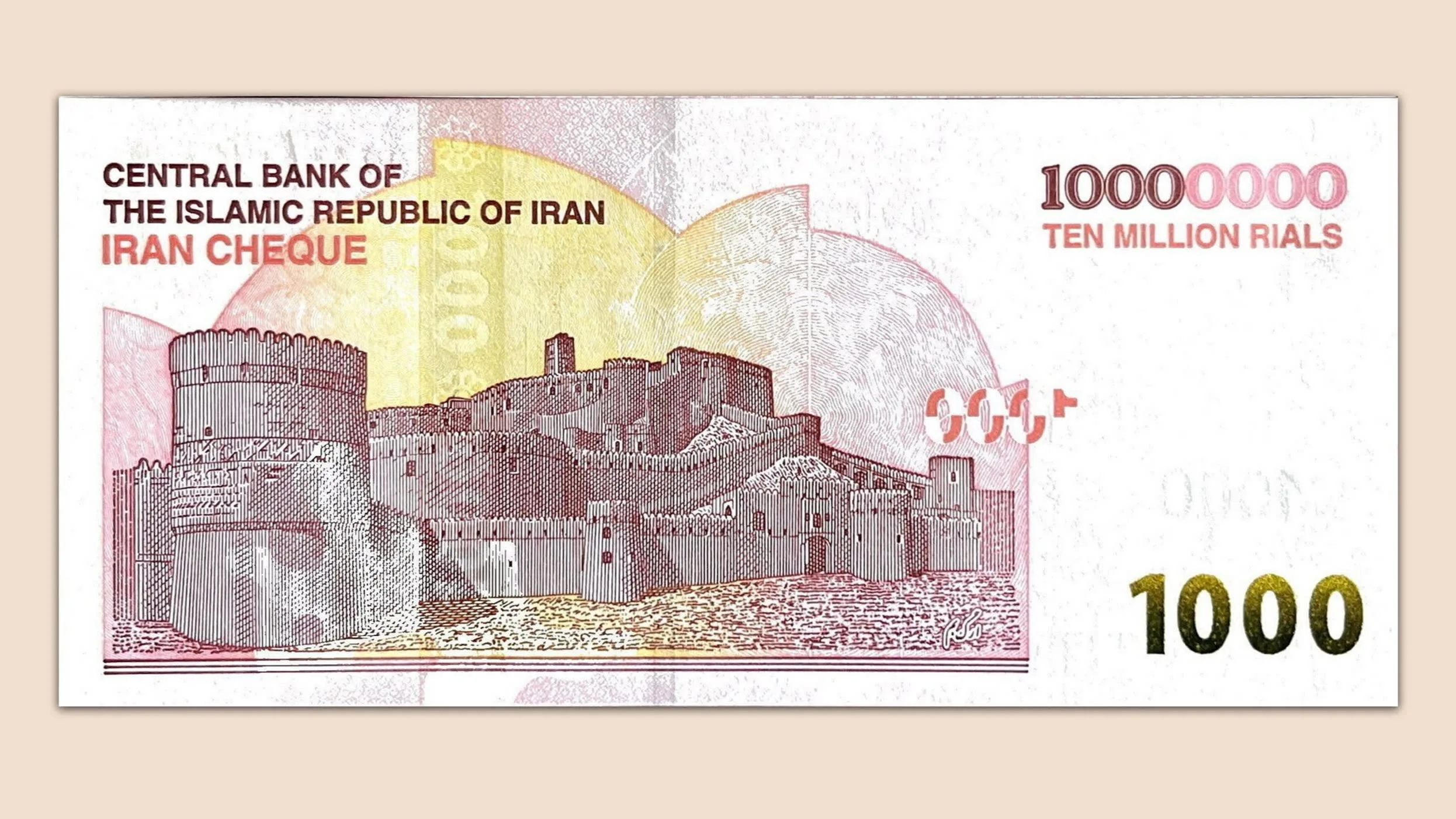
The Central Bank of Iran has officially introduced a new 10 million rial banknote into circulation, a move that underscores the deepening economic malaise and the precipitous devaluation of the national currency. While ostensibly designed to simplify transactions in an economy where consumers must often carry thick stacks of cash for basic purchases, the issuance of such a high-denomination note serves as a stark barometer of the hyperinflationary pressures gripping the Islamic Republic. This monetary shift comes at a critical juncture, as escalating geopolitical tensions and the looming threat of expanded regional conflict trigger a "dash for cash" among a populace increasingly wary of the banking system’s stability.
For decades, the Iranian rial has been on a downward trajectory, battered by a combination of systemic mismanagement, chronic corruption, and a relentless regime of international sanctions. However, the current acceleration of the currency’s collapse is inextricably linked to the heightened state of military readiness across the Middle East. As exchange of fire between Iran and regional adversaries moves from the shadows into direct confrontation, the Iranian public has responded with a predictable, yet frantic, flight toward liquidity. Families are reportedly withdrawing large sums from their accounts, seeking to convert rials into hard assets—primarily US dollars, gold coins, or physical cash—to prepare for the possibility of a disrupted infrastructure or a full-scale domestic emergency.
The technical introduction of the 10 million rial note (technically issued as a "Central Bank Cheque" to bypass certain legislative hurdles regarding currency printing) reflects the logistical nightmare of a "zero-heavy" economy. At current open-market exchange rates, where the rial has frequently hovered around 600,000 to 700,000 per US dollar, the new 10 million rial note is worth approximately $15 to $17. The fact that the nation’s highest-denomination note carries such a low global purchasing power illustrates the sheer scale of the monetary debasement. In Tehran’s bustling markets, a simple grocery run can now cost several million rials, making lower-denomination notes virtually obsolete and creating significant overhead for businesses tasked with counting and transporting physical currency.
Economic historians often point to the issuance of increasingly large banknotes as a harbinger of structural collapse. Similar patterns were observed in the Weimar Republic in the 1920s, Zimbabwe in the mid-2000s, and more recently in Venezuela. While Iran has not yet reached the astronomical inflation levels of those historical outliers, its "creeping hyperinflation"—consistently remaining above 40% for several consecutive years—has hollowed out the middle class. The introduction of the 10 million rial note is a psychological blow to a public that has already seen their life savings evaporated by the Rial’s 90% loss in value over the last decade.
The "dash for cash" is not merely a reaction to inflation, but a strategic move by citizens to hedge against institutional failure. In a war scenario, digital payment systems, which Iran has spent years modernizing, become vulnerable to cyberattacks or power grid failures. By holding physical high-denomination notes, Iranians hope to maintain some semblance of purchasing power if the country’s sophisticated, yet fragile, electronic banking network goes offline. This surge in demand for physical banknotes has put immense pressure on the Central Bank of Iran (CBI), forcing it to increase the money supply at a time when traditional economic theory would suggest a tightening of liquidity to combat inflation.
Furthermore, the geopolitical landscape acts as a primary driver of market volatility. Each time a diplomatic back-channel fails or a missile battery is moved into position, the rial takes a fresh hit on the "Bonbast" and other unofficial exchange platforms. The Iranian government’s "Maximum Pressure" resistance strategy has relied on diversifying trade and utilizing crypto-assets to bypass the SWIFT banking system, but these measures provide little relief to the average citizen facing the rising cost of imported medicine, electronics, and staple foods. The 10 million rial note is, in many ways, an admission that the government cannot stabilize the currency’s value and must instead accommodate its decline.
The internal impact of this monetary policy is profoundly regressive. While the wealthy can hedge their wealth in real estate or foreign offshore accounts, the working class is tethered to the rial. For a laborer earning a monthly wage that might now be represented by just a handful of these new 10 million rial notes, the cost of living has become an insurmountable barrier. The price of red meat, for instance, has surged beyond the reach of many households, leading to a significant shift in dietary habits and growing domestic discontent. This economic frustration has historically been a catalyst for civil unrest, a reality that the security apparatus in Tehran views with increasing concern.
From an international perspective, the devaluation of the rial complicates Iran’s broader economic ambitions. The country remains on the "Blacklist" of the Financial Action Task Force (FATF), the global watchdog for money laundering and terrorist financing. This status, combined with US-led sanctions, ensures that Iran remains largely isolated from the global financial architecture. The introduction of higher-denomination notes does nothing to address these underlying structural issues; it merely provides a more efficient way for the domestic economy to function within its own silo. Investors from neighboring regional powers, who might otherwise be tempted by Iran’s vast energy reserves and youthful demographic, are deterred by the extreme exchange-rate risk and the lack of a transparent monetary policy.
Market analysts suggest that the CBI’s move may also be a precursor to a long-discussed "redenomination" project. For years, the Iranian parliament has toyed with the idea of officially switching the national currency from the rial to the "toman," which would effectively slash four zeros from all denominations. Under this plan, 10,000 rials would become 1 toman. The new 10 million rial note already features the number "1000" prominently with the last four zeros dimmed or colored differently, signaling a transition toward a 1,000-toman designation. However, economists warn that redenomination is a cosmetic fix that fails unless accompanied by rigorous fiscal discipline and an end to the deficit spending that fuels the printing presses.
The role of the "shadow economy" cannot be ignored in this context. As the formal banking sector struggles, a massive parallel market for currency and goods has flourished. The 10 million rial note will likely become the preferred medium of exchange for these informal transactions, further distancing the country’s economic reality from official government statistics. The dash for cash is also fueled by a lack of trust in the CBI’s reported foreign exchange reserves. While officials claim to have billions in accessible funds held in various Asian and European banks, the volatility of the rial suggests that the market believes the "usable" portion of those reserves is far lower.
As the region teeters on the edge of broader conflict, the 10 million rial note stands as a symbol of an economy on a war footing. It is a tool of convenience for a population that has learned to survive in a state of permanent crisis, but it is also a testament to the erosion of national wealth. For the global observer, the "dash for cash" in Tehran is a leading indicator of how geopolitical instability can rapidly translate into monetary chaos. Whether the Iranian government can manage this transition without triggering a total collapse of the currency remains the central question for the country’s economic future. In the immediate term, the printing presses continue to run, and the stacks of paper required to sustain daily life in Iran continue to grow larger, even as their individual value shrinks toward insignificance.