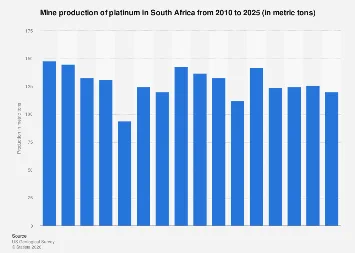
South Africa, a cornerstone of the global platinum supply chain, is poised to maintain its significant role in the platinum mining sector through 2025, although precise production figures remain a closely guarded proprietary metric. While specific, granular data for future output often resides within premium market intelligence platforms, industry analyses and broader market trends provide a clear indication of the nation’s continued importance. The country’s vast mineral reserves, particularly within the Bushveld Igneous Complex, represent one of the most substantial deposits of platinum group metals (PGMs) globally, underpinning its consistent contribution to international markets.
The platinum industry is inherently cyclical, influenced by a complex interplay of global economic conditions, automotive sector demand, jewelry consumption, industrial applications, and investment flows. For South Africa, this translates into a strategic imperative to optimize production efficiency, manage operational costs, and adapt to evolving market preferences. The year 2025 is anticipated to be a period of continued, albeit potentially measured, output. Factors such as the pace of new mine development, the sustainability of existing operations, and the impact of regulatory environments will all play a crucial role in shaping the final production numbers.
Global platinum production is dominated by a few key regions, with South Africa consistently leading the pack, followed by Russia, Zimbabwe, and Canada. South Africa’s share of global platinum mine production has historically hovered around the 70-80% mark, a testament to the sheer scale of its resource endowment. However, this dominance also makes the global market particularly sensitive to any disruptions or shifts in South African production. For instance, labor disputes, energy supply challenges, or changes in government policy in South Africa can have ripple effects across international markets, influencing platinum prices and the supply availability for downstream industries.
The automotive sector remains the primary driver of platinum demand, primarily due to its catalytic properties in reducing harmful emissions from internal combustion engines. As global regulations on vehicle emissions become increasingly stringent, the demand for platinum in catalytic converters has remained robust, despite the accelerating transition towards electric vehicles. While the long-term outlook for internal combustion engines may present a challenge, the immediate to medium-term demand for platinum in hybrid vehicles and existing gasoline and diesel fleets continues to support production levels. Projections for 2025 suggest that while the transition to EVs will undoubtedly gain momentum, platinum’s role in emission control technologies will still be significant.
Beyond automotive applications, platinum finds critical uses in jewelry, where its purity and luster are highly valued, and in various industrial processes, including chemical manufacturing, petroleum refining, and the production of glass and electronics. Investment demand also plays a role, with platinum ETFs and physical bullion acting as a store of value and a hedge against inflation for some investors. The diversification of demand across these sectors provides a degree of resilience to the platinum market, mitigating the impact of any single sector’s fluctuations.
For South Africa, the economic implications of its platinum production are profound. The sector is a significant contributor to the nation’s Gross Domestic Product (GDP), export earnings, and employment. The mining industry, particularly PGMs, supports a vast ecosystem of jobs, from highly skilled engineers and geologists to operational staff and those in ancillary services. Therefore, any sustained decline or significant disruption in platinum production would have a tangible negative impact on the South African economy. Conversely, stable or increasing production contributes to foreign exchange reserves and fosters economic stability.
Looking ahead to 2025, several factors will influence South Africa’s platinum output. Technological advancements in mining, such as automation and improved extraction techniques, could lead to increased efficiency and potentially higher yields. However, these investments require significant capital expenditure, which can be influenced by the broader economic climate and investor confidence. Furthermore, the sustainability of mining operations, including environmental stewardship and social responsibility, are increasingly critical considerations for both local communities and international stakeholders, potentially impacting operational licenses and long-term viability.
The global competitive landscape also warrants attention. While South Africa holds a dominant position, other PGM-producing nations are working to maximize their output. Shifts in production costs, geological discoveries, and geopolitical stability in these competing regions can subtly alter the global supply-demand balance, indirectly affecting South Africa’s market standing and pricing power. The ongoing development of new PGM resources in regions like Zimbabwe and the potential for increased production from established players like Russia will continue to shape the global PGM market.
Moreover, the price of platinum itself is a crucial determinant of production decisions. Fluctuations in platinum prices, driven by market sentiment, speculative trading, and the aforementioned demand-supply dynamics, directly impact the profitability of mining operations. When prices are high, marginal mines can become viable, and investment in exploration and development is encouraged. Conversely, sustained low prices can lead to the closure of less efficient operations, a reduction in capital expenditure, and a contraction in overall production. Analysts closely monitor price trends as a leading indicator of future production levels.
In conclusion, while precise, publicly available production figures for South Africa’s platinum output in 2025 are not readily accessible, the nation’s foundational role in the global platinum market is expected to endure. The country’s immense PGM reserves, coupled with ongoing efforts to enhance operational efficiency and navigate evolving market demands, position it to remain a critical supplier. The interplay of global economic forces, automotive sector evolution, industrial applications, and investment trends will collectively shape the trajectory of South Africa’s platinum production in the coming years, underscoring its continued significance in the international commodities landscape.