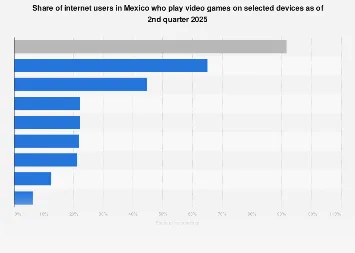
As the digital realm continues its inexorable expansion, Mexico stands as a pivotal market in the global gaming industry, with a significant portion of its internet-connected population actively engaging with video games. Projections for mid-2025 indicate that a substantial percentage of Mexican internet users will be immersed in the world of digital entertainment, transforming how they interact with their devices and consume content. This growing penetration underscores a dynamic shift in leisure activities, with gaming solidifying its position as a mainstream pastime.
The primary driver behind this widespread adoption is the ubiquitous nature of the smartphone. Data points to smartphones as the undisputed king of gaming devices in Mexico. For the vast majority of Mexican gamers, their mobile phones serve as their primary gateway into virtual worlds. This dominance is not merely a trend but a reflection of accessibility, affordability, and the sheer convenience offered by these pocket-sized powerhouses. With a continuously improving mobile internet infrastructure across the country, including advancements in 4G and the nascent rollout of 5G, the performance and capabilities of smartphones have evolved to support increasingly sophisticated gaming experiences. This allows for a diverse range of titles, from casual puzzle games to more demanding multiplayer online battle arenas (MOBAs) and battle royales, all playable on the go.
While smartphones command the largest share, the gaming ecosystem in Mexico is multi-faceted, encompassing a variety of hardware. Personal computers, both desktops and laptops, continue to hold a significant, albeit secondary, position. These platforms cater to a segment of the market that prioritizes graphical fidelity, competitive play, and more complex gaming genres. The increasing availability of affordable gaming PCs and laptops, coupled with the proliferation of digital distribution platforms like Steam, Epic Games Store, and others, fuels this segment’s growth. Moreover, the rise of esports in Mexico has further bolstered PC gaming, as professional and aspiring players rely on these machines for training and competition.
The console gaming segment also plays a crucial role in Mexico’s gaming landscape. Home consoles, such as those from Sony (PlayStation) and Microsoft (Xbox), offer dedicated gaming experiences that often emphasize immersive single-player narratives and high-quality graphics. Despite the higher initial investment compared to smartphones, consoles attract a dedicated fanbase who value exclusive titles and the social aspect of local multiplayer. The presence of these consoles in Mexican households signifies a commitment to premium gaming experiences. The lifecycle of current console generations, coupled with the anticipation of future hardware releases, suggests a sustained interest in this sector.
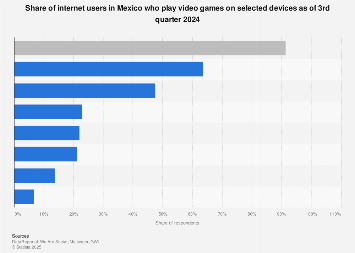
In contrast to the widespread adoption of traditional gaming devices, virtual reality (VR) headsets represent the frontier of immersive gaming in Mexico, currently holding the smallest market share among internet users who play games. While VR technology offers unparalleled levels of immersion, its adoption is hampered by several factors. The relatively high cost of VR hardware, including the headsets themselves and often the powerful PCs required to run them, creates a significant barrier to entry for the average consumer. Furthermore, the current library of VR-exclusive content, while growing, is still more limited compared to PC or console gaming. However, the potential for VR is undeniable. As the technology matures, becomes more affordable, and game developers continue to innovate, VR is poised to capture a larger segment of the Mexican gaming market in the coming years. Early adopters and tech enthusiasts are paving the way, and as costs decrease and the content ecosystem expands, a wider audience is expected to embrace this cutting-edge form of interactive entertainment.
The economic implications of Mexico’s gaming market are substantial. The video game industry is a multi-billion dollar global enterprise, and Mexico is a significant contributor to this figure. The revenue generated from game sales, in-game purchases (microtransactions), subscriptions, hardware sales, and associated advertising campaigns creates a robust economic ecosystem. This not only benefits global game developers and publishers but also fosters local employment opportunities in areas such as game development, testing, localization, marketing, and customer support. Furthermore, the growth of streaming platforms and content creators focused on gaming adds another layer to the economic impact, creating new avenues for monetization and influencing consumer purchasing decisions.
Globally, Mexico’s gaming market is often compared to other Latin American powerhouses like Brazil, and its trajectory mirrors broader trends observed in emerging markets. The increasing digitalization, rising disposable incomes among certain demographics, and a youthful population with a high affinity for technology all contribute to the burgeoning gaming scene. As internet penetration continues to rise across Latin America, the potential for further market expansion remains immense. Mexico, with its large population and growing digital infrastructure, is well-positioned to capitalize on these regional trends.
The survey data for mid-2025 provides a snapshot of a dynamic and evolving market. It highlights the critical role of mobile technology in democratizing access to gaming, while also acknowledging the enduring appeal of PC and console platforms for different segments of the gaming community. The nascent but promising growth of VR technology suggests a future where gaming experiences will become even more diverse and immersive. As Mexico continues its digital transformation, its gaming landscape is set to become an even more significant force in both the entertainment and economic spheres, offering a compelling case study in the power of technology to reshape leisure and commerce. The continued investment in digital infrastructure and the growing acceptance of gaming as a primary form of entertainment will undoubtedly drive further innovation and market expansion in the years to come, solidifying Mexico’s position as a key player in the global gaming arena.