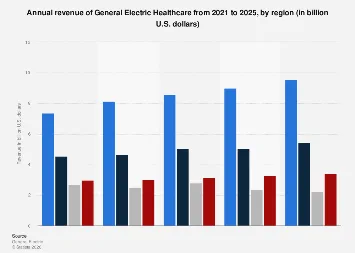
The global healthcare industry, a sector characterized by relentless innovation and demographic shifts, is bracing for a dynamic year in 2025, with GE HealthCare, a titan in medical technology and digital solutions, expected to see significant revenue streams across its key operational regions. While precise, granular figures often remain proprietary until official disclosures, market projections and industry analyses point towards a complex tapestry of regional performance, influenced by factors ranging from economic development and healthcare infrastructure investment to regulatory environments and the adoption of advanced medical technologies. Understanding these regional dynamics is crucial for investors, policymakers, and industry participants seeking to navigate the future of healthcare delivery and medical device markets.
GE HealthCare’s diversified portfolio, encompassing imaging, ultrasound, patient care solutions, and pharmaceutical diagnostics, positions it to capitalize on varying market demands. The company’s strategic focus on areas like precision health, AI-driven diagnostics, and at-home care solutions is likely to be a key determinant of its revenue generation capacity in the coming year. As healthcare systems worldwide grapple with aging populations, the increasing prevalence of chronic diseases, and the imperative to enhance operational efficiency, GE HealthCare’s offerings are strategically aligned to address these pressing challenges. The company’s ability to deliver integrated solutions that improve patient outcomes while managing costs will be paramount to its success.
In North America, GE HealthCare’s established presence and sophisticated healthcare ecosystem provide a strong foundation for continued revenue growth. The United States, in particular, represents a mature market with high adoption rates for advanced medical technologies and a significant investment in healthcare research and development. The ongoing transition towards value-based care, coupled with an increasing demand for diagnostic imaging and personalized treatment pathways, presents substantial opportunities. Furthermore, the U.S. market’s robust reimbursement frameworks for medical devices and services, although subject to policy shifts, generally support innovation and the deployment of cutting-edge solutions. However, competitive pressures and the ongoing consolidation within the provider landscape will necessitate continuous strategic adaptation and a keen focus on delivering demonstrable clinical and economic value. The market here is also highly sensitive to technological advancements, with a swift uptake of AI-enabled diagnostics and minimally invasive surgical tools.
The European market, a mosaic of diverse economic conditions and healthcare systems, offers a mixed but generally promising outlook for GE HealthCare. Countries with strong public healthcare funding and a commitment to modernizing their medical infrastructure, such as Germany and the United Kingdom, are expected to remain significant revenue drivers. The increasing emphasis on preventative care, chronic disease management, and the digitalization of healthcare records across the European Union presents fertile ground for GE HealthCare’s integrated solutions. However, the region’s fragmented regulatory landscape and the varying pace of technological adoption across member states require a nuanced market entry and operational strategy. Emerging economies within Europe, while smaller in absolute terms, may offer higher growth potential as they invest in upgrading their healthcare facilities and expanding access to advanced medical services. The push towards greater interoperability of health data and the implementation of digital health strategies across the EU are key trends that GE HealthCare is well-positioned to leverage.
Asia-Pacific, a region characterized by its sheer scale and rapid economic development, stands out as a critical growth engine for GE HealthCare in 2025. China, with its vast population and burgeoning middle class, continues to be a primary focus, driven by government initiatives to improve healthcare access and quality. The country’s increasing expenditure on medical infrastructure, coupled with a growing demand for advanced diagnostic imaging and treatment technologies, creates a substantial market opportunity. India, another populous nation, is witnessing a similar trajectory, with significant investments in its healthcare sector aimed at expanding access to quality medical care, particularly in semi-urban and rural areas. Southeast Asian nations are also showing robust growth, fueled by rising disposable incomes and a greater awareness of health and wellness. GE HealthCare’s ability to tailor its product offerings to meet the specific needs and affordability constraints of these diverse markets will be crucial for unlocking their full revenue potential. The region’s rapid digital transformation also presents opportunities for remote diagnostics and telehealth solutions.
Latin America, while facing economic headwinds in some of its key economies, presents pockets of significant growth potential for GE HealthCare. Brazil, the region’s largest economy, continues to be a substantial market, with ongoing investments in public and private healthcare infrastructure. Mexico and other emerging economies are also demonstrating a growing demand for advanced medical equipment and diagnostic tools as their healthcare systems mature. The company’s focus on delivering cost-effective solutions and building strong local partnerships will be essential for navigating the economic volatilities and diverse regulatory environments within this region. Furthermore, the increasing adoption of telemedicine and digital health solutions across Latin America, accelerated by recent global events, offers new avenues for revenue generation and patient engagement.
The Middle East and Africa (MEA) region, though diverse, represents a significant long-term growth opportunity. The Gulf Cooperation Council (GCC) countries, with their substantial oil wealth and commitment to developing world-class healthcare systems, are investing heavily in advanced medical technologies and facilities. This translates into a strong demand for sophisticated diagnostic imaging, patient monitoring systems, and specialized medical equipment. In Africa, while facing greater challenges related to infrastructure and affordability, there is a clear and growing need for accessible and effective healthcare solutions. GE HealthCare’s initiatives to expand its reach into underserved markets and provide essential medical technologies are likely to yield increasing revenue streams as healthcare access improves across the continent. The focus on building local manufacturing capabilities and training healthcare professionals within the MEA region could also contribute to sustained market penetration.
The competitive landscape for GE HealthCare remains intense, with established players and emerging innovators vying for market share across all regions. Companies like Siemens Healthineers, Philips, and numerous specialized medical device manufacturers are all actively pursuing similar growth strategies. Success in 2025 will hinge not only on product innovation but also on the ability to forge strategic alliances, optimize supply chains, and provide comprehensive after-sales support and service. The increasing role of digital platforms, artificial intelligence, and data analytics in healthcare delivery means that GE HealthCare’s ability to offer integrated, software-driven solutions will be a significant differentiator. The company’s investment in AI for diagnostics, for example, has the potential to revolutionize how diseases are detected and treated, offering substantial value to healthcare providers and patients alike.
Economic factors such as inflation, currency fluctuations, and geopolitical stability will also play a critical role in shaping regional revenue performance. Global supply chain disruptions, while potentially easing, could still impact the cost and availability of components, influencing pricing strategies and profit margins. Furthermore, shifts in government healthcare spending priorities, driven by economic conditions or public health emergencies, can rapidly alter market dynamics. GE HealthCare’s diversified regional presence provides a degree of resilience against localized economic downturns, allowing it to balance performance across different markets. The company’s ongoing efforts to streamline its operations and enhance its manufacturing efficiency are crucial for maintaining competitiveness in this dynamic global environment.
Ultimately, GE HealthCare’s revenue performance in 2025 will be a testament to its strategic agility, its capacity for innovation, and its understanding of the unique healthcare needs and economic realities of each region it serves. The company’s commitment to advancing healthcare technologies, coupled with its global reach, positions it to continue playing a pivotal role in shaping the future of medical diagnosis and treatment worldwide. The ongoing digitalization of healthcare, the pursuit of personalized medicine, and the increasing focus on patient outcomes will continue to drive demand for GE HealthCare’s comprehensive suite of products and services.