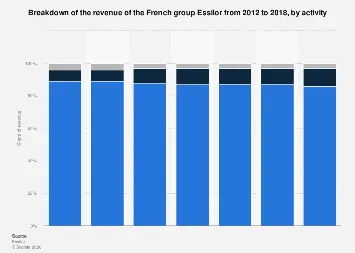
The global optical industry, a complex ecosystem driven by an aging population, increasing awareness of eye health, and continuous technological advancements, has witnessed significant evolution in its revenue streams. Among the key players shaping this landscape is Essilor, a world leader in ophthalmic optics. Analyzing Essilor’s revenue share by sector between 2012 and 2018 offers a compelling glimpse into the strategic shifts and market forces that influenced its performance and the broader industry trajectory. This period was marked by a robust demand for corrective lenses, a burgeoning market for sunglasses and prescription eyewear, and a growing emphasis on digital and high-tech solutions within the vision care segment.
During the 2012-2018 timeframe, Essilor’s operational performance was largely defined by the interplay of its core business segments. The ophthalmic lens division, encompassing single vision, multifocal, and specialty lenses, consistently represented the bedrock of the company’s revenue. This segment benefited from the persistent need for vision correction across demographics. As global populations aged, the prevalence of presbyopia and other age-related vision impairments naturally fueled demand for sophisticated multifocal lenses, including progressive lenses, which Essilor has long been a pioneer in developing. Furthermore, advancements in lens materials, coatings (such as anti-reflective, scratch-resistant, and UV-blocking), and digital surfacing technologies allowed for the creation of more personalized and high-performance products, commanding premium pricing and contributing significantly to revenue growth.
Complementing the ophthalmic lens business was the significant contribution from the eyewear segment, which included both prescription frames and sunglasses. The prescription eyewear market is intrinsically linked to the ophthalmic lens market, as frames house the lenses. Trends in fashion, celebrity endorsements, and the growing acceptance of eyeglasses as a style accessory played a crucial role in driving sales within this segment. Essilor, through its extensive portfolio of owned brands and licensed partnerships with fashion houses, was well-positioned to capitalize on these trends. The sunglasses market, in particular, saw robust growth, driven by increasing disposable incomes in emerging economies, a heightened awareness of the importance of UV protection, and the perception of sunglasses as a fashion statement. The company’s strategic acquisitions and organic brand development in this space were instrumental in capturing a larger share of this expanding market.
Beyond these primary pillars, Essilor also derived revenue from other related activities, which, while perhaps smaller in absolute terms, represented areas of strategic importance and future growth potential. This could include the distribution of medical devices related to eye care, optical retail operations, and the development of digital solutions and services for eye care professionals. The increasing digitalization of the healthcare sector and the growing demand for integrated vision care solutions presented opportunities for Essilor to diversify its revenue streams and strengthen its ecosystem. This might have involved investing in diagnostic equipment, patient management software, or online platforms connecting consumers with eye care providers and eyewear retailers.
Examining the revenue share evolution over this six-year period reveals nuanced shifts. While ophthalmic lenses likely maintained their dominant position, the growth rates across different segments may have varied. For instance, the sunglasses and prescription eyewear segment might have experienced a faster growth trajectory, fueled by emerging market expansion and fashion-driven demand, potentially leading to a slight increase in its revenue share relative to the more mature ophthalmic lens market. Conversely, the growth in other related activities, though perhaps starting from a smaller base, could have indicated a strategic pivot towards higher-margin, technology-driven services and products.
The period between 2012 and 2018 was not without its economic context. Global economic recovery following the 2008 financial crisis influenced consumer spending patterns. In developed markets, a steady demand for corrective eyewear persisted, driven by an aging demographic and the increasing adoption of digital devices, which can contribute to eye strain and the need for specialized lenses. In emerging markets, rising disposable incomes and greater access to healthcare services led to a surge in demand for both basic vision correction and more advanced eyewear solutions. Essilor’s global footprint and diversified product portfolio allowed it to strategically leverage these regional economic dynamics.
Furthermore, competitive pressures within the optical industry intensified during this period. The rise of online eyewear retailers presented a new challenge to traditional brick-and-mortar optical businesses, forcing companies like Essilor to adapt their distribution strategies and enhance their omnichannel offerings. Competitors were also investing heavily in research and development, particularly in areas like photochromic technology, blue light filtering, and personalized lens designs. Essilor’s response often involved strategic acquisitions of innovative companies and significant investments in its own R&D capabilities to maintain its market leadership and product differentiation.
The economic impact of Essilor’s performance extends beyond its own balance sheet. As a major employer and innovator in the vision care sector, its revenue generation directly contributes to job creation in manufacturing, research, sales, and retail. Its investments in new technologies and product development drive innovation across the entire supply chain, from material science to lens fabrication. Moreover, by making vision correction more accessible and advanced, Essilor plays a vital role in improving the quality of life for millions worldwide, enabling better educational outcomes, enhanced productivity in the workforce, and greater independence for individuals with vision impairments.
In essence, the period from 2012 to 2018 represented a dynamic phase for Essilor, characterized by the sustained strength of its core ophthalmic lens business, robust growth in the eyewear segment, and strategic expansion into related services. The company’s ability to navigate evolving consumer preferences, technological advancements, and a competitive global market underscored its resilience and its pivotal role in shaping the future of vision care. The subtle shifts in revenue share across its sectors during these years were indicative of broader industry trends and Essilor’s proactive strategies to maintain its leadership position in an ever-changing global market.