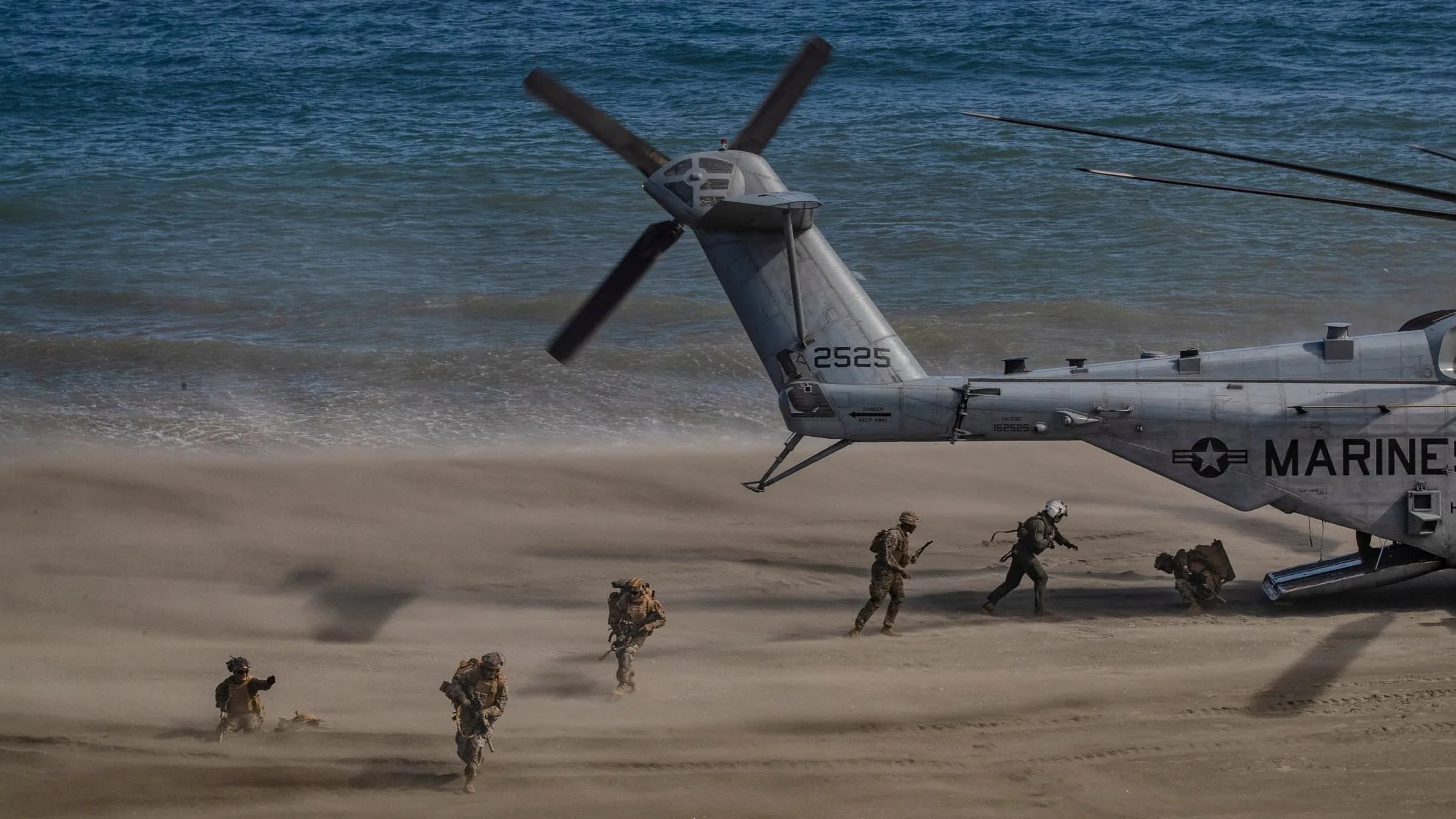
The United States Department of Defense has announced a significant expansion of its military footprint in the Middle East, authorizing the deployment of several thousand additional personnel and advanced aerial assets to the region. This strategic move, characterized by the Pentagon as a proactive measure to bolster regional stability and deter potential aggression, marks a decisive pivot in the Biden administration’s foreign policy posture. As the security landscape in the Levant and the Persian Gulf becomes increasingly volatile, the infusion of American military might is not merely a tactical adjustment but a multifaceted signal to global markets, regional adversaries, and international allies regarding the United States’ commitment to protecting its strategic interests and the free flow of global commerce.
The deployment includes several additional fighter jet squadrons—specifically F-15E Strike Eagles, F-16 Fighting Falcons, and A-10 Thunderbolt II attack aircraft—alongside the necessary support personnel to maintain a high state of operational readiness. This surge complements an already formidable naval presence, which currently features the USS Abraham Lincoln carrier strike group and the recently arrived USS Harry S. Truman. By maintaining a dual-carrier presence and significantly enhancing its land-based air capabilities, the U.S. is establishing a "deterrence by denial" framework intended to discourage a wider regional conflict that could draw in non-state actors and sovereign powers alike.
From an economic perspective, the sudden increase in military activity serves as a double-edged sword for global markets. In the immediate term, the deployment has introduced a "geopolitical risk premium" into the energy sector. Crude oil prices, which had been experiencing a period of relative softness due to concerns over Chinese demand, saw a sharp uptick in volatility following the announcement. Analysts at major financial institutions suggest that while the physical supply of oil has not yet been disrupted, the threat of escalation near the Strait of Hormuz—a transit point for roughly 20% of the world’s daily liquid petroleum consumption—remains a primary concern for commodities traders. A prolonged conflict or a closure of this maritime chokepoint could lead to a catastrophic spike in Brent Crude prices, potentially exceeding $100 per barrel and reigniting inflationary pressures that central banks across the West have only recently begun to tame.
The maritime security dimension of this deployment is particularly critical for global supply chains. For nearly a year, Houthi rebels in Yemen have targeted commercial shipping in the Red Sea, forcing major logistics firms like Maersk and Hapag-Lloyd to reroute vessels around the Cape of Good Hope. This detour adds approximately 10 to 14 days to transit times and significantly increases fuel costs and insurance premiums. By deploying additional air support and surveillance capabilities, the U.S. military aims to provide a protective umbrella over these vital shipping lanes. The success of these efforts is essential for the Suez Canal Authority, which has seen its revenues plummet by nearly 50% as traffic diverts, creating a substantial fiscal hole for the Egyptian economy.
Beyond the immediate energy and trade implications, the U.S. military surge carries profound consequences for regional investment climates. In recent years, Gulf nations such as Saudi Arabia and the United Arab Emirates have aggressively pursued "Vision 2030" style economic diversification projects, seeking to transition away from oil dependency toward tourism, technology, and finance. However, the specter of a regional war acts as a powerful deterrent to Foreign Direct Investment (FDI). Capital flight and the postponement of large-scale infrastructure projects are real risks if the security situation continues to deteriorate. The U.S. presence is, in part, an attempt to provide a security guarantee that keeps the regional business environment viable for international corporations.
Expert insights from defense and economic think tanks suggest that this deployment also reflects a temporary pause in the long-discussed "Pivot to Asia." While the United States remains strategically focused on the Indo-Pacific and the rise of China, the intractable nature of Middle Eastern security dilemmas necessitates a return to a more robust regional posture. This "re-engagement" carries a significant price tag for the American taxpayer. Estimates for the cost of maintaining a heightened presence in the Middle East range into the billions of dollars per quarter, factoring in combat pay, logistics, fuel, and the accelerated wear and tear on high-tech airframes. These expenditures come at a time when the U.S. federal budget is under intense scrutiny and the national debt remains a central topic of domestic political debate.
The geopolitical ramifications extend to the ongoing diplomatic efforts to broker a ceasefire in Gaza and Lebanon. Washington’s strategy appears to be a "carrot and stick" approach: using intensive diplomacy to find a political solution while simultaneously brandishing a massive military stick to ensure that adversaries do not interpret diplomatic overtures as a sign of weakness. The deployment of A-10 "Warthogs," in particular, is a clear message to ground-based paramilitary groups, as the aircraft is specifically designed for close air support and the destruction of armored targets. This suggests the Pentagon is preparing for a wide spectrum of contingencies, ranging from precision strikes to large-scale defensive operations.
Global comparisons illustrate the unique position of the United States in this crisis. While the European Union and China have both called for de-escalation, neither possesses the power projection capabilities or the carrier-based aviation necessary to enforce a maritime security regime in the region. This leaves the U.S. as the de facto "lender of last resort" for regional security. However, this role is fraught with risk. Critics of the deployment argue that an increased military footprint can lead to unintended escalation, where a single tactical miscalculation could trigger a cycle of retaliation that leads to the very war the deployment was intended to prevent.
The impact on the defense industrial base is also noteworthy. The surge in operations necessitates a rapid replenishment of munitions, particularly precision-guided missiles and interceptors used in air defense systems like the Patriot and the Aegis Combat System. This has led to a surge in orders for major defense contractors such as Lockheed Martin, Raytheon, and Boeing. While this provides a short-term boost to the industrial sector, it also highlights the limitations of current manufacturing capacities, which have been strained by the ongoing support for Ukraine’s defense against Russia.
Looking ahead, the duration of this "temporary" deployment remains an open question. History suggests that military surges in the Middle East often become long-term commitments as the underlying political grievances and security vacuums remain unresolved. For global markets, the "new normal" may involve a permanent state of heightened readiness and the associated costs of securing global trade routes. The economic interdependence of the 21st century means that a flare-up in the Levant is no longer a localized event; it is a systemic shock that affects the price of goods in London, the cost of heating in Berlin, and the stability of portfolios in New York.
In summary, the United States’ decision to deploy thousands more troops and advanced aircraft to the Middle East is a high-stakes gamble intended to stabilize a fracturing regional order. By reinforcing its military architecture, Washington is attempting to safeguard the pillars of the global economy: energy security, maritime trade, and investor confidence. Whether this show of force will lead to a durable peace or merely postpone a larger confrontation remains to be seen. However, for the moment, the message from the Pentagon is clear: the United States will use its full military and economic weight to prevent the Middle East from descending into a chaos that the world can ill afford.