The global financial community is currently navigating a tectonic shift in monetary policy communication, as the Federal Reserve, under the leadership of Chairman Kevin Warsh, continues to dismantle the decades-old framework of "forward guidance." On Wednesday, the Federal Open Market Committee (FOMC) released its second policy statement of the Warsh era, providing a stark reaffirmation that the era of verbose, highly choreographed central bank signaling has come to an abrupt end. For investors accustomed to the expansive, often predictive prose of former Chair Jerome Powell, the latest release was a jarring reminder that the new regime prioritizes brevity, immediacy, and a refusal to bind future policy actions to present rhetoric.
This latest communication from the central bank serves as a critical data point in what economists are calling the "Warsh Revolution." Since taking the helm earlier this year, Warsh has moved with startling speed to overhaul how the Fed interacts with the public and the markets. The July statement, much like its predecessor in June, was a model of radical minimalism. While statements during the Powell and Yellen eras frequently exceeded 300 to 400 words and were laden with nuanced qualifiers about "inclusive employment" and "transitory" inflationary pressures, Wednesday’s release clocked in at approximately 130 words. By stripping away the linguistic scaffolding that has supported market expectations for years, Warsh is forcing a fundamental reassessment of how capital is priced in the modern economy.
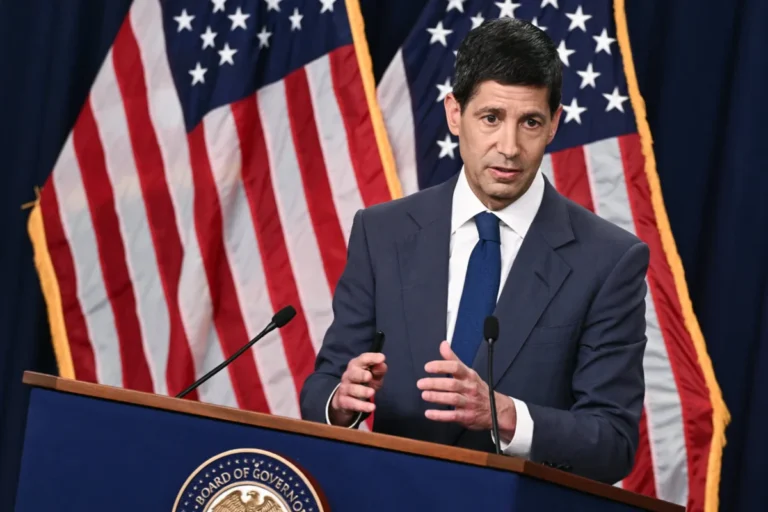
The central pillar of this new approach is the deliberate abandonment of forward guidance. For nearly twenty years, the Federal Reserve has utilized its statements to "guide" market participants toward future interest rate paths, a strategy designed to reduce volatility and ensure that financial conditions aligned with the committee’s objectives. However, Warsh has argued that such guidance is "not well suited for the current policy conjuncture." In his view, the world of 2026 is too volatile and data-dependent for the central bank to provide a roadmap that it may be forced to tear up within weeks. By "dispensing with some older language," as Warsh noted in his inaugural press conference, the Fed is effectively returning to a "just the facts" model of communication—one that describes the current state of the economy without promising specific future interventions.
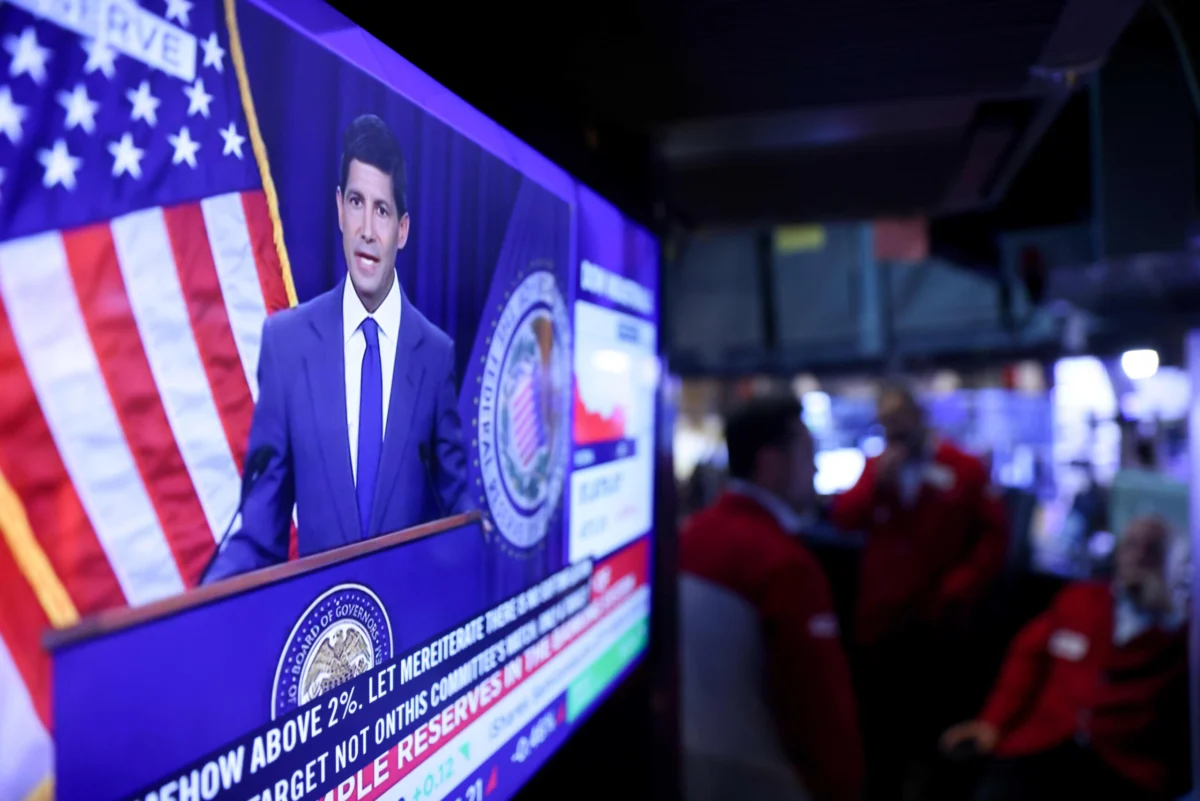
This shift has profound implications for global financial markets. Under the previous regime, the "dot plot" and the FOMC statement acted as a security blanket for Wall Street, offering a sense of certainty that often suppressed market volatility. Without that guidance, the burden of interpretation has shifted entirely back to the private sector. The July statement notably excluded information regarding the specific voting tallies of the FOMC members, a fixture of the Powell era that allowed analysts to gauge the level of hawkish or dovish dissent within the committee. By presenting a unified, albeit brief, front, the Warsh-led Fed is centralizing the narrative and reducing the "noise" created by individual governor dissents.
Market participants have not been idle in the face of this informational vacuum. Institutional investors and hedge funds have increasingly turned to sophisticated artificial intelligence tools to parse the Fed’s new, leaner communications. Termed "WarshGPT" by some on the sell-side, these large language models are being trained to identify micro-shifts in sentiment within the simplified text. The goal is to detect whether a subtle change in a single adjective—such as moving from "moderate" to "modest" growth—signifies a broader shift in the committee’s internal outlook. However, because the statements are now so short, the margin for error in these AI interpretations has narrowed significantly, leading to bursts of intraday volatility as algorithms react to the lack of traditional cues.

Beyond the text of the statements themselves, Warsh is orchestrating a broader institutional overhaul of the Federal Reserve’s operational mechanics. Shortly after his appointment, he announced the formation of several high-level task forces aimed at reviewing the bank’s core functions. These groups are not merely academic exercises; they are composed of some of the most influential figures in global finance and policy. The communication task force, for instance, includes Peter Fisher, a professor at the University of Washington and a former Fed official known for his skepticism of unconventional monetary policy, as well as Mervyn King, the former Governor of the Bank of England. The inclusion of King is particularly telling, as it suggests a desire to align the Fed’s communication strategy with the more "Spartan" traditions of European central banking, which historically avoided the hyper-transparency adopted by the U.S. in the post-2008 era.
Other task force members, such as Andreessen Horowitz co-founder Marc Andreessen and Walmart CEO Doug McMillon, indicate that Warsh is seeking perspectives from outside the traditional economic priesthood. This "outside-in" approach suggests that the Fed may be looking to simplify its message not just for the benefit of bond traders, but to make the central bank’s mission more comprehensible to the broader American public. The complexity of previous Fed communications was often criticized for creating an "information asymmetry," where only the most sophisticated financial institutions could truly decipher the bank’s intent. Warsh’s minimalism may be an attempt to democratize the impact of monetary policy by making the signals clear, even if they are infrequent.
From a global perspective, the Warsh Doctrine represents a significant departure from the trend of "central bank as storyteller." While the European Central Bank (ECB) and the Bank of Japan continue to provide detailed outlooks and maintain complex communication frameworks to manage their respective economies, the Fed is moving in the opposite direction. This divergence could lead to increased volatility in currency markets. If the U.S. dollar is no longer tethered to a clear forward-looking interest rate path provided by the Fed, the greenback may become more sensitive to real-time economic data releases, such as Non-Farm Payrolls or Consumer Price Index (CPI) prints. In this new environment, the "data" speaks louder because the "Fed" speaks less.
The economic impact of this transition is still being debated in academic circles. Proponents of the Warsh approach argue that by removing forward guidance, the Fed is regaining its "optionality." In a world characterized by geopolitical instability, supply chain shocks, and rapid technological change, the ability to pivot policy without being accused of breaking a previous promise is a significant strategic advantage. Critics, however, worry that the lack of guidance will lead to "market tantrums." If investors cannot predict the Fed’s next move, they may demand a higher "uncertainty premium" on long-term bonds, which could inadvertently tighten financial conditions more than the committee intends.
As the second statement of the Warsh era settles into the historical record, it is clear that the Federal Reserve is no longer interested in being the market’s navigator. Instead, it has become a reactive observer, providing a snapshot of the economy as it exists in the moment, rather than a projection of where it might be in six months. The July release confirms that the brevity of the June statement was not a one-off experiment, but the blueprint for a new institutional standard. For the global economy, the message is clear: the era of the "Fed Put" and the "Fed Path" has been replaced by a period of strategic ambiguity. Investors must now learn to navigate by the stars of hard data, rather than the lighthouse of central bank guidance. The "Warsh Revolution" is well underway, and its ultimate success will depend on whether markets can handle a Federal Reserve that finally knows when to stop talking.