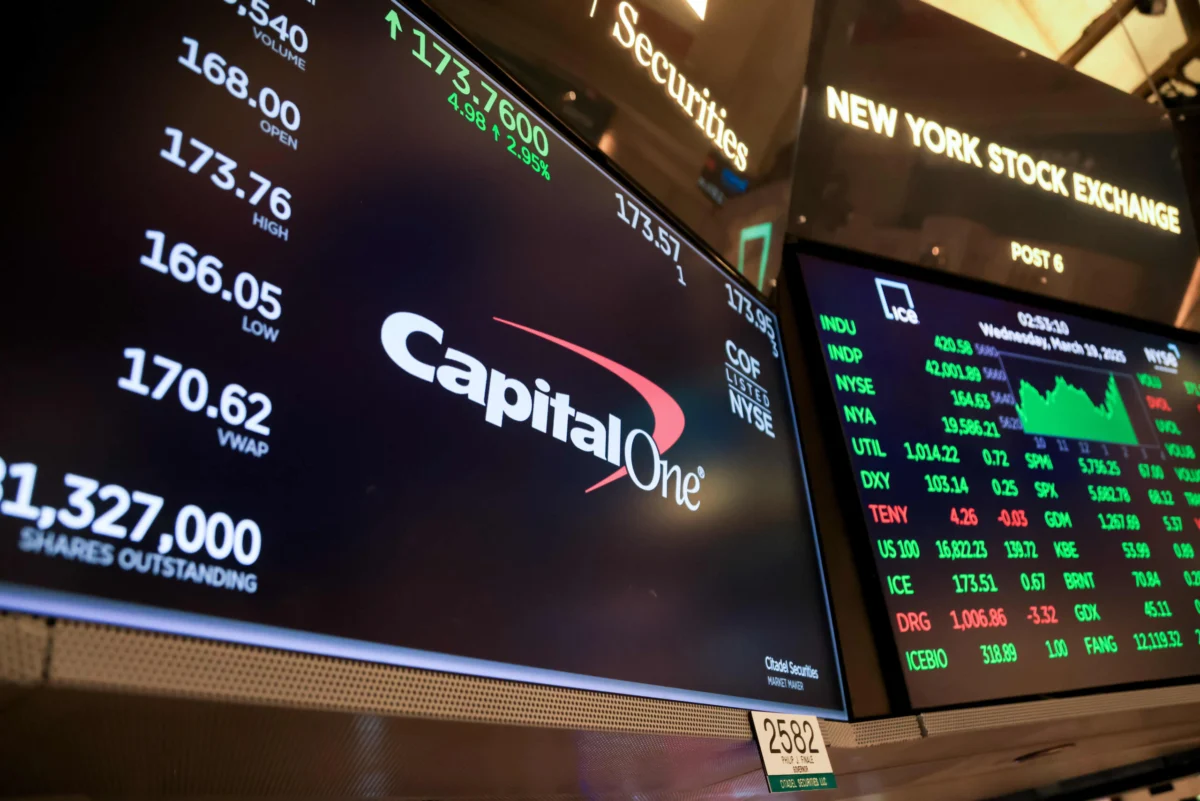
The landscape of American high finance is currently witnessing one of its most audacious transformations in decades as Capital One Financial Corporation moves to finalize its $35.3 billion acquisition of Discover Financial Services. This all-stock transaction is not merely a merger of two massive lending institutions; it represents a fundamental challenge to the established order of global payment processing and a high-stakes bet on the future of consumer credit. By absorbing Discover, Capital One is attempting to pivot from being a major credit card issuer that relies on third-party rails to becoming a vertically integrated financial titan capable of competing directly with the entrenched duopoly of Visa and Mastercard.
The architectural brilliance—and the inherent risk—of this deal lies in the acquisition of the Discover network. For decades, the payments ecosystem has been dominated by a four-party model where banks like Capital One issue cards, but rely on networks like Visa or Mastercard to facilitate the actual movement of money between merchants and consumers. Discover, along with American Express, operates a "closed-loop" network, acting as both the issuer and the processor. For Capital One’s CEO, Richard Fairbank, the acquisition is the culmination of a long-term vision to capture the "holy grail" of the industry: the interchange fees and data control that come with owning the plumbing of the financial system.
From a purely statistical perspective, the combined entity would be a juggernaut. If the merger clears the remaining regulatory hurdles, the new Capital One would leapfrog JPMorgan Chase and Citigroup to become the largest credit card issuer in the United States by loan volume. As of the most recent filings, the combined company would oversee more than $250 billion in credit card receivables, commanding a market share of approximately 19%. This scale provides a massive cushion of interest income, but it also places the firm under an unprecedented level of scrutiny from both the Federal Reserve and the Office of the Comptroller of the Currency (OCC).
The economic rationale for the deal is bolstered by projected synergies that Capital One estimates will reach $2.7 billion by 2027. These savings are expected to stem from the integration of back-office operations and, more importantly, the migration of Capital One’s existing debit and credit traffic onto the Discover network. By moving its massive volume of transactions away from Visa and Mastercard, Capital One could save billions in network fees while simultaneously increasing the utility and merchant acceptance of the Discover brand. Currently, Discover is accepted at roughly 70 million merchant locations globally—a significant number, yet still trailing the near-universal reach of its primary competitors. Capital One’s scale could be the catalyst needed to bridge that gap.
However, the path to integration is fraught with regulatory and political landmines. The deal comes at a time of heightened antitrust sentiment within the United States government. The Biden administration’s executive order on promoting competition has signaled a more aggressive stance toward bank mergers, particularly those that create "too big to fail" institutions. Critics, including several prominent members of the Senate Banking Committee, have raised concerns that the merger will lead to higher interest rates for subprime borrowers and reduced competition in the rewards space. Proponents of the deal counter that the merger actually increases competition by creating a viable third alternative to Visa and Mastercard, potentially lowering the interchange fees that merchants pay—a cost often passed down to consumers.
Further complicating the "gamble" is the current state of the Discover platform itself. In the months leading up to the merger announcement, Discover faced significant internal turbulence, including the resignation of its CEO and a series of regulatory consent orders related to compliance and risk management failures. Specifically, Discover admitted to misclassifying certain credit card accounts into its highest pricing tier for over a decade, leading to overcharges for merchants. Capital One is not just buying a network; it is inheriting a complex remediation process. Success depends on Capital One’s ability to overhaul Discover’s legacy systems and satisfy regulators that the combined entity will have a "best-in-class" compliance framework.
The timing of the acquisition also aligns with a volatile macroeconomic environment. U.S. consumer credit card debt recently surpassed the $1.1 trillion mark, a record high that reflects both the resilience of consumer spending and the mounting pressure of persistent inflation. While employment remains relatively strong, delinquency rates for credit cards have begun to trend upward, particularly among younger and lower-income cohorts. By doubling down on the credit card market, Capital One is increasing its exposure to consumer default risk at a moment when the "soft landing" of the U.S. economy is still not a certainty. Analysts suggest that while the merger provides scale, it also concentrates risk; a sharp economic downturn could hit a specialized lender like the new Capital One harder than a more diversified universal bank.
Beyond the domestic implications, the deal has significant global ramifications. The international payments market is currently undergoing a rapid evolution, with the rise of digital wallets, "Buy Now, Pay Later" (BNPL) services, and central bank digital currencies (CBDCs) threatening the traditional card model. By owning a network, Capital One gains the flexibility to innovate more quickly than banks tied to the technical roadmaps of Visa or Mastercard. This could include developing proprietary real-time payment solutions or integrating blockchain technology directly into its proprietary rails. In the global arena, the ability to control the end-to-end transaction experience is a competitive advantage that many fintech firms have sought but few have achieved at this scale.
Expert insights into the deal suggest that the market is cautiously optimistic but remains focused on the execution risk. "The strategic merit is undeniable, but the execution is a decade-long project," noted one senior analyst at a major Wall Street brokerage. The integration of two different corporate cultures and two massive technology stacks is a monumental task. Capital One has historically positioned itself as a technology company that happens to do banking, emphasizing its early move to the cloud and its use of machine learning for credit underwriting. Applying this tech-forward approach to Discover’s aging infrastructure will be the ultimate test of Capital One’s operational prowess.
As the financial world watches the regulatory clock tick toward a final decision, the stakes for Capital One could not be higher. A rejection of the merger would be a significant blow to the firm’s growth strategy and would likely result in a period of strategic soul-searching. Conversely, an approval would grant Capital One the tools to reshape the American financial landscape. It would no longer be just a participant in the payments game; it would be a rule-maker.
Ultimately, the Capital One-Discover merger is a referendum on the future of banking in an era of consolidation. It challenges the notion that the payment networks are untouchable utilities and asserts that scale and vertical integration are the only ways to survive in an increasingly digitized global economy. Whether this $35 billion bet pays off will depend on more than just balance sheets and interest margins; it will depend on the firm’s ability to navigate a hostile regulatory environment, stabilize a troubled acquisition target, and prove that a bigger bank can truly be a better one for the modern consumer. For now, the gamble remains the most talked-about play on Wall Street, a bold move that marks the beginning of a new chapter in the history of American capitalism.