The global mining behemoth BHP Group is poised for significant market valuation shifts in the coming years, with projections indicating a substantial growth trajectory leading up to 2026. This outlook is underpinned by a complex interplay of commodity prices, strategic operational expansions, geopolitical stability, and the evolving landscape of energy transition demands. As one of the world’s largest diversified mining companies, BHP’s financial performance is intrinsically linked to the global economic cycle and the demand for key resources like iron ore, copper, nickel, and coal. Understanding the drivers behind its anticipated market capitalization requires a deep dive into these multifaceted factors.
The company’s current market standing is already formidable, reflecting its dominant position in the extractive industries. However, the forecast for 2026 suggests a valuation that could see a notable increase, driven by several key market dynamics. Iron ore, a cornerstone of BHP’s revenue, is expected to maintain robust demand, primarily fueled by continued infrastructure development and steel production in Asia, particularly China. Despite ongoing efforts to decarbonize the global economy, the immediate and medium-term demand for steel, and thus iron ore, remains strong. Analysts are closely monitoring the pace of China’s economic recovery and its real estate sector, as these are pivotal indicators for iron ore consumption. A sustained or accelerated growth in these areas would invariably translate to higher prices and, consequently, a stronger valuation for BHP.
Copper is another critical pillar of BHP’s future prospects, with its demand set to surge due to the accelerating global energy transition. Copper is an indispensable component in electric vehicles, renewable energy infrastructure such as solar panels and wind turbines, and the expansion of electricity grids. As nations worldwide commit to ambitious decarbonization targets, the demand for copper is projected to outstrip supply. BHP’s significant copper assets, particularly in the Americas, are strategically positioned to capitalize on this trend. The company has been actively investing in expanding its copper production capacity, anticipating this surge in demand. The successful execution of these expansion plans, coupled with favorable copper prices, will be a major determinant of BHP’s market valuation by 2026.
Nickel, while currently a smaller contributor to BHP’s overall revenue compared to iron ore and copper, holds immense long-term potential, especially in the context of battery production for electric vehicles. The demand for high-purity nickel sulfate, a key ingredient in lithium-ion batteries, is forecast to grow exponentially. BHP’s nickel operations, particularly its nickel sulfide concentrate production, are well-placed to benefit from this burgeoning market. The company’s investments in advanced processing technologies and its commitment to sustainable nickel production are crucial factors that will influence its market appeal to investors focused on the green economy.
The broader economic environment will undoubtedly play a crucial role in shaping BHP’s market cap. Global GDP growth, inflation rates, and interest rate policies by central banks will all impact commodity demand and investment sentiment. A robust global economic expansion generally correlates with higher commodity prices and increased capital expenditure in the mining sector. Conversely, an economic slowdown or recession could dampen demand and put downward pressure on valuations. Geopolitical stability is also a paramount concern. Disruptions to supply chains, trade disputes, or conflicts in key resource-producing regions can lead to price volatility and investor uncertainty. BHP, with its vast international operations, is exposed to these risks and must navigate them effectively to maintain investor confidence.
Furthermore, the increasing focus on Environmental, Social, and Governance (ESG) factors by investors and regulators cannot be overstated. BHP has been investing heavily in reducing its carbon footprint, improving water management, and enhancing community relations across its operations. Its commitment to decarbonization, including targets for Scope 1, 2, and 3 emissions, is becoming a key differentiator. Companies that demonstrate strong ESG performance are increasingly favored by institutional investors, potentially leading to higher valuations and lower costs of capital. The ability of BHP to meet its ambitious ESG targets and transparently report on its progress will be critical for its market perception by 2026.
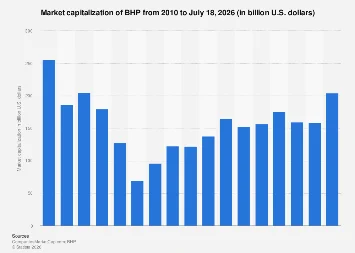
In terms of market data and expert insights, financial analysts are projecting a steady upward trend for BHP’s market capitalization. While precise figures vary depending on the analytical model and assumptions used, consensus forecasts suggest a valuation that could potentially exceed USD 200 billion by 2026, building upon its current standing. This projection is based on the assumption of sustained commodity prices, successful project execution, and effective management of operational and geopolitical risks. The company’s dividend policy, which has historically been generous, also plays a role in attracting investors seeking stable income streams, further supporting its market valuation.
Global comparisons with other major diversified mining companies, such as Rio Tinto, Vale, and Glencore, highlight BHP’s competitive positioning. While each company has its unique portfolio of assets and strategic priorities, the overall market trends affecting the sector are broadly similar. BHP’s diversification across key commodities provides a degree of resilience against sector-specific downturns. Its scale of operations and integrated value chains offer significant operational efficiencies. The competitive landscape is characterized by a constant drive for cost optimization, technological innovation, and strategic acquisitions or divestitures to align with market demands, particularly the energy transition.
The economic impact of BHP’s projected market valuation growth extends beyond the company itself. A higher valuation often signifies increased investor confidence, which can translate into greater access to capital for future investments. These investments, in turn, support job creation, stimulate economic activity in the regions where BHP operates, and contribute to government revenues through taxes and royalties. Moreover, BHP’s role as a major supplier of essential raw materials underpins global industrial production and technological advancement. Its financial health and growth are thus indicative of broader economic trends and industrial capacity.
In conclusion, the trajectory of BHP’s market capitalization towards 2026 is a narrative of strategic adaptation and market foresight. The company’s ability to navigate fluctuating commodity prices, capitalize on the burgeoning demand for metals crucial to the energy transition, and uphold stringent ESG standards will be paramount. While challenges such as global economic uncertainties and geopolitical risks remain, the fundamental drivers for growth in iron ore and copper, coupled with the emerging potential of nickel, paint a promising picture for BHP’s financial future, reinforcing its status as a titan in the global resources sector.