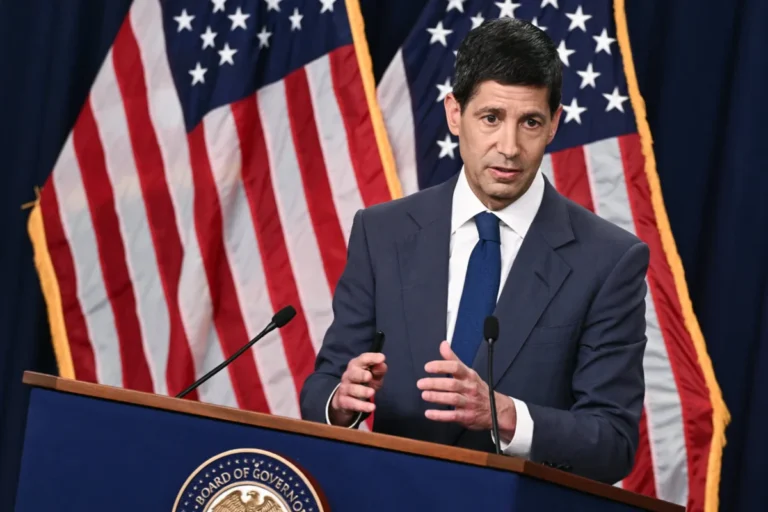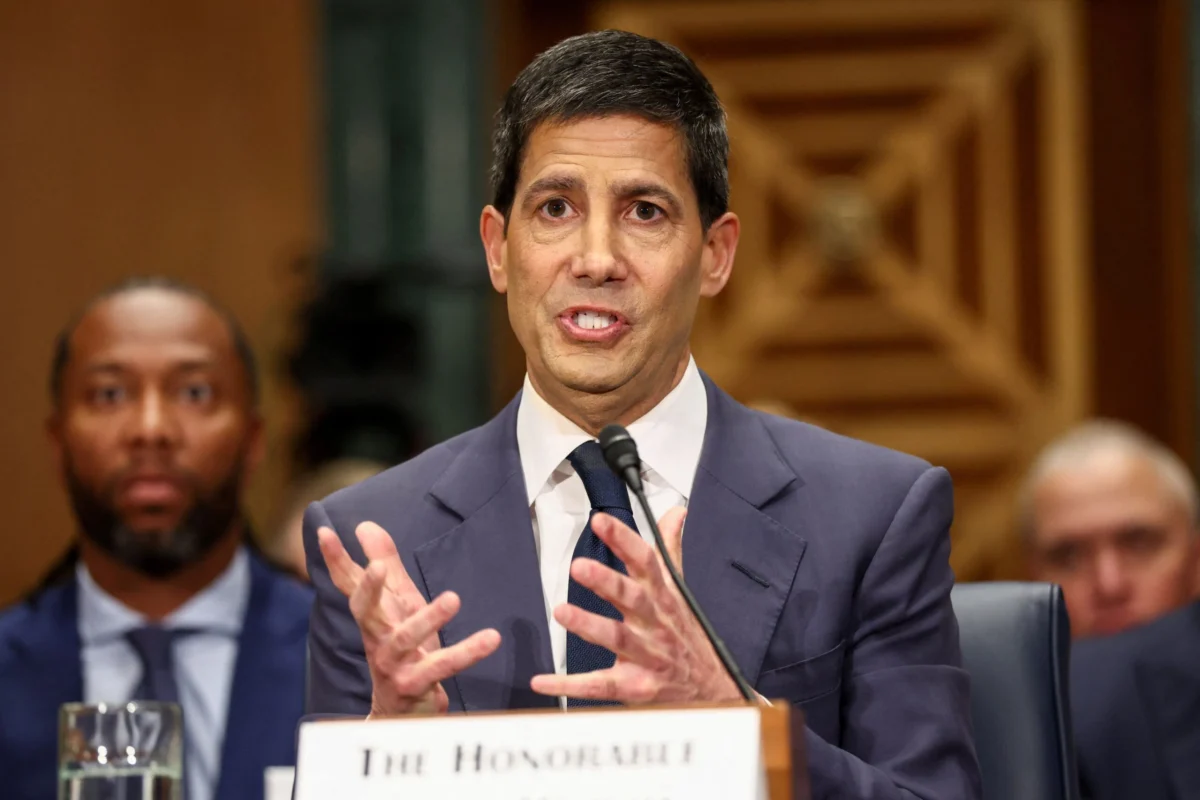
Federal Reserve Chairman Kevin Warsh arrived on Capitol Hill this Tuesday to deliver the central bank’s semiannual monetary policy report, navigating a complex economic landscape defined by a sudden cooling of inflationary pressures and a transformative technological boom. Speaking before the House Financial Services Committee, Warsh faced a barrage of inquiries regarding the future of interest rates following a morning data release that caught many market participants off guard. The Bureau of Labor Statistics reported that the Consumer Price Index (CPI) retreated by 0.4% in June, a contraction that significantly outpaced consensus estimates and signaled a potential shift in the structural drivers of the American economy.
The timing of the testimony provided a dramatic backdrop for the Chairman’s prepared remarks. While the headline inflation print suggested that the aggressive tightening cycle of the past several years might finally be yielding to a sustained period of price moderation, Warsh remained characteristically measured. He emphasized that while the latest data is encouraging, the Federal Reserve’s mission to anchor inflation at its long-term 2% target remains the paramount objective. The Chairman’s stance reflected a central bank that is wary of declaring victory too early, mindful of the historical "stop-start" policy errors that plagued the 1970s.
During his address, Warsh articulated a vision of a Federal Reserve that is both resolute and adaptive. "The members of our Committee have no tolerance for persistently elevated inflation," Warsh told the committee members, his tone underscoring the gravity of the institution’s mandate. "We share a resolute commitment to restoring price stability, which serves as the bedrock for a healthy labor market and sustainable long-term growth." This commitment, he noted, requires a vigilant eye on both traditional economic indicators and the emerging structural shifts that are beginning to redefine the supply side of the U.S. economy.
Central to Warsh’s optimistic outlook for long-term price stability is the accelerating investment in artificial intelligence. In a significant portion of his testimony, the Chairman linked the recent disinflationary trends to a massive surge in AI-driven productivity. He argued that the "AI investment boom" is no longer a speculative venture but a tangible force that is enhancing corporate efficiency and lowering the cost of goods and services. By allowing firms to produce more with less, these technological advancements are effectively acting as a deflationary tailwind, helping to absorb the wage pressures that have historically fueled price increases.
Economists observing the testimony noted that Warsh’s focus on productivity marks a pivot in the Federal Reserve’s rhetorical strategy. By highlighting the supply-side benefits of technology, the Fed may be preparing the markets for a "Goldilocks" scenario: one where economic growth remains robust even as inflation falls toward the target. This perspective suggests that the "neutral" interest rate—the rate at which policy is neither stimulative nor restrictive—may be higher than it was in the pre-pandemic era, but perhaps more sustainable due to higher output capacity.
However, the path toward this equilibrium is far from unanimous within the walls of the Eccles Building. Recent minutes from the Federal Open Market Committee (FOMC) meetings reveal a central bank that is deeply divided over the trajectory of monetary policy. One faction of policymakers remains concerned that the labor market, despite some cooling, remains too tight to ensure that inflation stays down. This group advocates for a "higher-for-longer" approach, fearing that premature rate cuts could reignite consumer demand and lead to a secondary wave of inflation. On the other side, a growing number of officials express concern that maintaining high real interest rates for too long could unnecessarily damage the housing market and stifle the very capital investments—like those in AI—that are currently driving productivity gains.
The House Financial Services Committee members pushed Warsh on these internal divisions, questioning whether the Fed’s current stance is overly restrictive given the June CPI print. The 0.4% drop in consumer prices was largely driven by a reversal in energy costs and a continued decline in the price of used vehicles and apparel, but the Chairman was quick to point out that "supercore" inflation—which excludes food, energy, and housing—remains a sticky variable. The Fed’s preferred gauge, the Personal Consumption Expenditures (PCE) price index, will be the next critical data point that officials analyze before the upcoming late-summer policy meeting.
Market reaction to the day’s events was swift and multifaceted. Equity markets rallied on the news of the CPI miss, with the S&P 500 and the Nasdaq Composite reaching intraday highs as investors priced in a higher probability of a rate cut before the end of the third quarter. Conversely, the yield on the 10-year Treasury note saw a sharp decline, reflecting a flight to quality and a downward adjustment in long-term inflation expectations. The U.S. dollar also softened against a basket of major currencies, as the prospect of a less hawkish Fed reduced the relative yield advantage of the greenback.
In a global context, the challenges facing Chairman Warsh are mirrored in other major economies, though the U.S. appears to be an outlier in its productivity performance. While the European Central Bank (ECB) and the Bank of England (BoE) continue to grapple with sluggish growth and more persistent service-sector inflation, the U.S. economy’s resilience has been bolstered by its dominant tech sector. Warsh’s testimony hinted at this "American Exceptionalism," suggesting that the U.S. is uniquely positioned to benefit from the current technological epoch. He noted that the capital expenditures currently flowing into American data centers and semiconductor manufacturing are unparalleled in the developed world, creating a "virtuous cycle" of investment and efficiency.
Despite the optimism surrounding AI, the Chairman was forced to address the more immediate pressures facing American households. Committee members highlighted the ongoing "cost of living" crisis, noting that while the rate of inflation is slowing, the absolute price level for essentials like groceries and insurance remains significantly higher than it was four years ago. Warsh acknowledged these hardships, stating that the Fed’s 2% target is not just a mathematical objective but a social necessity. "Price stability is not an abstract concept for the American family; it is the difference between being able to plan for the future and living in a state of constant financial uncertainty," he remarked.
As the hearing progressed, the discussion turned toward the Fed’s "alternative inflation signs"—a suite of non-traditional data points that the central bank has begun to monitor in an increasingly digital and fragmented economy. These include real-time logistics data, online pricing algorithms, and credit card spending patterns. Warsh indicated that these tools have become essential as traditional lag-heavy indicators often fail to capture the speed of modern economic shifts. By utilizing more granular data, the Fed aims to chart a course that avoids the "clunt force" trauma of past monetary cycles.
Looking ahead, the Federal Reserve finds itself at a critical juncture. The June data suggests that the "last mile" of the inflation fight may be less arduous than previously feared, provided that the productivity boom continues to expand the economy’s capacity. However, geopolitical risks—including ongoing tensions in trade corridors and volatile commodity markets—remain the "wild cards" that could disrupt this delicate disinflationary trend.
Warsh concluded his testimony by reiterating that the Fed’s policy remains data-dependent, a phrase that has become the hallmark of his tenure. While the June CPI report provides a much-needed reprieve, the central bank’s leadership is prepared to maintain a restrictive stance for as long as necessary to ensure that the "thing of the past" promise regarding high inflation becomes a permanent reality. For investors and policymakers alike, the coming months will be a test of whether the U.S. economy can successfully transition from a period of high-inflation volatility into a new era of technology-led stability. As Chairman Warsh exited the hearing room, the prevailing sentiment on Wall Street was one of cautious optimism, tempered by the knowledge that in the world of central banking, the only certainty is the necessity of constant vigilance.