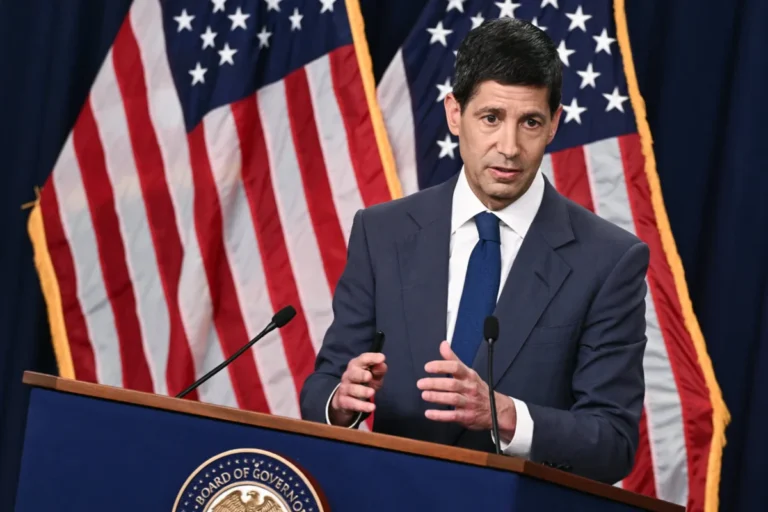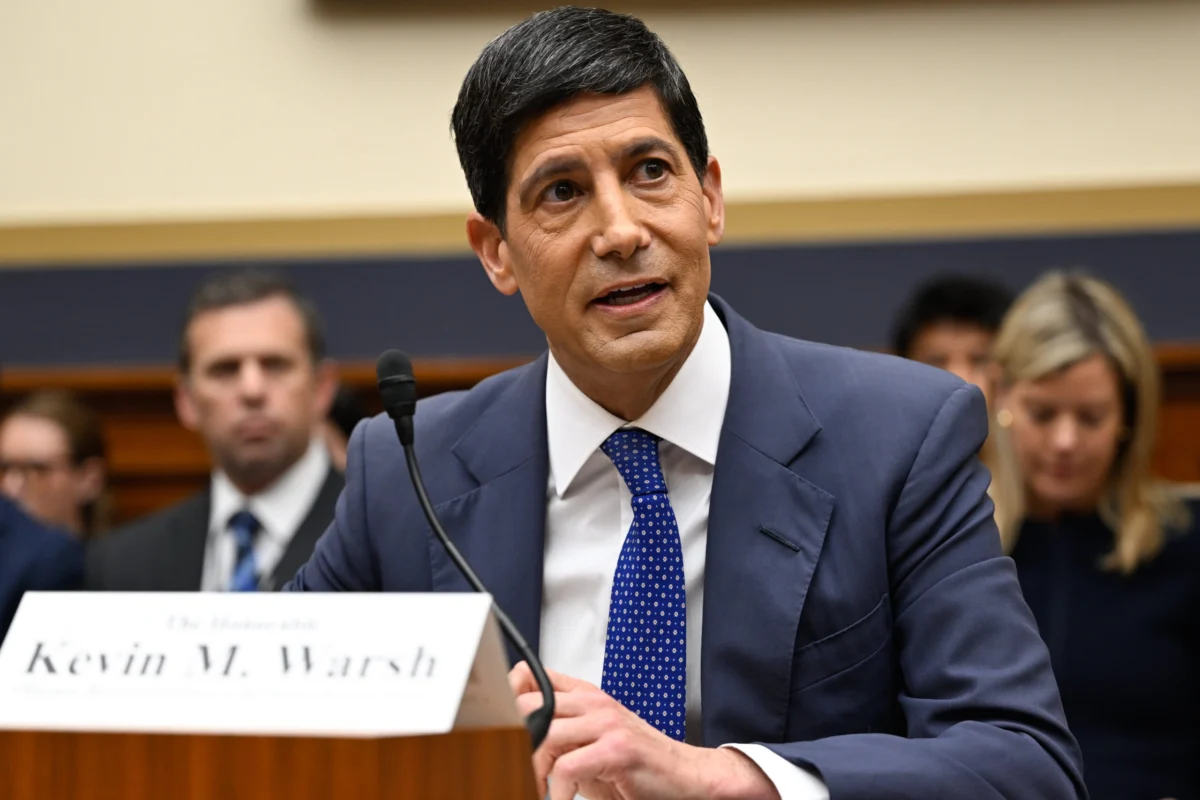
In a forceful testimony before the House Financial Services Committee this week, Federal Reserve Chairman Kevin Warsh signaled a definitive end to the monetary era of his predecessors, pledging a fundamental "regime change" designed to dismantle what he termed the "inflation tax" currently weighing on the American economy. Only two months into his tenure as the nation’s chief central banker, Warsh’s rhetoric marks a sharp departure from the cautious, data-dependent incrementalism that characterized the previous decade of U.S. monetary policy. By framing inflation not merely as a macroeconomic variable but as an unfair and regressive levy on households and businesses, Warsh is attempting to redefine the social contract between the Federal Reserve and the public.
The Chairman’s remarks, which come at a critical "hinge point in history," suggest that the central bank is moving away from the flexible frameworks of the early 2020s toward a more disciplined, price-stability-first mandate. Warsh argued that the inflationary surge of the last five years—which saw the Consumer Price Index (CPI) reach levels not seen since the 1980s—was not an unavoidable accident of history but a consequence of specific policy choices. By calling for a total overhaul of the Fed’s internal practices, Warsh is signaling to global markets that the era of "lower for longer" and "inflation tolerance" is officially over.
Central to Warsh’s critique is the rejection of Flexible Average Inflation Targeting (FAIT), a policy framework adopted by the Federal Reserve in 2020. FAIT allowed the Fed to permit inflation to run moderately above its 2% target for periods of time to compensate for previous undershoots. While intended to support labor market recovery, Warsh characterized this approach as a strategic error that compromised the Fed’s credibility. He noted that the central bank "asked for a little more inflation and ended up with a lot more," a miscalculation that eroded the purchasing power of the dollar and disproportionately affected low-income earners who spend a larger share of their revenue on essential goods like energy and food.
To institutionalize this "regime change," Warsh has moved with atypical speed, establishing five internal task forces within his first six weeks in office. These panels are tasked with a comprehensive review of the Fed’s core operations: communications, technology, the management of its multi-trillion-dollar balance sheet, the quality of economic data utilized for decision-making, and the very methodology used to measure inflation. This holistic review suggests that Warsh views the Fed’s recent failures as systemic rather than merely communicative. For example, by scrutinizing the balance sheet, the Fed may be preparing for a more aggressive approach to quantitative tightening, further draining liquidity from the system to ensure that the monetary base does not fuel future price spikes.
The economic impact of this shift is already being weighed by Wall Street analysts and international observers. A more hawkish Federal Reserve typically strengthens the U.S. dollar, which can lower the cost of imports but also create headwinds for American exporters and increase the debt-servicing costs for emerging markets holding dollar-denominated debt. Domestically, Warsh’s "price stability at all costs" stance could lead to a higher-for-longer interest rate environment, potentially cooling the housing market while rewarding savers who have seen their bank deposits devalued by inflation for years.
However, Warsh is not purely a "hawk" in the traditional sense; he is also an optimist regarding the supply side of the economy. A significant portion of his testimony focused on the transformative potential of business investment, particularly in the realm of artificial intelligence. He pointed to the rapid construction of data centers and the massive demand for AI-related software and hardware as the "most striking feature" of the current economic climate. In Warsh’s view, what is currently labeled as "AI investment" will soon become the standard for all capital expenditure across the economy.

This perspective leads to a unique economic hypothesis: that an AI-driven productivity boom could act as a powerful disinflationary force. If AI allows firms to produce more goods and services with fewer resources, it could lower costs and mitigate the need for aggressive interest rate hikes to curb demand. While some of his colleagues on the Federal Open Market Committee (FOMC) remain skeptical of how quickly these productivity gains will manifest in broader economic data, Warsh appears to be betting on a supply-side revolution to help the Fed achieve its 2% target without triggering a significant recession.
The Chairman’s focus on AI also reflects a broader desire to modernize the Fed’s technological infrastructure. By creating a task force dedicated to technology and data, Warsh is acknowledging that 20th-century economic indicators may no longer be sufficient to track a 21st-century digital economy. Real-time data, high-frequency consumer sentiment, and more granular price tracking could replace the lagging indicators that many critics believe caused the Fed to be "behind the curve" during the initial post-pandemic price surge in 2021.
Globally, Warsh’s rhetoric places the U.S. Federal Reserve in a distinct position compared to its peers. While the European Central Bank (ECB) and the Bank of England (BoE) continue to grapple with sluggish growth and persistent services inflation, Warsh is projecting an image of American economic resilience. He noted that the U.S. economy is expanding at a "solid pace" and showing remarkable durability in the face of geopolitical volatility and high interest rates. This divergence in policy—where the Fed focuses on a total regime change while other central banks manage gradual declines—could lead to increased volatility in currency markets.
The concept of inflation as a "tax" is perhaps the most politically potent aspect of Warsh’s new doctrine. In economic terms, inflation functions as a hidden tax because it reduces the real value of money held by the public and increases the nominal value of assets, often pushing taxpayers into higher tax brackets without a corresponding increase in real wealth—a phenomenon known as "bracket creep." By framing his policy shift as an effort to "get rid of that tax," Warsh is aligning the Fed’s technical mission with the everyday financial anxieties of American households.
However, the path to a post-inflationary era is fraught with risks. Critics of Warsh’s approach argue that a dogmatic pursuit of price stability could overlook vulnerabilities in the labor market or the financial system. If the Fed moves too aggressively to "remake" itself, it could inadvertently trigger a credit crunch or a sharp rise in unemployment. The Chairman, however, appears undeterred, stating that the Fed’s "clear and constant aim" is to get monetary policy right, viewing this as the only way to ensure long-term prosperity.
As Warsh moves from the House Financial Services Committee to the Senate Banking Committee, the scrutiny of his "five dimensions" of reform will only intensify. Legislators are likely to press for more details on how these task forces will operate and whether the "regime change" implies a shift toward a rules-based monetary policy—such as the Taylor Rule—which would limit the discretionary power of Fed officials.
Ultimately, the "Warsh Doctrine" represents a gamble that institutional reform and a focus on productivity can conquer the inflationary pressures that have haunted the global economy for the better part of a decade. By promising that the inflation surge will soon be "a thing of the past," Warsh has set a high bar for his chairmanship. Whether he can deliver on this promise without stalling the U.S. economy remains the central question for investors and policymakers alike. For now, the message from the hallowed halls of the Eccles Building is clear: the Federal Reserve is under new management, the old playbook has been discarded, and the fight against the inflation tax has entered a new, more aggressive phase.