A significant new incentive scheme, valued at an estimated ₹62,500 crore (approximately $7.5 billion), is poised to fundamentally reshape India’s electronics manufacturing landscape, catalyzing a robust rally in the shares of domestic electronics manufacturing services (EMS) companies. This comprehensive program, designed to run from fiscal year 2027 (FY27) through FY31, replaces the earlier Production-Linked Incentive (PLI) scheme for large-scale electronics manufacturing, which concluded on March 31. Its unveiling has instilled considerable optimism across the industry, promising to not only boost margins for local players but also to deepen the country’s integration into the global electronics value chain.
The immediate market response was palpable. On the day of the announcement, leading listed EMS firms experienced notable stock appreciation, even as the broader Nifty 50 index remained largely static. Dixon Technologies (India) Ltd, a key manufacturer for brands like Vivo, saw its shares surge by 6.1%. Syrma SGS Technology Ltd, Kaynes Technology India Ltd, and Amber Enterprises India Ltd, which recently partnered with Chinese handset maker Oppo, also recorded gains of 1.5%, 3%, and 2% respectively. This positive investor sentiment underscores the perceived transformative potential of the new Mobile Phone Manufacturing Scheme (MPMS), which targets a cumulative production value of ₹39 trillion (approximately $470 billion) over its five-year tenure.
At the heart of the MPMS are tiered incentives structured to encourage both increased local manufacturing and substantial domestic value addition. Manufacturers will be eligible for incentives ranging from 2.25% to 5% on eligible sales of locally produced mobile phones. Crucially, an additional incentive of up to 1.5% will be offered for sourcing key components and sub-assemblies from within India. This dual-pronged approach marks a strategic evolution from previous policies, which were often criticized for primarily promoting assembly operations rather than fostering a comprehensive local ecosystem. Furthermore, the scheme introduces a 3% capital expenditure incentive specifically aimed at companies establishing an Indian mobile brand, signalling a renewed governmental focus on nurturing indigenous brands capable of competing on a global scale.
Industry analysts are quick to highlight the scheme’s potential to alleviate margin pressures that have long plagued the EMS sector. Harshit Kapadia, vice-president at brokerage firm Elara Capital, noted, "Additional incentives for investing in moving away from a China-linked component supply chain to more sourcing from vendors within India were strongly requested by the industry. With the scheme now in place, there is clearly a strong tailwind for the sector." This sentiment was echoed by Vishal Goel and Sandesh Shetty of HSBC Global Investment Research, who observed that the MPMS "hugely benefits Dixon, alleviating our concerns on margin erosion and customer retention." They anticipate that the new scheme will support margins more effectively than its predecessor, under which Dixon, for instance, often passed on a significant portion (3.3-3.4% out of 4%) of incentives to its customers. The expectation is that the revised structure will allow EMS firms, including major privately held players like Tata Electronics, to retain a greater share of the benefits, thereby improving profitability.
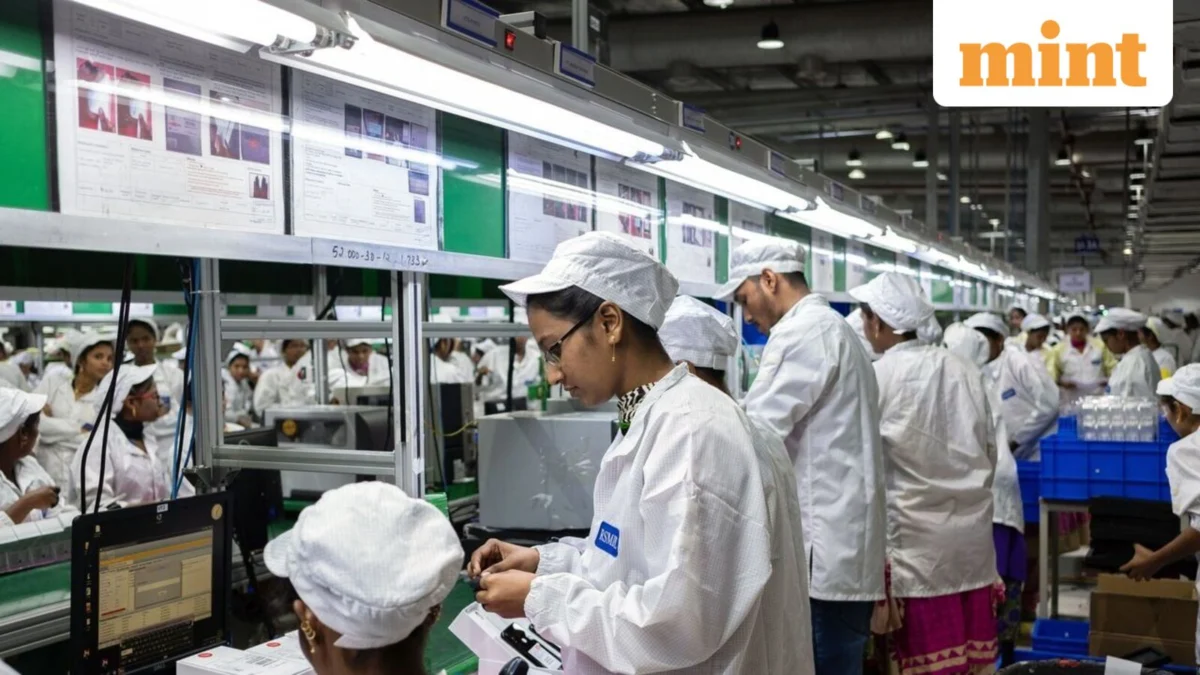
The strategic shift embedded in the MPMS is profoundly significant given India’s journey in electronics manufacturing. Over the past decade, India has remarkably transformed from a nation heavily reliant on mobile phone imports to the world’s second-largest manufacturer by volume. Statistics from the Ministry of Electronics and Information Technology (MeitY) indicate that an astounding 99.2% of phones sold domestically are now assembled within the country. However, this impressive assembly prowess has, until now, masked a persistent dependence on imported components and sub-assemblies, particularly from China. The new policy directly confronts this challenge, aiming to transition India from an assembly hub to a true manufacturing powerhouse with deep local value chains.

This ambition is not standalone; it is part of a broader, integrated strategy. The MPMS complements other key government initiatives such as the Electronics Components Manufacturing Scheme (ECMS) and the Semicon India 2.0 program. Together, these policies seek to create a cohesive ecosystem that supports the entire electronics value chain—from semiconductor design and fabrication to component manufacturing and final product assembly. As Ajai Chowdhry, co-founder of HCL Enterprise and founder of industry consultancy body Epic Foundation, articulated, the early contours of the policy "appear mature, and show that the country’s electronics ecosystem has climbed up the global value chain over the past years." This multi-pronged approach is critical for achieving true self-reliance and insulating India from global supply chain vulnerabilities, a lesson starkly highlighted by recent geopolitical tensions and the COVID-19 pandemic.
A particularly challenging, yet potentially transformative, aspect of the new scheme is its renewed emphasis on fostering homegrown mobile brands. While India has successfully established itself as a manufacturing destination for global giants, its past efforts to cultivate indigenous brands faced significant setbacks. A decade and a half ago, pioneering Indian brands like Micromax and Lava struggled to compete against the aggressive market penetration of Chinese rivals such as Xiaomi, Vivo, and Oppo. This was largely due to a nascent local ecosystem, forcing Indian brands to source designs and components almost entirely from China and merely assemble devices locally. Amitesh Sinha, additional secretary at MeitY and chief executive of the India Semiconductor Mission, acknowledges this historical context, stating, "The latter (domestic brands) is where the true complexity of the scheme lies, but is also one of the biggest opportunities that an Indian company can take." He assured that "this will not be a repeat of the past decade," with the MPMS explicitly designed to create a supply chain independent of heavy reliance on China.
The push for domestic brands carries immense strategic weight. India, with over 140 million mobile phones sold annually, represents one of the largest consumer markets globally. Drawing parallels with China’s successful model, where domestic brands leveraged their home market dominance to expand internationally, experts believe India can emulate this trajectory. "If you look at China’s success, you see that it too leveraged its stature to create homegrown brands that then exported to the world," Chowdhry pointed out. The 3% incentive for capital expenditure related to establishing Indian mobile brands is a clear signal that the government is committed to providing the necessary impetus, aiming to foster not just manufacturers but also innovators and brand builders who can project India’s technological prowess globally.
Beyond the immediate economic benefits, the MPMS holds significant geopolitical implications. It aligns perfectly with the global "China Plus One" strategy, positioning India as a credible and attractive alternative manufacturing hub for companies seeking to diversify their supply chains away from China. This diversification is driven by rising labor costs in China, geopolitical risks, and a desire for greater supply chain resilience. For India, a successful MPMS can translate into substantial foreign direct investment (FDI), large-scale job creation across the manufacturing spectrum (from assembly line workers to R&D engineers), and a significant boost to its overall GDP. It moves India closer to its ambitious goal of becoming a $5 trillion economy and a global manufacturing powerhouse.
However, the success of this ambitious scheme hinges on meticulous implementation and sustained policy support. While the broad contours have been announced, detailed notifications are still awaited, with Union IT minister Ashwini Vaishnaw indicating a timeline of "15 to 20 days" for their release. Challenges will undoubtedly arise, including ensuring bureaucratic efficiency, attracting the necessary high-skilled labor, fostering a robust R&D ecosystem, and maintaining a stable regulatory environment. Competition from other emerging manufacturing hubs like Vietnam and Mexico also remains a factor. Nevertheless, the MPMS, in conjunction with its complementary policies, provides a clear roadmap for localizing the entire electronics value chain, promising a transformative era for India’s mobile phone manufacturing sector and a significant leap towards its technological and economic sovereignty.