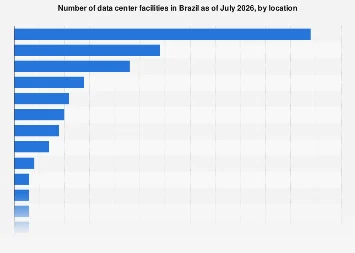
Brazil’s burgeoning digital economy is set to witness a substantial increase in its data center infrastructure by July 2026, with key urban centers poised to lead this expansion. While specific figures remain under embargo for broader access, projections indicate a concentrated growth pattern, with major metropolitan areas expected to house the lion’s share of new facilities. This trend underscores Brazil’s growing importance as a digital hub in Latin America and reflects a global surge in demand for cloud computing, artificial intelligence, and robust data processing capabilities.
The strategic development of data centers is intrinsically linked to the economic vitality and technological advancement of a nation. In Brazil, this growth is not merely about increasing the physical footprint of server farms; it signifies an investment in the digital backbone essential for modern commerce, innovation, and public services. As businesses increasingly rely on digital platforms for operations, customer engagement, and data analytics, the demand for secure, high-capacity, and geographically diverse data storage and processing solutions intensifies. This necessitates a proactive approach to infrastructure development, ensuring that Brazil can not only meet current demands but also anticipate future technological shifts.
Latin America, as a whole, is experiencing a remarkable acceleration in digital transformation, with Brazil often serving as the region’s bellwether. The country’s large population, expanding internet penetration, and a growing number of tech-savvy businesses create a fertile ground for data center investment. Furthermore, the increasing adoption of hybrid and multi-cloud strategies by enterprises necessitates localized data center presence to reduce latency, enhance data sovereignty, and optimize operational costs. This global trend directly influences Brazil’s data center market, encouraging both domestic and international players to expand their offerings.
The concentration of data centers in specific locations is a common phenomenon worldwide, driven by several critical factors. Proximity to major urban centers ensures access to a large pool of potential clients, including financial institutions, e-commerce giants, technology companies, and government agencies. These clients require low-latency connections for their mission-critical applications. Furthermore, major cities typically offer superior connectivity infrastructure, including access to multiple fiber optic networks and submarine cable landing stations, which are vital for reliable and high-speed data transmission. The availability of skilled IT professionals and a robust power grid are also significant considerations, and these are more readily found in established economic hubs.
Beyond connectivity and client proximity, the regulatory environment and the availability of specialized real estate play crucial roles. Developers often seek areas with favorable zoning laws and the potential for scalable infrastructure development. The initial investment in building a data center is substantial, and developers aim to secure locations that offer long-term viability and growth potential. This often translates to a preference for established industrial zones or areas designated for technological development within or on the outskirts of major metropolitan areas.
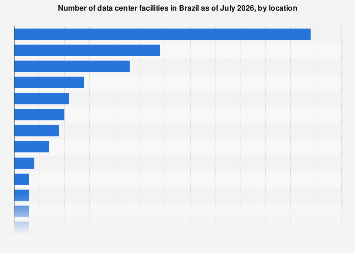
The projected growth in Brazil’s data center capacity is expected to have a ripple effect across the broader economy. The construction phase alone will generate employment opportunities, both directly in the IT and construction sectors, and indirectly in supporting industries. Once operational, these facilities will attract further investment from technology companies and cloud service providers, fostering innovation and creating high-value jobs in areas such as network engineering, cybersecurity, and data science. Moreover, a robust data center infrastructure can enhance Brazil’s competitiveness on the global stage, making it a more attractive destination for foreign direct investment in technology-driven sectors.
The increasing number of data centers also supports the development of emerging technologies. The widespread adoption of Artificial Intelligence (AI) and Machine Learning (ML) is heavily reliant on significant computational power and vast datasets, which data centers provide. As Brazil seeks to harness the potential of these technologies in areas such as agriculture, healthcare, and finance, the availability of localized, high-performance computing resources becomes paramount. Similarly, the expansion of the Internet of Things (IoT) ecosystem, with its proliferation of connected devices generating enormous amounts of data, will further drive the need for edge computing and distributed data center solutions.
However, the rapid expansion of data centers also presents challenges. Energy consumption is a significant concern, as these facilities are energy-intensive operations. Sustainable practices and the integration of renewable energy sources will be critical for the long-term viability and environmental responsibility of Brazil’s data center sector. Companies are increasingly under pressure from regulators, investors, and consumers to reduce their carbon footprint, and data center operators are at the forefront of this movement. Investing in energy-efficient cooling systems, utilizing renewable energy sources like solar and wind power, and optimizing power usage effectiveness (PUE) will be key differentiators.
Water usage for cooling systems is another consideration, particularly in regions facing water scarcity. Innovative cooling technologies, such as liquid cooling, are gaining traction as more efficient alternatives. Furthermore, the secure handling and disposal of electronic waste generated by outdated IT equipment will require careful planning and adherence to environmental regulations. The development of a circular economy approach within the data center industry, focusing on refurbishment, reuse, and responsible recycling, will be essential.
The competitive landscape for data center services in Brazil is dynamic. While established players continue to invest and expand, new entrants are also exploring opportunities. The market is characterized by a mix of colocation providers, hyperscale cloud operators, and enterprise-owned facilities. The increasing demand for specialized services, such as high-density computing for AI workloads and secure environments for sensitive data, is driving further diversification of offerings. Global trends in data center design, including modular construction and the development of hyperscale facilities, are also influencing the Brazilian market.
Looking ahead, the trajectory of Brazil’s data center market appears robust. Continued economic growth, digital transformation initiatives by both public and private sectors, and the increasing adoption of advanced technologies will fuel sustained demand. The strategic development of infrastructure, coupled with a commitment to sustainability and innovation, will be crucial for Brazil to solidify its position as a leading digital economy in Latin America and beyond. The insights into future data center locations will undoubtedly guide investment decisions and shape the geographical distribution of digital services across the nation. As the country continues to embrace its digital future, the evolution of its data center infrastructure will be a critical indicator of its progress.