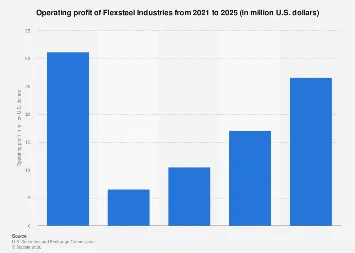
Flexsteel Industries, a prominent player in the furniture manufacturing sector, is poised to reveal its operating profit figures for the 2025 fiscal year, a crucial indicator of its financial health and strategic execution. While precise, granular data remains accessible through specialized business intelligence platforms, the anticipation surrounding these figures underscores the broader economic currents influencing the home furnishings market. The company’s performance in 2025 will be a barometer for consumer spending, supply chain resilience, and the effectiveness of its product innovation and distribution strategies in a dynamic global marketplace.
The furniture industry, inherently tied to discretionary spending and housing market trends, faces a complex interplay of factors. Inflationary pressures, fluctuating raw material costs, and evolving consumer preferences for sustainability and smart home integration are all critical variables that impact profitability. For Flexsteel, a company with a history spanning decades, adapting to these shifts is paramount. Its operational profit, or earnings before interest and taxes (EBIT), will offer insight into its core business efficiency, excluding the impact of financing decisions and tax structures. This metric is a vital tool for investors and analysts seeking to understand the company’s ability to generate profit from its primary operations.
Industry-wide, the furniture sector has experienced significant volatility in recent years. The pandemic initially spurred demand as consumers invested in home improvement and remote work setups. However, subsequent supply chain disruptions, coupled with rising interest rates and a general economic slowdown, have presented new challenges. Companies like Flexsteel are tasked with balancing production capacity, inventory management, and pricing strategies to maintain healthy margins. The projected 2025 figures will reflect how effectively the company has navigated these headwinds and capitalized on any emerging opportunities.
Examining Flexsteel’s profitability trends requires a look at its key performance indicators (KPIs) beyond just operating profit. Profitability KPIs, such as gross profit margin, operating profit margin, and net profit margin, provide a more nuanced understanding of its financial performance. Gross profit margin, for instance, reveals the profitability of its core manufacturing processes after accounting for the cost of goods sold. A healthy gross margin suggests efficient production and favorable procurement of raw materials. Operating profit margin, which is the operating profit divided by revenue, demonstrates the company’s ability to manage its operating expenses, including selling, general, and administrative costs, relative to its sales. Finally, net profit margin, the ultimate measure of profitability, shows the percentage of revenue remaining after all expenses, including taxes and interest, have been deducted.
Beyond profitability, balance sheet KPIs offer a snapshot of Flexsteel’s financial stability and resource management. Metrics like current ratio and quick ratio assess its short-term liquidity, indicating its ability to meet immediate financial obligations. Debt-to-equity ratio is a crucial measure of financial leverage, highlighting the extent to which the company relies on debt financing versus equity. Inventory turnover, another vital balance sheet KPI for a manufacturer, reflects how efficiently inventory is managed and sold. A higher turnover rate generally signifies strong sales and effective inventory control, minimizing the risk of obsolescence and storage costs.
Cash flow KPIs are equally critical, as they illustrate the actual movement of cash into and out of the business. Operating cash flow, in particular, is a strong indicator of the company’s ability to generate cash from its normal business operations. Positive and growing operating cash flow is essential for reinvestment, debt repayment, and dividend distribution. Free cash flow, which is operating cash flow minus capital expenditures, represents the cash available to the company after investments in its long-term assets, such as factories and equipment.
Productivity KPIs can shed light on the operational efficiency of Flexsteel’s workforce and manufacturing processes. Metrics such as revenue per employee or output per labor hour can highlight areas of strength or opportunities for improvement. In an industry where labor costs can be a significant factor, optimizing productivity is a direct driver of enhanced profitability.
Globally, the furniture market is diverse, with significant variations in consumer preferences, regulatory environments, and competitive landscapes across different regions. North America, where Flexsteel primarily operates, is a mature market characterized by strong brand loyalty and a growing demand for customized and sustainable furniture. However, it also faces intense competition from both domestic and international manufacturers, particularly from lower-cost production hubs in Asia.
The economic impact of Flexsteel’s performance extends beyond its shareholders. As a significant employer and consumer of raw materials, its operational success contributes to regional economies through job creation, wages, and demand for goods and services from its suppliers. A thriving Flexsteel can also bolster confidence in the broader manufacturing sector, potentially attracting further investment and innovation.
In the current economic climate, characterized by cautious consumer spending and persistent supply chain uncertainties, companies like Flexsteel are under pressure to demonstrate agility and strategic foresight. The projected 2025 operating profit figures will be a critical data point for understanding the company’s ability to not only weather these challenges but also to position itself for future growth. Analysts will be closely scrutinizing these results for evidence of effective cost management, successful product line adaptation, and robust demand generation in a competitive marketplace. The long-term implications for Flexsteel and the wider furniture industry will be shaped by its capacity to innovate, optimize operations, and respond effectively to the evolving needs and economic realities of consumers worldwide.