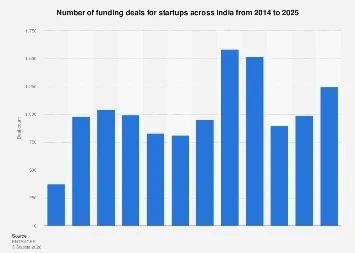
The Indian startup ecosystem is poised for a dynamic year in 2025, with significant shifts anticipated in the volume and nature of funding deals. While precise figures remain under exclusive access, industry analysis and emerging trends point towards a maturing market that, despite potential global economic headwinds, is likely to continue attracting substantial investment. This projected landscape reflects not only India’s inherent economic growth but also the evolving strategies of venture capitalists and the increasing sophistication of domestic startups.
The year 2025 is expected to be a pivotal period for Indian startups seeking capital. Following a period of rapid expansion and, in some cases, recalibration, the market is settling into a more sustainable growth trajectory. While the frenzied deal-making of previous years might see a moderation, the underlying investor appetite for disruptive technologies and scalable business models remains robust. This suggests a focus on quality over sheer quantity, with investors prioritizing companies demonstrating strong unit economics, clear paths to profitability, and resilient competitive advantages. Early-stage funding, particularly for pre-seed and seed rounds, is anticipated to remain active, fueling innovation at the foundational level. Series A and B rounds are also expected to be crucial, as promising startups seek to scale their operations and expand market reach.
The types of deals and the sectors attracting the most attention are also likely to evolve. While the digital economy, including e-commerce, fintech, and edtech, has been a dominant force, there’s a growing emphasis on deep-tech, sustainability-focused ventures, and sectors addressing India’s unique demographic and infrastructural challenges. Investments in artificial intelligence, machine learning, biotechnology, and renewable energy solutions are projected to see increased traction. Furthermore, the "Bharat" market, referring to tier-2 and tier-3 cities and rural areas, presents a vast untapped potential, and startups catering to this segment are likely to draw significant investor interest. The government’s continued push for digitalization and manufacturing (Make in India) will also indirectly spur funding in related technology and logistics startups.
Global economic conditions will undoubtedly play a role in shaping the funding environment. Inflationary pressures, geopolitical uncertainties, and the potential for interest rate hikes in major economies could lead to a more cautious approach from international investors. However, India’s strong domestic consumption, its growing middle class, and its position as a leading digital economy provide a degree of insulation. The increasing participation of domestic venture capital funds and corporate venture arms is also a significant stabilizing factor. These local players often have a deeper understanding of the Indian market and a longer-term investment horizon, helping to counterbalance any volatility from international capital flows.
The performance of Indian startups in 2025 will also be influenced by the regulatory landscape. The government’s efforts to streamline regulations, promote ease of doing business, and provide policy support for innovation are critical. Initiatives like the Startup India Seed Fund Scheme and the push for digital infrastructure create a more conducive environment for new ventures. However, areas such as data privacy, cybersecurity, and competition policy will continue to be areas of focus, requiring startups to navigate a complex but evolving regulatory framework.
Statistics from previous years offer valuable context. India has consistently ranked among the top startup ecosystems globally, with a significant number of unicorns emerging in recent years. While the pace of unicorn creation might moderate in 2025 compared to peak years, the focus will likely shift towards building sustainable businesses rather than rapid valuation growth. The average deal size at later stages might see some adjustment, but the overall volume of capital deployed is expected to remain substantial, reflecting the long-term growth story of the Indian economy.
Expert insights suggest that 2025 will be a year of strategic consolidation and focused growth for Indian startups. "Investors are becoming more discerning," notes a prominent venture capitalist. "They are looking for businesses that can demonstrate genuine product-market fit and a clear path to profitability, not just hyper-growth at any cost. The companies that can navigate this environment effectively will be the ones to watch." This sentiment is echoed by industry analysts who predict a greater emphasis on due diligence and valuation discipline from both investors and founders.
The economic impact of a robust startup funding environment in India is multifaceted. It drives job creation, fosters technological advancement, and contributes to GDP growth. Successful startups not only create direct employment but also generate indirect jobs through their supply chains and the ancillary services they utilize. Furthermore, the innovation spurred by these companies can lead to increased productivity across various sectors of the economy and enhance India’s competitiveness on the global stage. The ability of Indian startups to attract and deploy capital effectively in 2025 will be a key indicator of the nation’s economic resilience and its future growth potential. The coming year promises to be a testament to the evolving maturity and enduring dynamism of India’s entrepreneurial landscape.