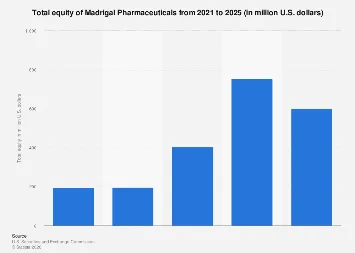
Madrigal Pharmaceuticals, a company known for its innovative approach to drug development, is poised to see significant shifts in its total equity by the year 2025. While specific, real-time equity figures are often proprietary and subject to market fluctuations, financial projections and analyses paint a picture of a company actively managing its capital structure, seeking growth, and potentially facing evolving investor sentiment. Understanding the dynamics that influence a biopharmaceutical company’s equity is crucial for investors, analysts, and industry observers alike, offering insights into its financial health, strategic direction, and long-term value creation potential.
The total equity of a company represents the residual interest in the assets of an entity after deducting all its liabilities. For a publicly traded entity like Madrigal Pharmaceuticals, this figure is a composite of common stock, preferred stock, retained earnings, and additional paid-in capital. Changes in total equity are driven by a multitude of factors, including profitability, share issuances or buybacks, dividend payments, and accounting adjustments. In the competitive and capital-intensive biopharmaceutical sector, where research and development costs are substantial and regulatory hurdles are significant, managing equity effectively is paramount to sustained success.
Madrigal Pharmaceuticals’ strategic initiatives, such as the advancement of its pipeline candidates through clinical trials and potential commercialization, directly impact its financial trajectory. Successful clinical trial outcomes and the subsequent approval of new therapies can lead to substantial revenue growth, boosting retained earnings and consequently, total equity. Conversely, setbacks in development or costly regulatory processes can strain financial resources, potentially necessitating equity financing or impacting profitability. The company’s investment in research and development is a critical determinant of its future earnings potential. For instance, if Madrigal is heavily investing in Phase III trials for a groundbreaking drug, this expenditure, while increasing operational costs, is a strategic move aimed at unlocking significant future revenue streams that will ultimately bolster equity through increased profitability.
Furthermore, Madrigal Pharmaceuticals’ approach to capital allocation plays a vital role. Decisions regarding share repurchases, for example, can reduce the number of outstanding shares, potentially increasing earnings per share and enhancing shareholder value, but also decreasing total equity. Conversely, issuing new shares to raise capital for expansion, acquisitions, or to fund ongoing research can increase total equity but may dilute existing ownership stakes. The company’s investor relations strategy and its ability to attract and retain capital are also intrinsically linked to its equity performance. A strong market perception of its pipeline and management team can facilitate favorable financing terms and support a higher valuation, influencing the overall equity composition.
The biopharmaceutical industry is characterized by intense competition and a constant drive for innovation. Companies like Madrigal operate within a global marketplace, facing challenges and opportunities from both domestic and international competitors. The economic climate, including interest rate policies and the availability of venture capital and public market funding, significantly influences a company’s ability to raise capital and manage its debt-to-equity ratios. For example, a period of low interest rates might make it more attractive for Madrigal to finance operations through debt, potentially leading to a higher debt-to-equity ratio, while rising rates could incentivize equity financing or a focus on internal cash generation.
Analyzing the projected equity of Madrigal Pharmaceuticals in 2025 requires consideration of its current financial statements, analyst reports, and forward-looking statements made by the company’s management. While precise figures are subject to disclosure and market dynamics, trends can be extrapolated. If Madrigal has a strong pipeline with high potential for commercial success, investors might anticipate a significant increase in retained earnings over the coming years, contributing positively to total equity. The company’s revenue streams are directly tied to the success of its drug portfolio. If a key drug is nearing market approval or has recently launched, and is demonstrating strong sales performance, this will translate into higher profits and thus, an increase in equity.
The valuation of biopharmaceutical companies is often complex, influenced not only by current financial performance but also by the perceived future value of their intellectual property and drug pipeline. This can lead to significant volatility in stock prices, which in turn affects market capitalization and, indirectly, the perception of the company’s equity. For instance, a successful drug launch could lead to a significant surge in market value, reflecting investor confidence in future earnings, which would then be indirectly reflected in equity growth through increased retained earnings and potentially higher stock valuations.
Moreover, regulatory environments worldwide present a critical factor. Approvals from agencies like the U.S. Food and Drug Administration (FDA) or the European Medicines Agency (EMA) are pivotal. The time, cost, and uncertainty associated with these approvals mean that successful navigation of the regulatory landscape is a key driver of value and, consequently, equity. A company that consistently demonstrates the ability to bring drugs to market efficiently and effectively is likely to see its equity value reflect this success.
In terms of global comparisons, the biopharmaceutical sector is highly consolidated and competitive. Major players often engage in mergers and acquisitions, which can drastically alter the equity structures of the involved entities. Madrigal’s strategic decisions regarding partnerships, licensing agreements, or potential acquisitions will also shape its equity profile. For example, if Madrigal were to acquire a smaller biotech firm with a promising early-stage drug candidate, this transaction would likely involve issuing new shares or utilizing cash reserves, impacting its total equity.
The economic impact of Madrigal Pharmaceuticals’ financial performance extends beyond its balance sheet. As a developer of potentially life-saving therapies, its success contributes to public health advancements and can create jobs within the research, development, manufacturing, and commercial sectors. A growing and financially robust Madrigal can therefore have a positive ripple effect on the broader economy, fostering innovation and contributing to overall economic growth.
Looking ahead to 2025, the equity of Madrigal Pharmaceuticals will likely be a reflection of its ability to translate scientific breakthroughs into commercial successes, navigate complex regulatory pathways, and manage its capital efficiently in a dynamic global market. Investors will closely monitor its progress in clinical development, its commercialization strategies, and its overall financial management to gauge its long-term value proposition. The company’s commitment to innovation, coupled with prudent financial stewardship, will be the cornerstones of its projected equity performance in the coming years. The intricate interplay of R&D investment, clinical trial outcomes, market approvals, and financial management will ultimately define Madrigal’s equity narrative by 2025.