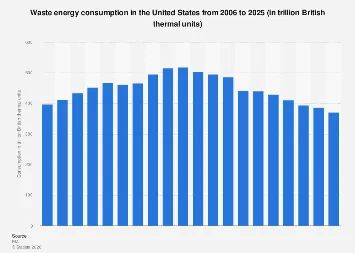
The United States is poised to continue its engagement with waste-to-energy (WTE) technologies, a critical component in the nation’s broader strategy for waste management and renewable energy generation, with projections indicating a steady trajectory through 2025. While precise, granular data on consumption is often proprietary and subject to market access, the overarching trend points towards sustained interest and investment in converting discarded materials into usable energy. This sector, though not as dominant as other renewable sources like solar or wind, plays a significant role in reducing landfill burden and contributing to the domestic energy mix.
The concept of waste-to-energy encompasses a range of technologies, from traditional incineration with energy recovery to more advanced methods such as gasification, pyrolysis, and anaerobic digestion. These processes transform municipal solid waste (MSW), industrial byproducts, and even agricultural residues into heat, electricity, or biofuels. In the U.S. context, incineration with energy recovery has historically been the most prevalent form of WTE, accounting for a substantial portion of the waste processed. However, evolving environmental regulations and technological advancements are spurring interest in cleaner and more efficient alternatives.
Globally, the WTE market is robust, driven by similar pressures of landfill scarcity, rising energy demands, and a growing imperative for circular economy principles. Countries like Japan, Germany, and Switzerland have long been leaders in WTE, integrating it deeply into their national waste management infrastructure. Their experience offers valuable lessons for the U.S. in terms of policy frameworks, public acceptance, and the economic viability of such projects. The U.S. market, while substantial, has faced challenges including public perception concerns regarding emissions, siting difficulties for new facilities, and competition from other waste disposal methods and energy sources.
Market analysis for the U.S. WTE sector through 2025 suggests a market that is neither explosive nor stagnant. Instead, it is characterized by incremental growth and technological refinement. Factors influencing this growth include municipal solid waste generation rates, the availability of suitable landfill sites, fluctuating fossil fuel prices, and supportive government policies. The Energy Information Administration (EIA) and the Environmental Protection Agency (EPA) are key sources for broader energy and waste data, often providing insights into the contribution of WTE to the national energy portfolio. While specific consumption figures for 2025 remain in flux and are often commercially sensitive, the operational capacity of existing WTE plants and planned expansions provide a strong indication of future activity.
The economic impact of the WTE sector extends beyond energy generation. It creates jobs in facility construction, operation, and maintenance, as well as in the collection and transportation of waste. Furthermore, by diverting waste from landfills, WTE facilities can reduce the environmental liabilities associated with landfill management, such as methane emissions and leachate contamination. The revenue generated from selling electricity or heat to the grid, coupled with tipping fees for waste disposal, forms the economic backbone of these operations. However, the profitability of WTE facilities is sensitive to electricity prices, the cost of waste processing, and the capital investment required for construction and upgrades.
The U.S. currently operates a significant number of WTE facilities, with their contribution to the national electricity generation mix, though modest, being consistent. For instance, WTE plants collectively generate a few gigawatts of power, a fraction of the total U.S. electricity output but a significant source of baseload renewable power. The projected data for 2025 will likely reflect the continued operation of these existing plants, with potential additions or upgrades to enhance efficiency and environmental performance. The trend is towards optimizing existing infrastructure and exploring advanced technologies that can handle a wider range of waste streams and produce more valuable energy products.
Expert insights often highlight the need for a balanced approach to WTE. While beneficial for waste reduction and energy production, it is crucial to ensure that WTE facilities meet stringent environmental standards. Modern WTE plants employ advanced pollution control technologies to minimize emissions, including particulate matter, dioxins, and furans. The debate often centers on the hierarchy of waste management: reduce, reuse, recycle, and then recover energy. WTE is typically positioned as an option for residual waste that cannot be effectively managed through other methods.
The global market for WTE technologies is projected for steady growth, indicating a worldwide recognition of its role in sustainable waste management. This global demand influences technological innovation and cost reductions, which can, in turn, benefit the U.S. market. As international companies develop and deploy more efficient and environmentally sound WTE solutions, these advancements become accessible to American project developers and municipalities. The U.S. market’s development is therefore intertwined with global trends in technology and policy.
Looking ahead to 2025, the U.S. WTE landscape will likely be shaped by several key drivers. These include the ongoing push for decarbonization and increased renewable energy deployment, federal and state policies that incentivize waste diversion and energy recovery, and the development of new markets for waste-derived products, such as recycled materials and biofuels. The ability of the WTE sector to adapt to evolving waste streams, driven by changes in consumption patterns and the increasing prevalence of packaging materials, will also be critical. Furthermore, public discourse and community engagement will remain pivotal in the successful siting and operation of new WTE projects. The sector’s future hinges on its capacity to demonstrate its environmental integrity and economic competitiveness within the broader energy and waste management ecosystem.