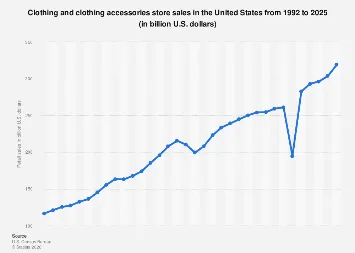
The United States apparel and accessories retail sector is projected to achieve a substantial sales volume of approximately $319 billion in 2025, underscoring its enduring dominance as the world’s largest clothing market. This robust figure represents a consistent upward trajectory for an industry that operates primarily through brick-and-mortar establishments, defined by the North American Industry Classification System (NAICS) as businesses retailing clothing and related accessories from fixed points of sale. The sector’s resilience is further evidenced by its consistent monthly sales performance, frequently surpassing the $15 billion mark. In December 2024 alone, retail sales within clothing stores reached an impressive $27 billion, signaling strong seasonal demand.
The expansive nature of the U.S. apparel market is distinctly segmented, with women’s and girls’ apparel generating an estimated $191.4 billion in revenue in 2024. This segment significantly outweighs the men’s and boys’ apparel market, which garnered an estimated $111 billion during the same period. These figures highlight not only the sheer scale of consumer spending but also the nuanced demographic preferences that shape the industry’s landscape. The ongoing evolution of fashion trends, coupled with shifting consumer lifestyles and increased disposable incomes, continues to fuel demand across all age and gender demographics.
Delving deeper into the competitive dynamics of the U.S. apparel landscape, certain brands have cultivated exceptional consumer loyalty and market penetration. Levi’s, a venerable name in denim and casual wear, stands out as a testament to enduring brand appeal. According to a survey conducted in the fourth quarter of 2024, Levi’s ranks among the most popular apparel brands for U.S. consumers. This widespread recognition is directly correlated with its financial performance, with the company reporting a record-breaking $6.4 billion in global net sales for 2024. Such success is attributable to a strategic blend of heritage, innovative product development, and effective marketing that resonates with a broad consumer base. The brand’s ability to consistently adapt to evolving fashion sensibilities while maintaining its core identity has solidified its position as a market leader.
The broader economic impact of the U.S. apparel sector extends far beyond retail sales figures. It encompasses a complex supply chain involving manufacturing, design, logistics, and marketing, creating a significant number of employment opportunities. The industry’s contribution to the U.S. Gross Domestic Product (GDP) is substantial, reflecting its role as a major engine of economic activity. Furthermore, the sector is increasingly influenced by global economic trends, international trade policies, and the fluctuating costs of raw materials such as cotton and synthetic fibers. Geopolitical events and trade disputes can directly impact sourcing and manufacturing costs, necessitating agile and responsive business strategies from apparel companies.
Consumer behavior within the apparel market is also undergoing a rapid transformation, driven by the proliferation of e-commerce and the growing emphasis on sustainability. Online retail has become an indispensable channel, offering consumers unparalleled convenience, a wider selection of products, and competitive pricing. This shift has compelled traditional brick-and-mortar retailers to innovate, integrating digital strategies with their physical store presence to create a seamless omnichannel experience. Simultaneously, there is a discernible and accelerating consumer demand for ethically sourced and environmentally friendly apparel. Brands that prioritize sustainable practices, from material sourcing to production processes and packaging, are increasingly gaining favor with conscious consumers, particularly among younger demographics. This growing segment of the market presents both a challenge and an opportunity for established and emerging players alike.
Market analysts project that the U.S. apparel market will continue to expand, albeit at a more moderate pace in the coming years, driven by innovation and evolving consumer priorities. The integration of technology, such as artificial intelligence for personalized shopping experiences and virtual try-on solutions, is expected to further enhance customer engagement and drive sales. The ongoing dialogue around supply chain transparency and ethical manufacturing will likely intensify, pushing companies to adopt more responsible business models. Moreover, the luxury segment of the market, while smaller in volume, often exhibits greater resilience during economic downturns and continues to be a significant contributor to overall industry revenue and brand perception. The ability of U.S. apparel retailers to navigate these multifaceted challenges and capitalize on emerging opportunities will be critical to their sustained success in the global marketplace. The industry’s capacity to adapt to technological advancements, embrace sustainability, and understand the ever-shifting preferences of its diverse consumer base will ultimately define its trajectory in the years ahead. The $319 billion projection for 2025 serves as a strong indicator of the market’s inherent strength and its continued importance to the U.S. economy.