The dynamic landscape of Indian aviation is undergoing a significant realignment, with IndiGo, the nation’s largest low-cost carrier, solidifying its market dominance to an unprecedented degree, while the Tata Group-led Air India grapples with operational headwinds that have seen its market share recede. This divergence underscores not only contrasting strategic trajectories but also highlights the intense competition and the critical role of operational efficiency in one of the world’s fastest-growing aviation markets.
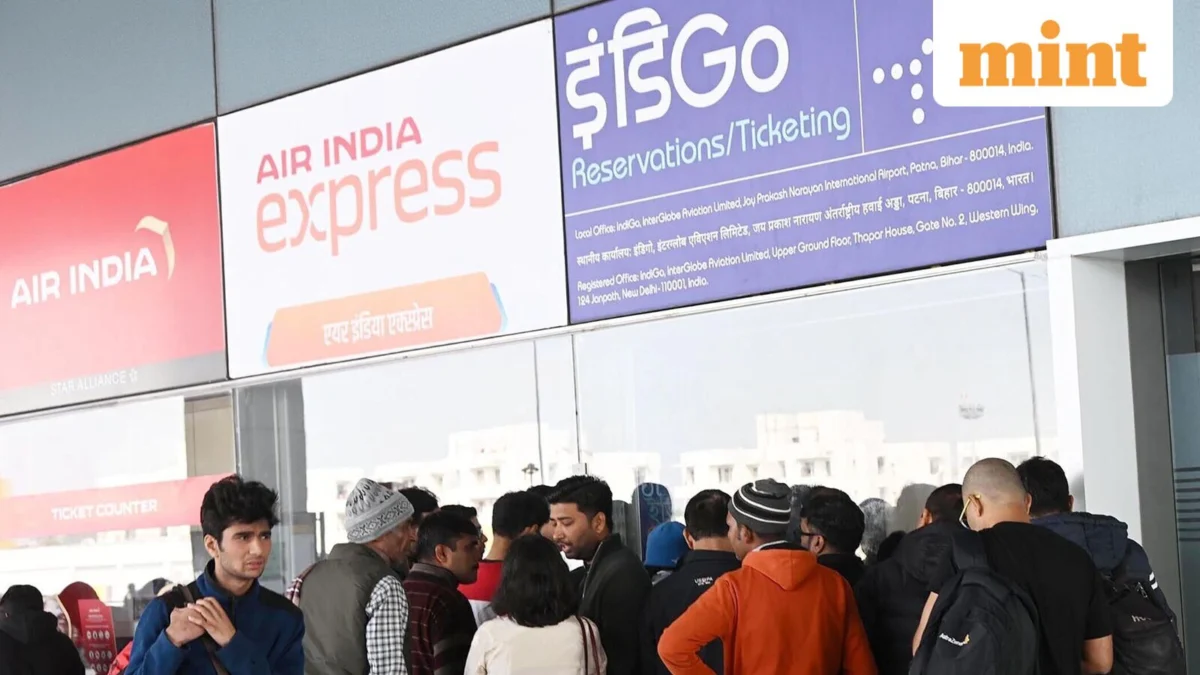
Recent data from the Directorate General of Civil Aviation (DGCA) reveals a stark picture for June, illustrating IndiGo’s formidable grip on the domestic sector. The budget carrier, operated by InterGlobe Aviation Ltd., saw its market share expand to a remarkable 66.3%, meaning nearly two out of every three domestic passengers in India now choose IndiGo. This figure represents an increase from 64.5% a year prior, cementing its position as the undisputed leader. Conversely, the Air India group, which encompasses the full-service Air India and its budget arm Air India Express, experienced a contraction, with its share falling to 23.9% from 27.1% in the corresponding period last year. This market redistribution is a critical indicator of the broader challenges and opportunities shaping India’s burgeoning air travel sector.
At the heart of this market shift lies a fundamental disparity in capacity deployment. The Air India group has faced substantial operational disruptions and capacity cuts, notably operating approximately 3,900 fewer domestic departures in April and May compared to the previous year, a decline of around 7%. These reductions have ripple effects across its network, impacting both domestic and international connectivity. Industry observers, such as Kotak Institutional Equities, noted a more severe contraction, with Air India operating nearly 25% fewer flights year-on-year during the first week of June. This sustained reduction in available seats inevitably leads to a migration of passengers to competitors, particularly those with readily available capacity.
In sharp contrast, IndiGo has aggressively expanded its footprint. Over the same two-month period (April-May), the carrier augmented its capacity by a substantial 12%, adding over 13,000 domestic departures. This proactive strategy of adding flights and routes has allowed IndiGo to capture a significant portion of the displaced demand, translating directly into its record-high market share. This capacity-led growth strategy is a hallmark of successful low-cost carriers globally, enabling them to leverage economies of scale and maintain competitive pricing, even in an environment of rising operational costs.
The challenges confronting Air India are multifaceted, stemming from its complex privatization process and the ambitious integration of its various entities. The airline is undergoing a massive fleet modernization and expansion program, which includes retrofits, aircraft retirements, and awaiting new deliveries. However, these transitions are often fraught with delays, exacerbated by global supply-chain bottlenecks impacting aircraft availability and maintenance schedules. Jainam Shah, an aviation analyst at Equirus Securities, articulated this, stating that "delayed aircraft deliveries, fleet retrofits, aircraft retirements, and supply-chain bottlenecks have reduced aircraft availability at Air India, enabling IndiGo to capture a significant portion of the displaced demand." While Air India’s Chief Commercial Officer, Nipun Aggarwal, expressed confidence in restoring capacity across most domestic and international routes from September onwards, analysts suggest that a meaningful recovery in market share will likely be gradual, given the scale of the operational overhaul required.
Beyond capacity, operational consistency plays a pivotal role in passenger preference and airline loyalty. IndiGo has consistently outperformed its rivals in key metrics such as on-time performance (OTP) and cancellation rates. In June, IndiGo reported an impressive OTP of 89.4% across India’s ten busiest airports, significantly ahead of the Air India group’s 85.9% and Akasa Air’s 82.7%. Furthermore, IndiGo maintained one of the industry’s lowest cancellation rates at just 0.2%. This level of reliability is a powerful differentiator, especially in a market where flight delays and cancellations can cause considerable inconvenience and financial loss for travellers. The Air India group, while better than some competitors, still registered a higher cancellation rate of 0.49%.

The competitive landscape beyond the two giants also tells a compelling story. Akasa Air, a relatively new entrant promoted by SNV Aviation, continues its impressive ascent, cementing its position as the country’s third-largest airline. Its market share reached a record 6.4%, fueled by steady fleet additions and a 16% increase in domestic departures during April and May, operating 1,356 more flights than a year ago. Akasa’s rapid expansion underscores the underlying demand in the Indian market and the potential for agile new players to carve out niches.
In stark contrast, SpiceJet, promoted by Ajay Singh, continues to struggle under the weight of prolonged operational constraints, financial difficulties, and legal battles with lessors. With a depleted fleet of just 11 planes, the airline maintained its market share at a paltry 1.9% in June—its lowest ever. Despite a marginal increase of 195 departures (about 3%) in April-May, its deep-seated issues overshadowed any capacity gains. SpiceJet’s dismal OTP of 33.5% and alarmingly high cancellation rate of 6.23% highlight the severe challenges it faces, serving as a cautionary tale of the unforgiving nature of the aviation business. Amit Mittal, an aviation expert and director at Aerointellect Aviation, observed that "the redistribution of market share suggests passengers affected by Air India’s reduced capacity and SpiceJet’s prolonged operational challenges have largely migrated to IndiGo, further widening the gap between the market leader and its rivals."
The leadership transitions at both Air India and IndiGo add another layer of complexity and potential strategic shifts. IndiGo’s appointment of Willie Walsh, former British Airways chief, as its chief executive, following Pieter Elbers’ resignation, signals a continued focus on international best practices and potentially an enhanced global footprint. Air India, on the other hand, is still seeking a successor to Campbell Wilson, who announced his departure in April. Leadership stability and vision are crucial for navigating the highly capital-intensive and competitive aviation sector, influencing everything from fleet strategy to network planning and customer service.
Globally, the Indian aviation market stands out for its immense potential, driven by a burgeoning middle class, increasing disposable incomes, and improving connectivity. India is projected to become the third-largest aviation market by 2030, presenting significant opportunities for growth. However, this growth also brings challenges, including high fuel costs, infrastructure constraints at major airports, and intense fare competition. The current market concentration, with IndiGo controlling nearly two-thirds of domestic traffic, raises questions about long-term competitive health and potential pricing power. While increased capacity can lead to lower fares in the short term, sustained dominance could allow for less competitive pricing over time, impacting consumers.
The overall health of the Indian aviation sector, despite individual airline challenges, remains robust. Domestic airlines collectively carried 13.5 million passengers in June, contributing to a total of 86.4 million passengers in the first six months of the year, representing a 1.44% increase from a year earlier. This stable passenger traffic, even amidst industry capacity cuts, underscores a resilient underlying demand. As Equirus’ Shah noted, "Despite capacity cuts in the industry, passenger traffic has remained broadly stable, reflecting stable underlying demand." This sustained demand is crucial for the airlines as they navigate operational complexities, integrate new aircraft, and expand their networks.
Looking ahead, the Indian aviation sector is poised for continued expansion, but the trajectory of its key players will be critical. Air India’s success hinges on its ability to swiftly execute its turnaround strategy, integrate its various brands, and effectively deploy its planned capacity. Its long-term vision involves transforming into a world-class global carrier, leveraging its strategic location and the Tata Group’s extensive resources. IndiGo, meanwhile, is expected to continue its relentless pursuit of growth, potentially exploring further international routes and deepening its operational efficiencies. The continued emergence of new players like Akasa Air and the potential for existing smaller airlines to consolidate or revive will also shape the competitive landscape. The skies over India remain fiercely contested, with operational excellence and strategic capacity management proving to be the ultimate determinants of altitude.