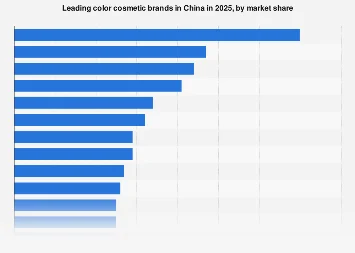
The Chinese color cosmetics market, a vibrant and rapidly evolving sector, is characterized by intense competition and a significant shift in consumer preferences, with both global luxury brands and burgeoning domestic players vying for market dominance. In 2025, the landscape for color cosmetics in China is projected to be a complex interplay of established luxury names and rising national brands, reflecting the country’s growing consumer sophistication and increasing pride in local innovation. While specific market share percentages for many brands remain proprietary, available data and industry analyses point to a highly contested environment where brand perception, product innovation, and effective marketing strategies are paramount.
Luxury brands, long a staple in the high-end beauty segment, continue to command significant attention. Yves Saint Laurent (YSL) has historically demonstrated strong performance in China’s color cosmetics segment, often ranking among the top contenders. Its association with glamour, sophisticated formulations, and aspirational marketing resonates deeply with a significant consumer base. The brand’s ability to consistently deliver on product quality and cultivate an image of exclusivity has been key to its sustained appeal in a market that values premium experiences. The presence of YSL at the forefront of the market underscores the enduring power of heritage luxury in China, a testament to its strategic investment in understanding and catering to the discerning Chinese consumer.
However, the narrative of China’s beauty market is increasingly being rewritten by its domestic champions. Mao Geping, a prominent Chinese makeup artist and brand founder, has emerged as a formidable force, challenging the long-held dominance of international labels. The brand’s success is rooted in its deep understanding of Chinese facial features, skin tones, and aesthetic preferences. Mao Geping’s ability to offer products that are perceived as tailor-made for the local consumer, combined with strategic celebrity endorsements and effective social media campaigns, has propelled it into the upper echelons of the market. The brand’s ascent highlights a broader trend of national pride and a growing appreciation for domestically developed beauty products that offer both quality and cultural relevance.
The competitive intensity is further evidenced by the significant representation of domestic brands within the top tier of China’s color cosmetics market. This suggests a strategic rebalancing, moving away from a perception of international brands being inherently superior towards an acceptance and endorsement of local expertise and product development. This rise of domestic brands is not merely a matter of price point; it reflects a maturing consumer base that is more informed, discerning, and increasingly loyal to brands that genuinely understand their needs and aspirations. These local players are leveraging digital platforms with remarkable agility, engaging consumers through livestreaming, short-form video content, and influencer collaborations, creating a direct and authentic connection that is proving highly effective.
Beyond these leading players, a multitude of brands, both international and domestic, are actively participating in this dynamic market. Brands like Estée Lauder Companies’ MAC, L’Oréal’s Lancôme, and Shiseido’s NARS are also significant contributors to the high-end color cosmetics segment, each bringing their unique brand ethos and product innovations. MAC, known for its professional-grade formulations and vibrant color palettes, appeals to makeup artists and enthusiasts alike. Lancôme, with its focus on sophisticated elegance and scientific innovation, targets a more mature and affluent demographic. NARS, celebrated for its bold color stories and chic branding, continues to attract consumers seeking a modern, edgy aesthetic.
The Chinese beauty market’s sheer scale and growth trajectory make it an indispensable focus for global beauty conglomerates. China has consistently ranked as one of the largest and fastest-growing beauty markets worldwide. The economic growth, coupled with a rising disposable income, particularly among younger generations, has fueled a robust demand for beauty products. Statista data consistently indicates a strong upward trend in beauty and personal care spending in China, with color cosmetics forming a significant and growing segment within this. Projections for the coming years suggest continued expansion, driven by factors such as increased urbanization, a growing middle class, and evolving consumer lifestyles.
The digital ecosystem in China plays a pivotal role in shaping brand performance and consumer engagement. E-commerce platforms like Tmall and JD.com are not just sales channels but also crucial touchpoints for brand discovery and consumer interaction. Livestreaming e-commerce, in particular, has revolutionized the way beauty products are marketed and sold. Key opinion leaders (KOLs) and key opinion consumers (KOCs) leverage these platforms to provide authentic reviews, tutorials, and real-time engagement, directly influencing purchasing decisions. Brands that master this digital-first approach, integrating social media, e-commerce, and influencer marketing seamlessly, are better positioned to capture market share.
Furthermore, the rise of "Guochao," or national trend, has significantly impacted the beauty industry. This movement celebrates Chinese culture and heritage, encouraging consumers to embrace domestic brands and products that reflect their identity. This has provided a fertile ground for local cosmetic brands to innovate and market themselves effectively, often by incorporating traditional Chinese elements into their branding, packaging, and product development. Mao Geping’s success is a prime example of this phenomenon, demonstrating that authenticity and cultural resonance can be powerful competitive advantages.
The economic implications of this competitive landscape are substantial. For international brands, maintaining relevance requires continuous adaptation to local trends, rigorous product innovation, and substantial investment in digital marketing and localized strategies. Failure to do so risks ceding ground to agile domestic competitors. For Chinese brands, the challenge lies in scaling their operations, maintaining product quality as they grow, and building global brand recognition. The growth of these domestic players not only contributes to the national economy but also fosters a more diverse and dynamic global beauty industry.
Looking ahead, the Chinese color cosmetics market is expected to remain a focal point for global beauty brands and a breeding ground for innovative local players. The continued rise of conscious consumerism, with an increasing emphasis on sustainability, ethical sourcing, and clean beauty, will likely shape future product development and marketing strategies. Brands that can authentically address these concerns, while continuing to deliver on performance and desirability, will be best positioned for long-term success in this ever-evolving and fiercely competitive arena. The interplay between global luxury, domestic innovation, and evolving consumer values will undoubtedly continue to define the contours of China’s vibrant beauty sector.