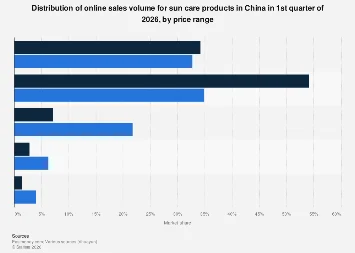
The first quarter of 2026 is poised to witness a strong performance in China’s online sunscreen market, with products positioned in the mid-price segment emerging as the clear frontrunners in sales volume. This trend is particularly pronounced for both traditional sunscreen creams and their spray counterparts, indicating a consumer preference for value-driven offerings that do not necessarily compromise on perceived quality or efficacy. Analysis of sales data from major e-commerce platforms such as Taobao, Tmall, JD.com, and Douyin reveals that a significant portion of consumer spending is concentrated within a specific price bracket, suggesting a mature market where consumers have a clear understanding of product value.
While specific figures remain proprietary, the data points towards a substantial share of the market being captured by products priced between a yet-to-be-disclosed lower threshold and a similarly undefined upper limit. For sunscreen sprays, this mid-price category is projected to account for a commanding majority of the sales volume. This phenomenon is not unique to China; similar consumer behavior patterns have been observed in other developing and developed markets where a balance between affordability and performance is a key purchasing driver. As disposable incomes rise and consumer awareness about sun protection grows, individuals are increasingly seeking out products that offer a good return on investment.
The Chinese sun care market has experienced remarkable growth over the past decade, fueled by increasing awareness of the detrimental effects of UV radiation, a growing middle class with greater purchasing power, and a burgeoning beauty and wellness industry. This has led to a proliferation of both domestic and international brands competing for market share. The shift towards online channels, accelerated by the COVID-19 pandemic and the rapid expansion of e-commerce infrastructure, has further democratized access to these products and intensified competition. Consumers now have an unprecedented array of choices at their fingertips, making price a critical differentiator, especially for frequently purchased consumer goods like sunscreens.
The emphasis on the mid-price range suggests a consumer base that is discerning but not necessarily seeking the absolute cheapest or most luxurious options. This segment often represents products from established mid-tier brands, as well as premium offerings from emerging domestic players that have managed to optimize their supply chains and marketing strategies to offer competitive pricing. It also reflects a consumer segment that is educated about the ingredients and benefits of sun protection but is mindful of budget constraints, particularly when purchasing products for daily use or for multiple family members.
The distinction between sunscreen creams and sprays in terms of sales volume distribution by price is also noteworthy. While both formats are dominated by the mid-price segment, the specific percentage of sales within this range for sprays highlights their growing popularity. Sunscreen sprays offer convenience and ease of application, making them attractive for active lifestyles and for reapplying throughout the day. This convenience factor, combined with a competitive price point, appears to be a winning formula for capturing market share. The innovation in formulations, such as lighter textures and improved coverage, has also contributed to the broader appeal of spray sunscreens.
The sourcing of this data from major Chinese e-commerce platforms is critical. Taobao and Tmall, operated by Alibaba, are giants in China’s e-commerce landscape, offering a vast range of products. JD.com is known for its strong logistics and focus on authentic products, often attracting consumers looking for higher-end goods. Douyin, the Chinese version of TikTok, has rapidly evolved into a significant e-commerce channel, leveraging short-form video content and live streaming to drive sales. The inclusion of these platforms provides a comprehensive overview of online consumer purchasing behavior.
The supplementary notes regarding currency conversion are also important for an international audience. The exchange rate of one yuan to approximately 0.15 U.S. dollars and 0.13 euros as of July 2026 provides a benchmark for understanding the absolute price points of these mid-range products in global terms. This allows for a more nuanced comparison with sunscreen markets in other regions.
The broader economic implications of this trend are significant. The sustained demand for mid-priced sunscreens suggests a robust consumer market in China, capable of supporting a wide spectrum of brands and product offerings. For manufacturers, it underscores the importance of a well-defined pricing strategy that balances production costs, perceived value, and competitive positioning. Brands that can effectively communicate the benefits of their products within this price bracket are likely to achieve greater success. Furthermore, the dominance of online sales highlights the continued importance of digital marketing, influencer collaborations, and efficient e-commerce operations for reaching Chinese consumers.
Looking ahead, the sun care market in China is expected to continue its upward trajectory. Factors such as an aging population increasingly focused on anti-aging benefits, a growing interest in outdoor activities, and a heightened awareness of skin health will likely sustain demand. The mid-price segment is anticipated to remain a core area of growth, although premium and niche products may also find success by catering to specific consumer needs and preferences. The ongoing evolution of e-commerce, including the integration of social commerce and live streaming, will further shape how these products are discovered, marketed, and purchased. Understanding the price sensitivity and value perception of Chinese consumers will remain paramount for any brand seeking to thrive in this dynamic and increasingly sophisticated market. The data for early 2026 offers a clear snapshot of current consumer behavior, providing valuable insights for strategic planning and market entry for both established players and new entrants in the global sun care industry.