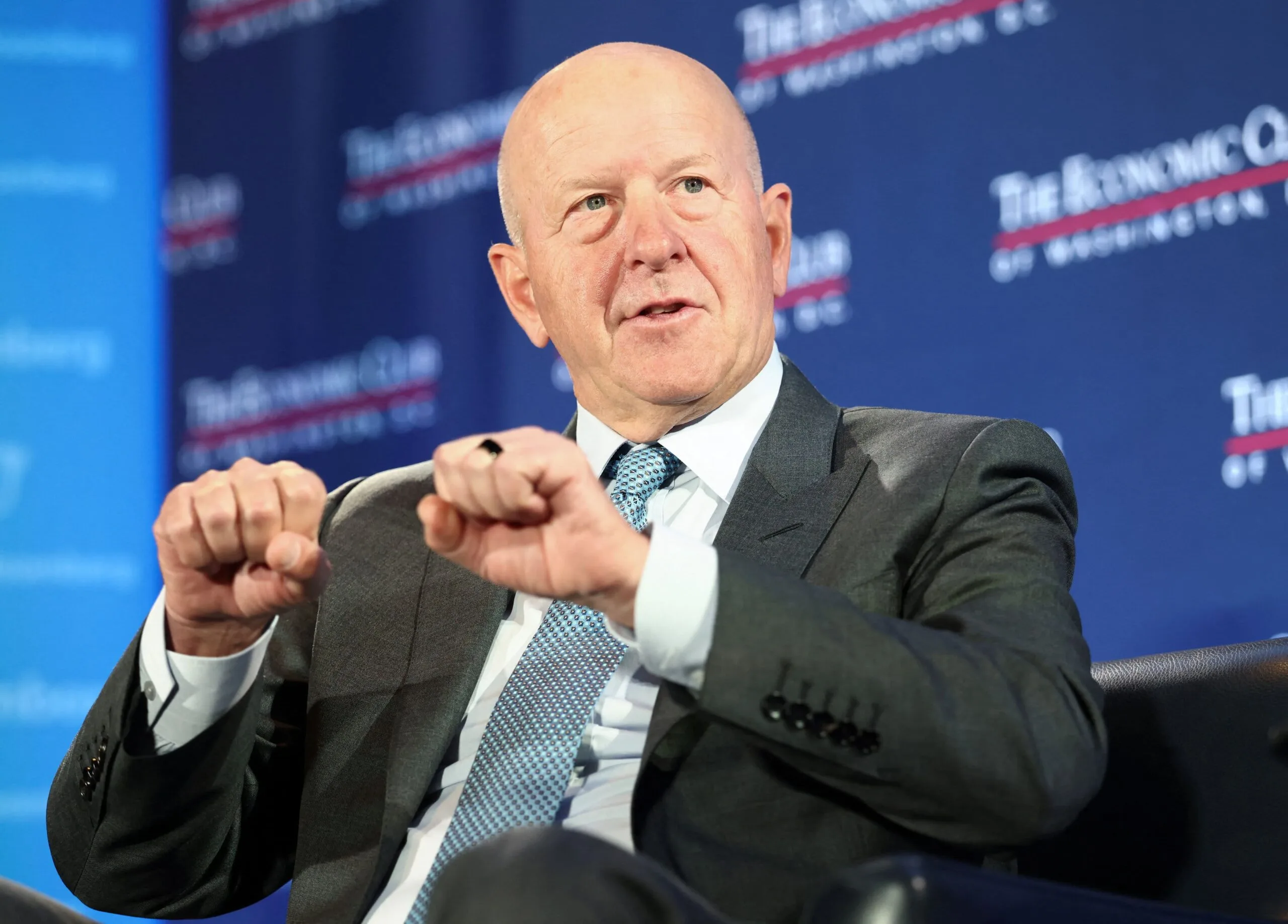
The financial world is turning its collective gaze toward 200 West Street as Goldman Sachs prepares to unveil its first-quarter earnings report this Monday. For the storied investment bank, this reporting period represents more than just a tally of profits and losses; it is a critical litmus test for CEO David Solomon’s strategic "back to basics" pivot. After a tumultuous period characterized by a retreat from consumer banking and internal leadership restructuring, Goldman enters this earnings cycle at a crossroads where macroeconomic resilience meets sudden, sharp geopolitical instability. Wall Street analysts are expecting a performance that reflects a bifurcated reality: a thriving institutional trading environment fueled by technological disruption, contrasted against a deal-making landscape suddenly clouded by conflict in the Middle East.
The narrative of the first quarter has been dominated by a notable resurgence in investment banking activity, a core pillar of Goldman’s identity. According to industry data from Dealogic, global investment banking revenues rose by approximately 10% during the first three months of the year. This rebound follows a prolonged drought in mergers and acquisitions (M&A) and initial public offerings (IPOs) that characterized much of the previous two years. For Goldman Sachs, which derives a significantly higher portion of its revenue from advisory and underwriting fees compared to its more diversified peers like JPMorgan Chase or Bank of America, this industry-wide uptick is a vital tailwind. The bank’s pipeline has reportedly been swelling as corporate boards, previously paralyzed by interest rate uncertainty, began to regain confidence in the "soft landing" economic narrative.
However, the momentum in deal-making now faces a formidable challenge in the form of heightened geopolitical risk. The outbreak of hostilities involving Iran on February 28 has sent shockwaves through global markets, introducing a layer of complexity that few analysts had priced in at the start of the year. In the world of high-finance, uncertainty is the primary enemy of the deal. When the cost of energy spikes and supply chains face potential disruption, corporate executives often opt for a "wait and see" approach, potentially shelving large-scale acquisitions until the dust settles. For Goldman, the timing of this conflict is particularly sensitive. While the first two months of the quarter likely saw robust advisory activity, the final weeks may tell a different story of delayed closings and paused mandates.
Conversely, what creates a headwind for investment banking often provides a propellant for trading desks. Goldman’s Global Banking & Markets division is expected to be a primary beneficiary of the market "churn" catalyzed by both the geopolitical crisis and the ongoing revolution in Artificial Intelligence. Institutional investors have been aggressively repositioning their portfolios to account for the massive capital expenditures being poured into AI infrastructure. This sector-wide rotation, combined with the volatility in interest rates and currency markets triggered by the conflict in the Middle East, has created a fertile environment for Goldman’s traders. Historically, the bank has excelled during periods of rapid price discovery, where its ability to provide liquidity and manage risk for clients translates into significant FICC (Fixed Income, Currencies, and Commodities) and equities revenue.
Market analysts are particularly interested in the performance of the commodities desk. With the Iran conflict impacting oil prices and creating fluctuations in gold and other industrial metals, Goldman’s storied commodities franchise is once again in the spotlight. While disruptive events can sideline corporate hedgers, they simultaneously drive massive volumes from hedge funds and sovereign wealth funds looking to capitalize on price swings. The ability of the bank to navigate these choppy waters will be a defining feature of the Monday morning report.
Beyond the immediate trading and advisory numbers, investors are looking for updates on Goldman’s strategic shift toward Asset and Wealth Management. Under Solomon’s direction, the bank has sought to grow its fee-based revenue to provide a more stable cushion against the inherent volatility of Wall Street. This transition involves moving away from balance-sheet-intensive principal investments and toward managing third-party capital. The success of this transition is crucial for the bank’s valuation; currently, Goldman trades at a lower price-to-book multiple than some of its rivals who boast more predictable, recurring revenue streams. Progress in raising new private equity and credit funds, as well as growth in the ultra-high-net-worth advisory space, will be key metrics for judging the long-term health of the firm.
The broader economic backdrop remains a complicated mosaic. While the U.S. labor market has shown remarkable resilience, inflation remains "sticky," leading to a recalibration of expectations regarding Federal Reserve policy. At the start of the year, many participants anticipated a series of rapid rate cuts; however, the persistent strength of the economy, combined with the inflationary pressures of rising energy costs due to the Iran conflict, has pushed those expectations further into the future. For a bank like Goldman, "higher for longer" interest rates are a double-edged sword. While they can improve net interest margins in certain areas, they also keep the cost of financing for leveraged buyouts high, which can act as a drag on the private equity-led M&A market.
Goldman’s stock performance leading up to the announcement reflects a cautious optimism, with shares climbing roughly 3% since the start of the year. This modest gain suggests that while the market recognizes the firm’s dominant position in a recovering deal environment, it remains wary of the risks posed by the current geopolitical climate and the potential for a "risk-off" sentiment to take hold among global investors. Compared to the broader S&P 500, Goldman has maintained a steady pace, but it has yet to see the breakout performance that would signal a full return to its pre-pandemic glory.
The competitive landscape also looms large. As rivals like Morgan Stanley continue to lean into their massive wealth management engines, Goldman must prove that its leaner, more focused institutional model can still deliver superior returns on equity (ROE). Analysts will be parsing the earnings call for any commentary on the "Basel III Endgame" capital requirements, which threaten to force large banks to hold more capital against their trading activities. Any insight from Solomon on how the bank intends to optimize its capital structure in the face of these regulatory shifts will be of paramount importance to institutional shareholders.
Furthermore, internal culture and leadership stability will likely be addressed, albeit perhaps indirectly. Following a period of high-profile partner departures and public scrutiny of Solomon’s management style, the bank has made efforts to project a more unified front. A strong earnings beat would go a long way in silencing critics and reinforcing Solomon’s mandate to continue the current strategic path. The bank’s ability to retain top talent in a competitive environment—where private credit firms and boutique advisory shops are aggressively poaching Wall Street veterans—remains a perennial concern for observers.
As the opening bell approaches on Monday, the stakes are undeniably high. Goldman Sachs finds itself at the epicenter of the global financial system, acting as both a barometer for corporate confidence and a primary engine of market liquidity. The upcoming report will provide a definitive answer to whether the bank’s core strengths can overcome the headwinds of global strife. If the surge in trading revenue can offset the potential cooling of the M&A market, and if the wealth management division shows continued signs of scaling, Goldman may well set the tone for a bullish spring on Wall Street. However, if the "churn" proves more destructive than productive, the bank may face renewed questions about its volatility-dependent business model in an increasingly unstable world. Regardless of the final numbers, the results will offer a crucial window into the health of the global economy at a moment of profound transformation.