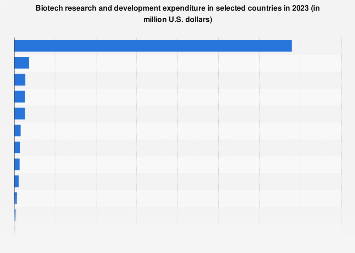
The United States continues to dominate global biotechnology research and development (R&D) expenditure, significantly outpacing other nations in its commitment to innovation within the life sciences sector. This sustained leadership is underpinned by a complex interplay of robust government funding, a vibrant venture capital ecosystem, a deep pool of scientific talent, and a regulatory environment that, while sometimes challenging, generally supports the translation of scientific discovery into commercial products. The sheer scale of investment from U.S. companies, particularly those categorized as dedicated biotech R&D firms, reflects a strategic imperative to maintain a competitive edge in a field with immense potential for economic growth and societal benefit.
Beyond the United States, a cohort of developed economies is also making substantial investments, albeit at different scales and with varying strategic focuses. European nations, in particular, are actively engaged in bolstering their biotech R&D capabilities. Countries like Germany and Austria, while reporting expenditures specifically for dedicated biotech R&D firms, are key players within the broader European pharmaceutical and life sciences landscape. Their R&D spending, even when narrowly defined, contributes significantly to the continent’s overall innovation output. The inclusion of only dedicated biotech R&D firms in these specific country reports, while providing a focused view, may not fully capture the R&D efforts of larger pharmaceutical conglomerates that also house significant biotechnology divisions. Understanding this nuance is crucial when comparing international R&D investment figures.
The Canadian biotechnology sector, encompassing medical, environmental, industrial, and agricultural applications, demonstrates a diversified approach to R&D investment. This broad scope indicates a national strategy to leverage biotechnology across multiple industries, aiming for advancements in healthcare, sustainability, and food security. The inclusion of these distinct sub-sectors paints a picture of a more comprehensive R&D ecosystem, where innovation is not confined to a single therapeutic area but is aimed at addressing a wider range of societal challenges and economic opportunities. This multi-faceted investment strategy can foster cross-pollination of ideas and technologies, potentially leading to more holistic and impactful breakthroughs.
Latvia, also encompassing medical, environmental, industrial, and agricultural biotechnology, presents an interesting case study. While likely representing a smaller absolute expenditure compared to major global players, its strategic investment across these diverse fields signifies a commitment to developing specialized expertise and fostering growth in nascent but potentially high-impact areas. The nation’s participation across these four key biotechnology domains suggests an ambition to carve out niche strengths within the global biotech landscape, potentially attracting international collaboration and investment by demonstrating focused R&D capabilities.
The methodologies employed in tracking R&D expenditures can significantly influence comparative analyses. For instance, the United States’ reporting standard, which includes companies performing or funding $50,000 or more of R&D starting in 2018, reflects a broad definition aimed at capturing a comprehensive view of innovation activity. The Census Bureau’s rigorous review process for data disclosure avoidance further underscores the commitment to data integrity. This broad inclusion, contrasted with the more specific definitions used for some European countries, highlights the importance of understanding the granular details of data collection when making cross-border comparisons. Different national statistical agencies may prioritize different aspects of R&D, leading to variations in reporting that can affect direct comparability.
The economic impact of sustained R&D investment in biotechnology is profound and far-reaching. Countries that consistently invest in this sector are not only fostering the development of new treatments and therapies that improve public health but are also cultivating high-skilled employment opportunities, attracting foreign direct investment, and building robust export markets for their innovative products. The biotech industry is characterized by its high intellectual property generation, contributing to national economic competitiveness and long-term growth. Furthermore, advancements in industrial and environmental biotechnology can lead to more sustainable manufacturing processes, cleaner energy solutions, and improved agricultural yields, addressing critical global challenges and creating new economic value chains.
The global landscape of biotechnology R&D is increasingly competitive. While the United States maintains its leading position, nations in Asia, particularly China, are rapidly increasing their R&D investments and capabilities, posing a significant challenge to established leaders. South Korea and Singapore have also made substantial strides in building their biotech ecosystems, focusing on specific areas of expertise and fostering international partnerships. This global dynamism necessitates continuous strategic investment and adaptation from all players to remain at the forefront of scientific discovery and commercialization.
Venture capital plays a pivotal role in fueling biotech R&D, especially for early-stage companies. The availability of robust venture capital funding, often linked to strong public markets and investor confidence in the sector’s long-term prospects, is a critical differentiator for leading R&D nations. The U.S. market, with its deep and diverse pool of investors, has historically been a significant advantage. However, other regions are actively working to develop their venture capital landscapes to support their domestic biotech industries. Government grants and tax incentives also form crucial components of the funding puzzle, encouraging private sector investment and de-risking early-stage research.
The regulatory environment is another critical factor influencing R&D spending. A predictable, efficient, and science-based regulatory framework can accelerate the path from laboratory to market, encouraging companies to invest in R&D within that jurisdiction. Conversely, lengthy and uncertain approval processes can deter investment. Balancing the need for rigorous safety and efficacy testing with the imperative to bring life-saving innovations to patients swiftly is a constant challenge for regulatory bodies worldwide. International harmonization of regulatory standards is also an ongoing effort to facilitate global R&D and market access.
Looking ahead, the trajectory of biotechnology R&D spending will likely be shaped by several key trends. The continued growth of personalized medicine, driven by advances in genomics and data analytics, will require substantial investment in diagnostic tools and targeted therapies. The burgeoning field of synthetic biology holds immense promise for creating novel materials, fuels, and therapeutics. Furthermore, the increasing focus on addressing antimicrobial resistance and developing new vaccines, particularly in the wake of global health crises, will undoubtedly spur further R&D investment. The integration of artificial intelligence and machine learning into drug discovery and development processes is also expected to significantly enhance efficiency and success rates, driving further investment in R&D infrastructure and talent. The global nature of these challenges and opportunities means that international collaboration and competition in biotechnology R&D will only intensify in the coming years.