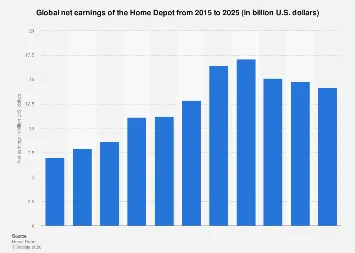
The Home Depot, a titan of the global home improvement retail sector, is poised for a significant financial year in 2025, with projections indicating robust net earnings that will underscore its enduring market leadership. While precise figures remain under subscription-based access, industry analysis and macroeconomic indicators suggest a company navigating a complex yet ultimately favorable economic landscape. The Atlanta-based behemoth, which operates an extensive network of stores across North America and maintains a substantial online presence, is expected to leverage its scale, diversified product offerings, and sophisticated supply chain to achieve its financial objectives.
The company’s performance is intrinsically linked to the broader health of the housing market and consumer spending patterns, both of which are subject to a myriad of global and regional influences. In recent years, the DIY and home renovation sector experienced an unprecedented surge, fueled by pandemic-induced lockdowns and a renewed focus on domestic living spaces. While some of this momentum has naturally moderated, the underlying demand for home improvement remains strong, driven by an aging housing stock, a desire for increased property value, and a persistent interest in personalization and sustainability. The Home Depot is strategically positioned to capitalize on these enduring trends, offering everything from essential building materials and tools to decorative items and smart home technology.
Analyzing the factors contributing to Home Depot’s anticipated financial success requires a multi-faceted approach, encompassing consumer sentiment, inflationary pressures, interest rate environments, and the competitive arena. Consumer confidence plays a pivotal role, as discretionary spending on home improvement projects often correlates with a feeling of economic security. While inflation has presented challenges, leading to increased input costs for materials and impacting consumer purchasing power, Home Depot’s scale allows for greater negotiation leverage with suppliers and the ability to absorb some of these costs, passing on only essential price adjustments to its customer base. Furthermore, the company’s commitment to operational efficiency and its vast merchandising capabilities enable it to maintain competitive pricing, a critical factor in attracting and retaining customers.
The interest rate environment is another crucial determinant of Home Depot’s performance. Higher interest rates can dampen housing market activity, potentially reducing the number of new home purchases and refinancing that often trigger renovation projects. However, for existing homeowners, higher rates can also incentivize staying put and investing in their current properties rather than undertaking the expense and complexity of moving. Home Depot’s business model, which serves both the do-it-yourself (DIY) consumer and the professional contractor, provides a degree of insulation. Professional contractors, who rely on the company for bulk materials and specialized equipment for larger projects, often maintain a steady workflow even during periods of slower housing turnover.
Globally, the home improvement retail landscape is characterized by intense competition, with established players and emerging e-commerce platforms vying for market share. Home Depot’s primary competitors in the United States include Lowe’s, a formidable rival with a similar store footprint and product range. Internationally, the company faces a more fragmented competitive environment, with regional leaders and specialized retailers. However, Home Depot’s brand recognition, extensive loyalty programs, and its robust omnichannel strategy—seamlessly integrating its physical stores with its e-commerce operations—provide a significant competitive advantage. The company’s investment in digital capabilities, including enhanced website functionality, mobile app features, and efficient online order fulfillment, has become increasingly vital in meeting evolving consumer expectations.
The economic impact of Home Depot’s operations extends far beyond its direct financial results. As one of the largest employers in the retail sector, the company provides jobs for hundreds of thousands of individuals, contributing to local economies through wages and benefits. Its vast supply chain supports numerous manufacturers, distributors, and transportation companies, creating a ripple effect throughout the economy. Moreover, Home Depot’s focus on sustainability initiatives, such as reducing waste, promoting energy-efficient products, and investing in renewable energy sources, aligns with growing global demand for environmentally conscious business practices. This not only enhances its corporate reputation but also appeals to a segment of consumers who prioritize sustainability in their purchasing decisions.
Looking ahead to 2025, Home Depot’s financial projections are likely to be influenced by its ability to adapt to emerging consumer trends. The increasing demand for smart home technology, sustainable building materials, and personalized design solutions presents both opportunities and challenges. The company’s ongoing investments in product innovation, supplier partnerships, and associate training are critical to staying at the forefront of these evolving market demands. Furthermore, its ability to effectively manage inventory, optimize its distribution networks, and provide exceptional customer service across all channels will be paramount to sustaining its growth trajectory.
The company’s financial statements, when fully accessible, will likely reveal key performance indicators such as revenue growth, gross profit margins, operating expenses, and net income. Analyzing these metrics in conjunction with broader economic data, such as GDP growth, inflation rates, and consumer spending indices, will provide a comprehensive understanding of Home Depot’s financial health and its strategic positioning within the global marketplace. The company’s consistent track record of financial performance and its proactive approach to market shifts suggest that it is well-equipped to navigate the complexities of the 2025 fiscal year and continue its legacy as a dominant force in the home improvement industry. The sheer scale of its operations, coupled with its strategic foresight, positions The Home Depot as a bellwether for the broader retail and construction sectors, offering valuable insights into consumer behavior and economic resilience.