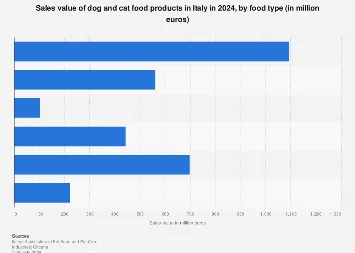
The Italian market for pet food is demonstrating robust performance in 2024, with a clear hierarchy emerging among product categories. Wet food designed for feline consumption stands out as the leading revenue generator, surpassing all other types of dog and cat food. This segment is projected to generate over €XXX million in sales value for the year. Concurrently, dry food for canines represents another substantial contributor to the overall market, with an estimated value of approximately €XXX million. This figure accounts for a significant portion, around XX percent, of the total sales value within the broader dog and cat food industry in Italy.
The data, compiled for the 52 weeks ending December 31, 2024, offers a granular view of consumer spending habits and preferences within Italy’s increasingly important pet care sector. The dominance of wet cat food suggests a strong consumer inclination towards premium or highly palatable options for their feline companions. This could be attributed to factors such as perceived higher nutritional content, ease of consumption for cats, or the growing trend of humanizing pets, leading owners to invest more in specialized diets.
Conversely, the substantial market share held by dry dog food underscores its continued relevance and popularity. Dry kibble often appeals to dog owners due to its convenience, longer shelf life, and perceived benefits for dental hygiene. The continued strong performance of this category indicates that it remains a staple in many households, catering to a wide range of nutritional needs and price points.
While the precise figures for other food types remain proprietary, the disclosed data points to a market where distinct product formats cater to different pet needs and owner preferences. The overall value of the Italian dog and cat food market in 2024 is a significant indicator of the growing economic importance of pet ownership. Globally, the pet food industry has seen consistent growth, driven by an expanding pet population, increased discretionary spending on pets, and a burgeoning market for specialized and premium pet nutrition. Italy is a key player within the European pet food landscape, a continent that consistently ranks among the largest consumers of pet products worldwide.
The economic impact of the pet food industry extends beyond direct sales. It encompasses job creation in manufacturing, logistics, research and development, marketing, and retail. Furthermore, the growth in this sector often correlates with broader trends in household formation, disposable income, and changing societal attitudes towards animal companionship. In many developed economies, pets are increasingly viewed as integral family members, leading to a greater willingness to spend on their well-being, including high-quality food.
Market analysts observe that the Italian pet food sector, like its European counterparts, is influenced by several key trends. The demand for natural, organic, and grain-free options continues to rise, reflecting a broader consumer shift towards healthier and more sustainable food choices. This trend is also evident in the pet food market, where owners seek ingredients that mimic natural diets and avoid artificial additives.
Innovation in product formulation is another significant driver. Manufacturers are investing in research to develop foods tailored to specific life stages, breeds, health conditions, and dietary sensitivities. This includes functional foods designed to support joint health, digestion, skin and coat condition, and cognitive function. The premiumization of pet food, where consumers opt for higher-quality ingredients and specialized formulations, is a global phenomenon that is clearly impacting Italy.
Distribution channels also play a crucial role. While traditional supermarkets and pet specialty stores remain important, online retail has witnessed substantial growth. E-commerce platforms offer convenience, a wider selection of products, and often competitive pricing, making them an increasingly popular choice for Italian pet owners. Subscription services for pet food are also gaining traction, providing a seamless way for consumers to ensure they never run out of their pet’s preferred brand.
The regulatory environment also shapes the market. Adherence to stringent European Union regulations regarding pet food safety, labeling, and nutritional standards is paramount for manufacturers. These regulations, while ensuring consumer and pet safety, also necessitate ongoing investment in quality control and product development.
Looking ahead, the trajectory of the Italian pet food market is likely to remain positive. Continued urbanization, an aging population seeking companionship, and a general increase in pet ownership are expected to sustain demand. The ongoing evolution of consumer preferences, particularly the demand for health-conscious and ethically sourced products, will likely spur further innovation and diversification within the industry. The competition among manufacturers to capture market share will also drive advancements in product offerings and marketing strategies, ultimately benefiting Italian pet owners and their beloved companions. The substantial figures generated by wet cat food and dry dog food in 2024 serve as a strong indicator of the enduring economic significance and consumer commitment within Italy’s dynamic pet food sector.