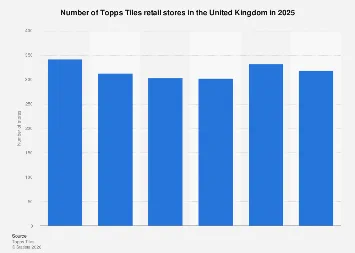
The United Kingdom’s retail landscape is undergoing a significant transformation, marked by the evolving consumer habits and the persistent pressure of online competition. Amidst this dynamic environment, a notable achievement has been reached by Topps Tiles, a prominent player in the flooring and tiling sector, which has inaugurated its 2025th store. This expansion milestone, representing a substantial physical footprint across the nation, offers a compelling case study on how established brick-and-mortar businesses are navigating the complexities of the modern economy, suggesting a continued appetite for physical retail experiences when executed strategically.
The opening of the 2025th Topps Tiles location signifies more than just an increase in retail units; it reflects a sustained investment in physical presence, a strategy that runs counter to the prevailing narrative of widespread store closures. While many sectors have seen a contraction in their high street presence, with retailers either downsizing or shuttering operations entirely, Topps Tiles’ continued expansion points towards a sector that, while not immune to economic headwinds, possesses inherent resilience and a clear market strategy. This growth can be attributed to several factors, including the essential nature of home improvement and renovation projects, which often necessitate in-person consultation and the tactile experience of viewing materials.
The tiling industry, in particular, benefits from the tangible aspects of product selection. Unlike many fast-moving consumer goods, tiles are a significant investment for homeowners and businesses alike. Customers often seek to feel the texture, assess the colour nuances under different lighting conditions, and understand the practical applications of various materials – from ceramic and porcelain to natural stone. A physical showroom allows for this crucial interaction, something that even the most sophisticated online visualisation tools struggle to fully replicate. This experiential advantage is a key differentiator for brick-and-mortar retailers like Topps Tiles, enabling them to build trust and cater to a customer base that values expert advice and a hands-on approach.
Furthermore, the expansion can be interpreted as a strategic response to demographic shifts and evolving housing trends. The UK, like many developed nations, continues to see activity in the property market, whether through new builds, renovations, or property upgrades. These activities directly fuel demand for flooring and tiling solutions. Topps Tiles’ continued store openings suggest a deliberate effort to capture market share by ensuring accessibility to their products and services across a wider geographical area. This saturation strategy aims to place stores within convenient reach of a larger consumer base, thereby reducing the friction associated with purchasing decisions and enhancing customer loyalty.
Economically, the opening of new retail outlets has a ripple effect. Each new store represents job creation, from store managers and sales associates to installation specialists and administrative support staff. This contributes to local economies, boosting employment figures and generating tax revenue. Moreover, the supply chain supporting these stores – involving manufacturing, logistics, and distribution – also experiences increased activity, creating a broader economic stimulus. The investment in physical retail infrastructure also signals confidence in the long-term economic outlook of the regions where these stores are located.
However, the success of such an expansion strategy is contingent on more than just physical presence. In the current retail climate, a successful brick-and-mortar operation must integrate seamlessly with its digital channels. Topps Tiles, like many forward-thinking retailers, likely employs an omnichannel strategy, where the physical store serves as a showroom, a point of consultation, and a convenient location for click-and-collect services. This integration allows customers to research products online, visit a store to experience them firsthand, and then complete their purchase through their preferred channel. This flexibility is crucial for meeting the diverse needs of today’s consumers.
Market data from the UK home improvement sector provides further context. While the broader retail sales figures can be volatile, the DIY and home renovation market has shown a degree of resilience. Factors such as an aging housing stock, a desire for more personalised living spaces, and the increasing trend of "home-working" have all contributed to sustained interest in home improvement projects. This sustained demand underpins the rationale for Topps Tiles’ continued investment in its physical store network. The company’s ability to reach the 2025-store mark suggests it has successfully tapped into and continues to serve this persistent market demand.
Looking at global comparisons, the trend towards experiential retail and the strategic importance of physical touchpoints is not unique to the UK. In markets like the United States and across Europe, retailers are re-evaluating the role of their physical stores, often transforming them into brand experience hubs rather than mere transaction points. This involves investing in store design, staff training to provide expert advice, and creating engaging in-store events or workshops. Topps Tiles’ expansion can be seen as aligning with this global trend, adapting the traditional retail model to meet contemporary consumer expectations.
The economic impact of a large physical retail network like Topps Tiles extends beyond direct sales. It influences the broader construction and renovation sectors, creating demand for complementary products and services. For instance, the availability of a wide range of tiling options can inspire more ambitious renovation projects, leading to increased expenditure on associated trades like plumbing, electrical work, and general contracting. This multiplier effect underscores the significant economic contribution of large-scale retailers with a strong physical presence.
Furthermore, the company’s sustained growth in store numbers, reaching a total of 2025, is a testament to its effective operational management and supply chain efficiency. Maintaining such a widespread network requires robust logistics, inventory management, and consistent quality control across all locations. The ability to achieve this scale without compromising on customer service or product quality is a significant operational achievement and a key driver of its ongoing success.
In conclusion, the inauguration of Topps Tiles’ 2025th store in the UK is a powerful indicator of the enduring relevance of physical retail when combined with a clear strategic vision. It highlights the sector’s ability to adapt to changing consumer preferences and economic conditions, leveraging the inherent advantages of tangible product experience and expert consultation. This expansion not only signifies the company’s commercial success but also contributes to local employment, economic activity, and the broader landscape of home improvement and renovation in the United Kingdom. As the retail environment continues to evolve, Topps Tiles’ achievement serves as a compelling example of how established businesses can thrive by strategically investing in their physical footprint while embracing an integrated approach to customer engagement.