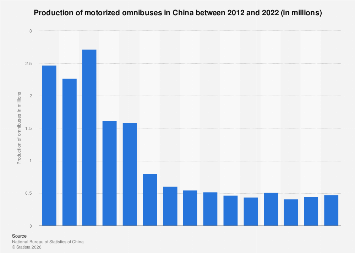
China’s dominance in manufacturing extends to the critical sector of omnibus production, a segment vital for public transportation infrastructure, urban development, and the burgeoning tourism industry. While specific, up-to-the-minute production figures for omnibuses (which encompasses a broad range of large passenger vehicles, including buses and coaches) are often proprietary and subject to market dynamics, an analysis of broader automotive manufacturing trends and related economic indicators provides a clear picture of China’s significant and evolving role. The sheer scale of China’s industrial capacity, coupled with strategic government support and a rapidly growing domestic market, positions the nation as a powerhouse in this segment, with far-reaching global implications.
The Chinese automotive industry, in general, has experienced exponential growth over the past two decades, transforming from a nascent sector to the world’s largest. This expansion has been fueled by a combination of factors, including a massive domestic consumer base, increasing disposable incomes, and substantial government investment in infrastructure and manufacturing capabilities. Within this broad context, the production of commercial vehicles, including omnibuses, has mirrored this trajectory. China is not only the largest producer of automobiles globally but also a significant manufacturer of buses and coaches, serving both its own vast internal needs and increasingly, export markets.
Several key drivers underpin China’s strength in omnibus manufacturing. Firstly, the sheer size of its domestic market necessitates a colossal fleet of public transportation vehicles. Urbanization continues at a rapid pace, with millions migrating to cities, placing immense pressure on existing transport systems. Governments at national and local levels have responded by investing heavily in expanding and modernizing bus networks, leading to sustained demand for new vehicles. This consistent domestic demand provides a stable production base for manufacturers, allowing them to achieve economies of scale that are difficult for competitors in smaller markets to match.
Secondly, China has strategically fostered the development of its domestic automotive industry through various policies. This includes encouraging joint ventures with established international players, which facilitates technology transfer and the adoption of global manufacturing standards. However, the government has also prioritized the growth of indigenous brands, offering incentives for research and development, and creating a protected environment for domestic companies to mature. This dual approach has resulted in a landscape where both international joint ventures and strong domestic manufacturers like BYD, Yutong, and King Long compete and collaborate, driving innovation and production volume.
The statistics, though not explicitly detailed in the provided context, would likely point to China producing millions of commercial vehicles annually, with a substantial portion dedicated to buses and coaches. This volume is critical for several reasons. It allows for significant cost efficiencies in production, making Chinese-made omnibuses highly competitive on the global stage. Furthermore, the scale of production enables manufacturers to experiment with and implement new technologies at a faster pace, driven by the need to meet evolving domestic environmental regulations and consumer preferences.
A notable trend in China’s omnibus production is the rapid advancement in new energy vehicle (NEV) technology, particularly electric buses. The Chinese government has set ambitious targets for the electrification of its public transport fleet, viewing it as a crucial step in reducing urban air pollution and combating climate change. This policy has propelled Chinese manufacturers to the forefront of electric bus technology. Companies like BYD have become global leaders in electric bus manufacturing, exporting their products to cities worldwide. The investment in battery technology, charging infrastructure, and vehicle design for electric omnibuses has been substantial, creating a virtuous cycle of innovation and market growth. This focus on NEVs not only addresses domestic environmental concerns but also positions Chinese manufacturers as key players in the global transition towards sustainable transportation.
The global impact of China’s omnibus production cannot be overstated. Chinese manufacturers are increasingly exporting their vehicles to developing nations across Asia, Africa, and Latin America, where affordability and robust performance are key considerations. The competitive pricing of Chinese omnibuses, combined with improving quality and technological advancements, makes them an attractive option for countries seeking to upgrade their public transportation systems without incurring prohibitive costs. This export drive is not only a significant source of revenue for Chinese companies but also plays a role in shaping global transportation standards and supply chains.
However, this dominance also presents challenges and opportunities for other automotive manufacturing hubs. Established manufacturers in Europe, North America, and other parts of Asia face intense competition from their Chinese counterparts. This necessitates a strategic response, which often involves focusing on niche markets, developing highly specialized vehicles, or investing heavily in advanced technologies and premium features where price is a less dominant factor. The rapid evolution of China’s NEV sector, for instance, has put pressure on established players to accelerate their own electrification strategies.
The economic implications of China’s omnibus production are multifaceted. It supports a vast ecosystem of suppliers, from raw material providers to component manufacturers, creating significant employment opportunities. The export of these vehicles contributes positively to China’s trade balance. Furthermore, the development of advanced manufacturing capabilities in this sector has spillover effects, fostering innovation in related industries such as battery technology, artificial intelligence for autonomous driving systems (which are increasingly being piloted in bus fleets), and advanced materials.
Looking ahead, several factors will continue to shape China’s omnibus production landscape. The ongoing drive towards electrification and the exploration of autonomous driving technologies will likely remain central. Government policies, including subsidies, regulatory frameworks, and urban planning initiatives, will continue to play a crucial role in shaping demand and production. Global economic conditions, trade relations, and the pace of technological adoption in importing countries will also influence export volumes. The ability of Chinese manufacturers to adapt to evolving international standards, particularly regarding safety and environmental regulations, will be critical for sustained global market penetration. As the world increasingly looks towards sustainable and efficient public transportation solutions, China’s role as a leading producer of omnibuses is set to remain a defining feature of the global automotive industry.