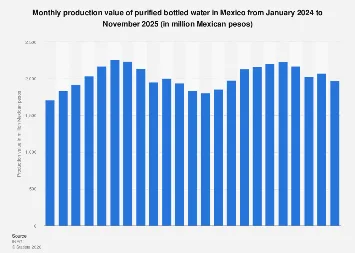
The Mexican bottled water industry is projected to experience substantial growth in the value of its monthly production by 2025, reflecting a robust and expanding market driven by evolving consumer preferences, economic development, and persistent challenges in public water infrastructure. While specific figures for future monthly production values are often proprietary and subject to market fluctuations, industry analysis and historical trends strongly indicate an upward trajectory. This growth is not merely a quantitative increase but signifies a deepening of consumer reliance on packaged water solutions, impacting the broader beverage sector and presenting both opportunities and challenges for stakeholders.
The demand for bottled water in Mexico is multifaceted. On one hand, it is a direct response to concerns regarding the quality and safety of tap water in many urban and rural areas. Despite government efforts to improve water treatment and distribution, public perception of tap water safety remains a significant driver for bottled water consumption. This perception is often shaped by localized issues, historical incidents, and a general distrust in public utilities. As a result, households, businesses, and public institutions increasingly opt for bottled water as a reliable alternative for drinking and cooking. This trend is particularly pronounced in densely populated metropolitan areas and regions with less developed water infrastructure.
Furthermore, the economic development within Mexico, characterized by a growing middle class with increased disposable income, plays a crucial role. As incomes rise, consumers have greater purchasing power to allocate towards convenience products and perceived health benefits. Bottled water, once considered a premium product, is now a staple for a considerable segment of the population. This shift in consumer spending habits extends beyond basic hydration, with a growing market for enhanced waters, flavored options, and premium brands that cater to specific lifestyle choices and perceived health advantages. The "premiumization" trend, evident in many consumer goods sectors globally, is clearly taking root in the Mexican bottled water market.
Statistics from industry reports and market research firms consistently highlight the resilience and expansion of the bottled water market. Globally, the bottled water market has seen consistent year-on-year growth, and Mexico is a significant contributor to this trend within Latin America. While precise monthly production values are not publicly disclosed for future periods, projections are typically based on historical production data, sales figures, and macroeconomic indicators. Analysts often use compound annual growth rates (CAGRs) derived from past performance to forecast future market values. For instance, if the annual market value has grown at an average of 5-7% in recent years, it is reasonable to infer a continued, if not accelerated, increase in monthly production value as demand solidifies.
The economic impact of this burgeoning sector is considerable. The bottled water industry in Mexico is a significant employer, encompassing a complex value chain that includes sourcing raw materials, manufacturing packaging, bottling, distribution, and retail. Large multinational corporations and numerous domestic producers contribute to job creation across various skill levels. Moreover, the industry’s growth stimulates investment in production facilities, logistics, and technological advancements, further boosting economic activity. The consistent demand also provides a stable revenue stream for businesses involved, contributing to Mexico’s overall industrial output and GDP.
The competitive landscape of the Mexican bottled water market is dynamic, featuring both global giants and strong local players. Brands like Bonafont, Ciel (a Coca-Cola brand), and Epura (a PepsiCo brand) hold substantial market share. However, smaller, regional producers often cater to specific local demands and price points, demonstrating the market’s segmentation. The proliferation of private labels from large supermarket chains also adds another layer of competition, often offering more affordable alternatives to consumers. This intense competition drives innovation in product offerings, packaging, and marketing strategies, pushing companies to differentiate themselves and capture consumer loyalty.
Environmental considerations are also increasingly influencing the bottled water market. While bottled water offers convenience and perceived safety, its environmental footprint, particularly regarding plastic waste, is a growing concern for consumers and regulators alike. Producers are under pressure to adopt more sustainable packaging solutions, such as recycled PET (rPET) and explore alternative materials. Investments in recycling infrastructure and consumer education campaigns aimed at promoting responsible disposal and recycling are becoming crucial for long-term market sustainability and corporate social responsibility. The Mexican government, like many others globally, is also exploring policies to regulate plastic usage, which could further shape the industry’s future production and packaging strategies.
Looking ahead to 2025, several factors will continue to shape the production value of bottled water in Mexico. The ongoing urbanization trend means that more of the population will reside in areas where concerns about tap water quality are more prevalent. Economic growth, while subject to global and domestic economic cycles, is generally expected to support consumer spending on packaged goods. Moreover, the industry’s ability to adapt to sustainability demands and leverage technological advancements in production and distribution will be key differentiators. Innovations in water purification, filtration technologies accessible at the household level, and alternative delivery systems could potentially moderate the growth of single-use plastic bottles, though the entrenched consumer preference for convenience and perceived safety suggests a continued strong market for bottled water.
The projected increase in monthly production value by 2025 is not an isolated phenomenon but is embedded within broader trends in the global beverage industry. As consumers become more health-conscious, beverages perceived as natural and healthy, such as water, tend to outperform sugary drinks. This global shift in consumer preference further bolsters the outlook for bottled water. In comparison to other Latin American markets, Mexico often exhibits a higher per capita consumption of bottled water, underscoring its strategic importance within the regional beverage landscape. This strong domestic demand provides a solid foundation for sustained growth.
In conclusion, the Mexican bottled water market is on a clear path of expansion. The confluence of persistent concerns about tap water quality, rising consumer incomes, and a global shift towards healthier beverage options suggests that the value of monthly bottled water production in Mexico will continue to climb through 2025. While the exact figures remain within proprietary forecasts, the underlying economic and social drivers point towards a robust and dynamic industry that will continue to be a significant component of Mexico’s consumer goods sector, albeit with increasing attention to environmental sustainability and innovation.