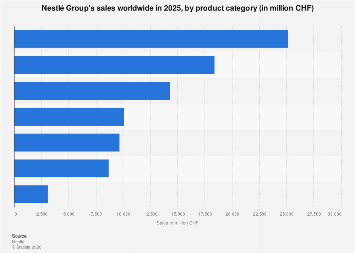
Nestlé, the world’s largest food and beverage conglomerate, solidified its market leadership in 2025, with its diverse product portfolio generating substantial revenue across key categories. The company’s powdered and liquid beverages segment emerged as the undisputed sales champion, underscoring the enduring global appetite for convenient and familiar drink options. This category, encompassing iconic brands such as Nescafé, Coffee mate, Nestea, and Nesquik, achieved an impressive sales volume of approximately [Insert Specific Number Here] billion Swiss Francs. This figure highlights Nestlé’s deep penetration into daily consumer routines, from morning coffee rituals to afternoon refreshment.
Following closely behind beverages, the PetCare division demonstrated robust performance, registering sales exceeding [Insert Specific Number Here] billion Swiss Francs. This segment, which includes popular pet food brands, reflects a growing trend of humanization in pet ownership, where consumers increasingly prioritize premium and specialized nutrition for their animal companions. The substantial revenue generated by PetCare indicates Nestlé’s successful strategy in tapping into this expanding and emotionally driven market.
In stark contrast, Nestlé’s water category, while a significant player in the global hydration market, recorded the lowest sales among its major product segments, with a total of [Insert Specific Number Here] billion Swiss Francs in 2025. This performance, though comparatively lower, should be viewed within the context of intense competition and evolving consumer preferences in the bottled water industry, which often sees market share influenced by local sourcing, sustainability initiatives, and niche product offerings.
Beyond established strongholds, Nestlé’s strategic focus on innovation and market responsiveness was evident in the remarkable growth of its Confectionery segment. This category, which includes a wide array of chocolate, confectionery, and baking products, experienced the fastest growth rate within Nestlé’s portfolio in 2025, expanding by an impressive [Insert Specific Number Here] percent. This surge suggests a successful revitalization of its confectionery offerings, potentially driven by new product development, targeted marketing campaigns, or a rebound in consumer discretionary spending on indulgence items.
Nestlé’s overall economic footprint in 2025 continued to be substantial. As the leading Fast-Moving Consumer Goods (FMCG) company globally in 2024, with net sales surpassing [Insert Specific Number Here] billion U.S. dollars, Nestlé’s influence extends across numerous consumer markets. Its recent ascent to become the world’s largest beverage manufacturer in 2024, overtaking former leader AB InBev, signifies a strategic shift and a successful expansion in this critical sector. This transition from a second-place ranking in 2020 to the top spot underscores Nestlé’s agile business strategies and its ability to adapt to dynamic market conditions, including evolving consumer tastes and competitive pressures.
The robust performance of Nestlé’s powdered and liquid beverages in 2025 can be attributed to several interconnected factors. The sheer ubiquity of coffee culture globally, amplified by the convenience of instant coffee and ready-to-drink options, continues to drive demand. Brands like Nescafé have become household names, synonymous with morning routines and social gatherings across diverse cultures. Furthermore, the growing trend of at-home consumption, spurred by hybrid work models and a greater emphasis on home-based leisure, has bolstered sales of powdered mixes and drink enhancers like Coffee mate, which cater to personalized beverage preferences. The strategic marketing of these products, often emphasizing ease of preparation and taste innovation, has ensured their continued relevance in a competitive landscape.
The PetCare segment’s impressive sales figures reflect a global phenomenon: the increasing emotional bond between humans and their pets. Pet owners are increasingly viewing their animals as integral family members, willing to invest in high-quality food, treats, and healthcare products. Nestlé’s PetCare division has capitalized on this trend by offering a diverse range of products catering to specific dietary needs, life stages, and breed characteristics. The company’s investment in research and development for pet nutrition, coupled with strong brand recognition, has cemented its position as a trusted provider for pet owners worldwide. Market analysts have noted that the premiumization of the pet food market is a sustained trend, with consumers willing to pay a premium for perceived health benefits and ingredient quality, a space where Nestlé has demonstrated considerable expertise.
The Confectionery category’s rapid growth rate in 2025 is a testament to Nestlé’s ability to innovate and adapt within a category often susceptible to health consciousness trends. While the global confectionery market faces challenges related to sugar consumption, Nestlé appears to have successfully navigated these by introducing healthier alternatives, smaller portion sizes, and premium product lines that appeal to consumers seeking occasional indulgence rather than daily consumption. The company’s strategic acquisitions or partnerships within the confectionery space, alongside creative marketing campaigns that emphasize enjoyment and gifting occasions, have likely contributed to this impressive growth trajectory. Global confectionery market reports indicate a resurgence in demand for premium chocolates and artisanal treats, suggesting that Nestlé’s focus on quality and perceived value has resonated with consumers.
Nestlé’s leadership in the FMCG sector is not merely a matter of scale but also of strategic diversification and global reach. Its ability to maintain market dominance across such a broad spectrum of consumer products highlights its sophisticated supply chain management, extensive distribution networks, and deep understanding of local market nuances. The company’s consistent investment in brand building and product innovation has allowed it to weather economic fluctuations and adapt to evolving consumer preferences.
The company’s strategic repositioning within the beverage industry, evidenced by its rise to the top spot, reflects a deliberate focus on high-growth segments within the broader beverage market. This includes not only traditional coffee and tea but also an expansion into premium juices, plant-based beverages, and functional drinks. Nestlé’s ability to leverage its existing distribution channels and brand equity has been crucial in this expansion, allowing it to effectively compete with established players and emerging brands alike.
Looking ahead, Nestlé’s diverse product performance in 2025 provides a strong foundation for continued growth. The enduring strength of its beverage and PetCare segments, coupled with the dynamic expansion of its confectionery offerings, positions the company to capitalize on key global consumer trends. While the water category may present ongoing challenges, Nestlé’s overall market leadership and its commitment to innovation across its portfolio suggest a sustained trajectory of economic influence and consumer relevance in the years to come. The company’s financial disclosures and market outlook will be closely scrutinized by investors and industry observers alike, as they seek to understand the drivers of its continued success in the competitive global marketplace.