The intricate landscape of the pharmaceutical industry is characterized by its dynamic nature, where innovation, regulatory hurdles, and market access profoundly influence a company’s financial standing. Within this complex ecosystem, understanding a company’s total assets provides a crucial snapshot of its resource base, encompassing everything from tangible property and equipment to intangible intellectual property and cash reserves. For NRX Pharmaceuticals, a biopharmaceutical company focused on developing novel treatments for critical medical conditions, a thorough examination of its asset valuation for 2024 is paramount for investors, analysts, and industry observers seeking to gauge its operational capacity and future potential.
While specific, up-to-the-minute total asset figures for privately held or recently public companies are often proprietary and subject to strict reporting cycles, the general principles governing asset valuation in the pharmaceutical sector offer significant insight. Total assets represent the sum of all resources controlled by NRX Pharmaceuticals that are expected to provide future economic benefits. This broad category can be broadly bifurcated into current assets and non-current assets. Current assets are those expected to be converted into cash or consumed within one year, such as cash and cash equivalents, marketable securities, accounts receivable, and inventories of raw materials and finished products. Non-current assets, conversely, have a longer useful life, including property, plant, and equipment (PP&E), intangible assets like patents and research and development (R&D) capitalized costs, and long-term investments.
For a company like NRX Pharmaceuticals, the composition of its assets is heavily influenced by its stage of development and its strategic focus. Early-stage biotechs often have a significant portion of their assets tied up in R&D, which may be capitalized under specific accounting standards if it meets certain criteria for future economic benefit realization, such as demonstrating a clear path to commercialization. This intangible asset category is often the most volatile and subject to significant write-downs if clinical trials fail or regulatory approvals are not secured. Conversely, more mature pharmaceutical companies tend to have substantial investments in PP&E, including manufacturing facilities, laboratories, and sophisticated equipment necessary for drug production and quality control.
The valuation of these assets is a critical accounting exercise. Cash and cash equivalents are valued at their face amount. Marketable securities are typically valued at fair market value, with fluctuations recorded in the income statement or other comprehensive income. Accounts receivable are valued at their net realizable value, accounting for potential uncollectible amounts. Inventories are generally valued at the lower of cost or net realizable value. PP&E is recorded at historical cost less accumulated depreciation, reflecting the gradual decline in its value over time due to wear and tear or obsolescence. Intangible assets, particularly patents, are often amortized over their legal or economic useful lives, with impairment charges recognized if their future economic benefits are deemed unlikely.
The pharmaceutical industry is particularly unique in its asset profile due to the immense value placed on intellectual property. Patents represent exclusive rights to a drug or treatment, and their expiration can lead to a precipitous decline in revenue as generic competition enters the market. Therefore, the valuation of patents and other intellectual property is a complex process involving forecasting future sales, estimating market share, and discounting future cash flows. R&D expenditures, while often expensed as incurred, can sometimes be capitalized, especially when they relate to the development of specific drug candidates that have a high probability of regulatory approval and future commercial success. This capitalization is a key area where a company’s strategic investment in its pipeline is reflected on its balance sheet.
In the context of NRX Pharmaceuticals, understanding the 2024 asset valuation requires considering several key economic factors. The global pharmaceutical market is projected to continue its growth trajectory, driven by an aging population, increasing prevalence of chronic diseases, and advancements in medical science. This broader market trend can positively influence the valuation of a company’s existing assets and its potential to develop and commercialize new assets. However, the industry also faces headwinds such as increasing pricing pressures from governments and payers, the rising costs of drug development, and intense competition.
Globally, the pharmaceutical industry is highly concentrated, with a few multinational giants dominating market share. However, there is also a vibrant ecosystem of smaller, specialized companies like NRX Pharmaceuticals that focus on niche therapeutic areas or cutting-edge technologies. The success of these smaller players often hinges on their ability to innovate and effectively manage their R&D pipelines, translating scientific breakthroughs into commercially viable products. Their asset base, therefore, is a critical indicator of their capacity to undertake this challenging journey.
For NRX Pharmaceuticals, the total assets in 2024 would reflect its ongoing efforts in areas such as infectious diseases, inflammation, or oncology, depending on its specific therapeutic focus. A substantial portion of its assets might be allocated to clinical trial expenditures, which are crucial for gaining regulatory approval. The valuation of these intangible assets, while challenging, is vital for understanding the company’s long-term prospects. If NRX Pharmaceuticals has successfully navigated late-stage clinical trials for a promising drug candidate, the associated capitalized R&D and potential future patent values would significantly bolster its asset base.
Furthermore, the economic environment plays a crucial role. Interest rate fluctuations can affect the cost of capital, influencing investment decisions and the valuation of long-term assets. Inflation can impact the cost of raw materials and manufacturing, potentially affecting inventory and PP&E valuations. Geopolitical events and trade policies can also introduce volatility, impacting supply chains and market access for pharmaceutical products.
Analysts often scrutinize the ratio of intangible assets to total assets as a key performance indicator for biopharmaceutical companies. A high proportion of intangible assets, particularly those related to a robust R&D pipeline, can signal significant growth potential. However, it also carries inherent risks, as these assets are more susceptible to market and scientific uncertainties. Conversely, a company with a larger proportion of tangible assets like manufacturing facilities might indicate a more established, revenue-generating business with less reliance on future R&D successes, though it could also signal a slower growth profile.
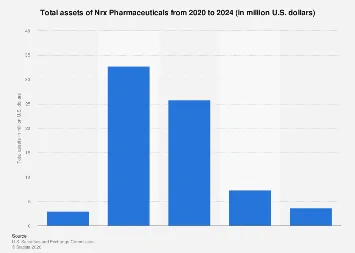
In conclusion, while specific figures for NRX Pharmaceuticals’ total assets in 2024 are not publicly disclosed in the provided context, the framework for their valuation is deeply rooted in the complex economics of the pharmaceutical industry. The interplay of R&D investment, intellectual property rights, manufacturing capabilities, and the broader economic and regulatory environment dictates the composition and value of its asset base. For stakeholders, a detailed analysis of these components, viewed through the lens of industry benchmarks and economic trends, is essential for a comprehensive understanding of NRX Pharmaceuticals’ financial health and its potential to deliver value in the years to come. The constant evolution of the biopharmaceutical sector demands continuous vigilance in asset assessment, reflecting both the scientific promise and the commercial realities of bringing life-saving therapies to market.