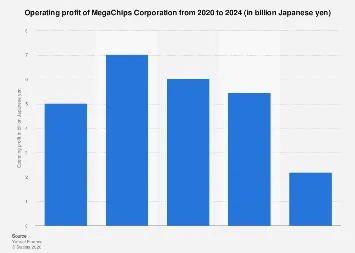
MegaChips Corporation, a prominent Japanese technology firm, has reported its operating profit for the fiscal year concluding March 31, 2024. While precise figures remain under wraps for general access, available data indicates a notable contraction in profitability compared to the fiscal year 2020. This year-over-year decline, though significant, does not represent a consistent downward trend throughout the four-year period from 2020 to 2024, suggesting a more complex financial trajectory influenced by various market dynamics.
The semiconductor industry, MegaChips’ core domain, is notoriously cyclical, characterized by rapid technological advancements, intense global competition, and fluctuating demand from key sectors such as consumer electronics, automotive, and data centers. In this environment, operating profit – a measure of a company’s profitability from its core business operations before interest and taxes – serves as a critical indicator of financial health and operational efficiency. The reported dip in MegaChips’ operating profit for FY2024 is likely a reflection of these industry-wide pressures and the company’s specific strategic responses and market positioning.
Understanding the context of the Japanese semiconductor market is crucial. Japan has a long-standing legacy in electronics manufacturing, with companies like MegaChips playing a vital role in the global supply chain. However, the sector has faced increasing competition from South Korea, Taiwan, and more recently, mainland China. Furthermore, global economic headwinds, including inflation, supply chain disruptions, and geopolitical uncertainties, have impacted demand for electronic components across various end-markets. For instance, a slowdown in the global PC and smartphone markets in recent years has directly affected the revenue streams of many semiconductor manufacturers.
The period between fiscal years 2020 and 2024 has been particularly turbulent. Fiscal year 2020, for many companies, represented a period of strong demand fueled by the initial surge in remote work and digital transformation initiatives during the COVID-19 pandemic. This often led to record profits for semiconductor firms. However, the subsequent years saw a recalibration of demand, coupled with significant investments in capacity expansion that, in some segments, outpaced market growth. This has led to inventory corrections and price pressures, impacting profitability for many players.
MegaChips’ reported decrease in operating profit for FY2024, relative to FY2020, underscores the challenges of navigating this evolving landscape. While the exact figures are proprietary, the magnitude of the decline suggests that the company may have experienced reduced sales volumes, increased cost of goods sold, or a combination of both. The cost of raw materials, energy, and skilled labor are all significant factors that can affect operating margins in the capital-intensive semiconductor industry. Furthermore, research and development expenses, crucial for maintaining a competitive edge in this sector, can also weigh on short-term profitability, even as they promise long-term growth.
The statement that the decrease was not continuous implies that MegaChips may have experienced periods of recovery or even growth in operating profit within the 2020-2024 timeframe. This could be attributed to successful product launches, expansion into new market segments, or effective cost management strategies implemented at different points. For example, a surge in demand from the automotive sector for advanced driver-assistance systems (ADAS) or the burgeoning market for artificial intelligence (AI) hardware could have provided temporary boosts to profitability.
Global comparisons offer further perspective. Major semiconductor players worldwide have reported mixed financial results in recent years. Companies heavily reliant on the consumer electronics market have often seen their profits fluctuate more dramatically than those with diversified portfolios, particularly those with significant exposure to the automotive, industrial, or data center sectors. For instance, companies specializing in high-performance computing chips or those enabling AI advancements have often demonstrated greater resilience and even growth in their profitability, benefiting from robust demand in these specific niches. The strategic focus of MegaChips, whether it leans towards high-volume, commoditized components or specialized, high-margin solutions, would significantly influence its financial performance relative to global peers.
The economic impact of a company like MegaChips extends beyond its direct financial statements. As a technology firm, it contributes to job creation, innovation, and the overall competitiveness of the Japanese economy. A decline in operating profit, while potentially concerning for shareholders, can also signal a need for strategic recalibration. This might involve divesting from underperforming business units, investing more heavily in high-growth areas, or exploring strategic partnerships and acquisitions to bolster market position and technological capabilities.
Looking ahead, the semiconductor industry is poised for significant transformation driven by trends such as 5G, the Internet of Things (IoT), electric vehicles, and the continuous advancements in AI and machine learning. Companies that can successfully adapt to these shifts, invest in cutting-edge technologies, and maintain agile supply chains are likely to emerge stronger. For MegaChips, understanding the precise drivers behind its FY2024 operating profit performance will be crucial for charting a course through the competitive and dynamic global technology market. The company’s ability to innovate, manage costs effectively, and capitalize on emerging market opportunities will ultimately determine its future profitability and its standing within the global semiconductor landscape. The exact figures for its operating profit in FY2024, when fully disclosed, will provide a more granular understanding of the company’s performance and its strategic positioning within this critical industry.