The global economy is at a critical juncture, facing demographic shifts, technological acceleration, and a re-evaluation of human capital. In this landscape, the persistent undervaluation of caregiving responsibilities within the professional sphere represents a significant and increasingly costly oversight for businesses worldwide. Historically, career interruptions for caregiving, predominantly by women, have been viewed as a liability, creating resume gaps that often lead to professional penalties, including reduced callbacks, lower starting salaries, and a perceived competence deficit. Recent data from early 2025, showing over 212,000 women exiting the U.S. workforce following increased return-to-office mandates, with a nearly three percentage point drop in workforce participation among mothers with young children in just six months, starkly illustrates this ongoing exodus of vital talent. This trend is not confined to a single nation; it reflects a broader global pattern where insufficient support for caregivers leads to a drain on skilled labor and exacerbates gender inequality in professional advancement.
This phenomenon, often termed the "she-cession," extends beyond direct caregiving leave. It encompasses the "maybe baby" bias, where women are preemptively penalized for the potential to take leave, impacting their hiring and promotion prospects. Such biases inflict a double penalty on women: first, by forcing them to step back from their careers due to caregiving demands, and second, by devaluing the very experiences gained during those periods when they attempt to re-enter the workforce. The economic implications are profound, contributing to a significant loss of GDP, reduced innovation, and a narrowing of the talent pipeline. Studies by organizations like the OECD and McKinsey consistently demonstrate that companies with higher female representation, particularly in leadership, exhibit lower employee turnover, enhanced team performance, and notably greater profitability. For instance, an increase from zero to 30% female representation in C-suite roles has been correlated with a gain of approximately one percentage point in net profit margin, translating to a substantial 15% boost in profitability for a typical enterprise.
Cultivating Essential Skills Through Caregiving
The prevailing corporate narrative often frames caregiving as a diversion from professional development, a drain on time and resources. However, emergent research fundamentally challenges this assumption, positing that caregiving is, in fact, a powerful incubator of highly sought-after professional skills. Investigations conducted by the Rutgers Center for Women in Business, involving a 2023 survey of 131 caregivers, revealed that the skills honed through their caregiving experiences demonstrably enhanced their performance in paid work. These improvements spanned critical competencies such as conflict resolution, sophisticated time management, and strategic foresight—attributes indispensable in today’s complex business environment.
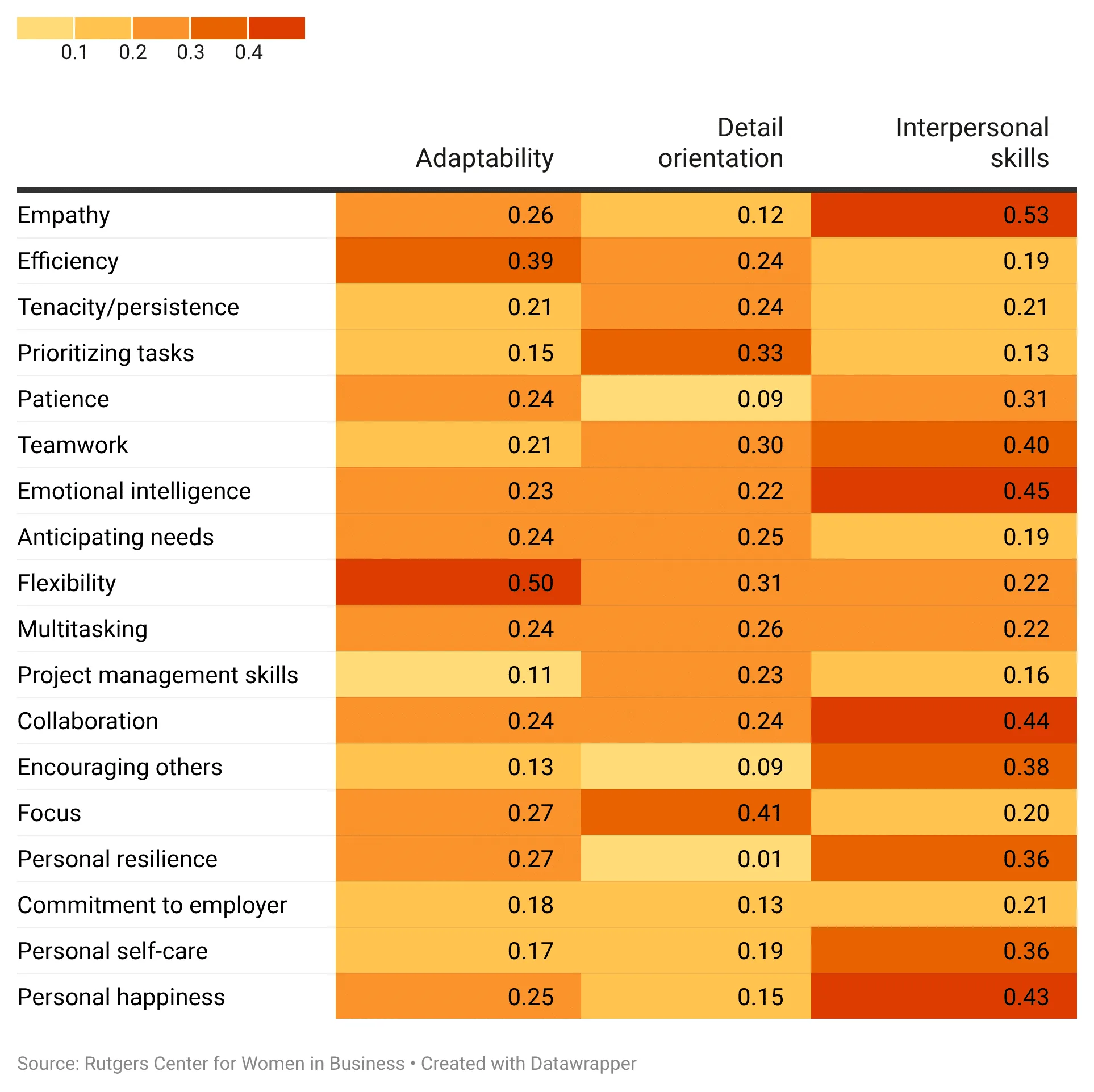
To validate these qualitative findings from an employer’s perspective, further semantic embedding analysis was undertaken, mapping the 18 distinct caregiving-honed skills identified in the initial survey against the U.S. Bureau of Labor Statistics’ (BLS) 17 core workplace skills. These BLS skills represent the fundamental human capacities most valued across a spectrum of occupations, with importance ratings assigned based on employer-reported requirements. The analysis yielded compelling results: caregiving skills covered 76.5% of these core workforce skills and achieved a remarkable 100% overlap with the top three skills consistently in demand across all occupations: adaptability, interpersonal communication, and detail orientation. When focusing specifically on management occupations, the alignment was even more striking, with caregiving skills demonstrating 100% coverage across all leadership competencies, including complete overlap with the BLS’s top managerial priorities: adaptability, problem-solving, decision-making, and leadership. These findings unequivocally demonstrate that caregiving is not merely a personal responsibility but a potent form of leadership training, cultivating the adaptive, interpersonal, and organizational acumen essential for effective management.
Reframing Caregiving: A Strategic Business Imperative
In an era increasingly shaped by artificial intelligence and automation, the human capabilities fostered by caregiving — empathy, complex problem-solving, resilience, and ethical judgment — are precisely those that machines cannot replicate. For organizations aiming to thrive, a paradigm shift in how caregiving is perceived and integrated into talent strategies is no longer optional; it is a strategic imperative.

The first crucial step involves explicitly recognizing and articulating caregiving-derived skills. Organizations must actively track and translate these contributions into the language of resumes, performance reviews, and leadership development frameworks. Skills such as humanity, emotional intelligence, and advanced organizational capabilities, often relegated to the "soft skills" category, are in fact "power skills" that drive innovation and competitive advantage. Failing to acknowledge and integrate these competencies perpetuates systemic inequities and deprives organizations of a rich source of talent and leadership. Companies should proactively develop internal guidelines for managers and HR professionals to identify, evaluate, and promote individuals who demonstrate these skills, irrespective of how they were acquired.
Secondly, businesses must cease penalizing career breaks. Research from various global markets, including India, indicates that women who take career breaks receive significantly fewer callbacks than those with uninterrupted career paths – a costly leakage of talent. Parental leave and other caregiving absences should be reframed not as "resume gaps" but as periods of intensive, real-world skill development. To mitigate this penalty, organizations must normalize parental leave for all genders. Data shows that fewer than half of eligible U.S. men utilize paid parental leave, often due to perceived career penalties and a lingering cultural stigma. Encouraging men to take extended leave not only fosters a more equitable distribution of caregiving responsibilities but also allows more women to return to work without bias, while simultaneously broadening the skill sets of male employees. Furthermore, "returnship" programs, designed to reintegrate highly skilled individuals who have paused their careers for caregiving, offer a structured pathway to harness this invaluable talent pool, providing necessary upskilling and a supportive re-entry environment. As Brett Hemmerling, Vice President and Global Head of Early Careers and Programs Talent Attraction at Moody’s, insightfully notes, "If employers are stuck looking only at career trajectories and see gaps as negatives, they’re missing the skills and experiences cultivated within those gaps. Relocating a family, for example, is project management. Managing caregiving demands requires adaptability and resilience managers find appealing."
Thirdly, a comprehensive re-evaluation of workplace policies is essential. Paid leave, flexible work arrangements, and robust caregiving support are not perks but fundamental pillars of a resilient and inclusive workforce. As Caitlin Freeland, Vice President of Inclusion and Culture at Bristol-Myers Squibb, emphasizes, "Organizations that overlook caregiving are missing a major growth opportunity." Policies like hybrid work models, compressed workweeks, and flexible scheduling are consistently cited as top factors influencing employee retention. These structural policies directly intersect with caregiving demands, enabling employees to integrate their professional and personal lives more effectively, reducing burnout, and fostering greater loyalty. When such policies are visibly championed by leadership and widely adopted across the organization, they create a virtuous cycle of cultural acceptance, reduced bias, and superior equity outcomes. This also contributes to national economic stability by retaining skilled workers, boosting productivity, and ensuring a more dynamic labor market.
Finally, organizations must strategically double down on human skills. The BLS data mapping confirmed that caregiving skills do not significantly overlap with categories where AI is making the fastest advancements, such as advanced mathematics, mechanical operations, or highly specialized technical domains. Instead, caregiving cultivates uniquely human, adaptive, and relational skills—empathy, foresight, complex decision-making, resilience, and ethical reasoning—that remain beyond the reach of artificial intelligence. These are precisely the competencies that global reports, like those from the World Economic Forum, identify as the most critical for the future workforce. By prioritizing and developing these capabilities within their workforce, companies can build a formidable competitive advantage, ensuring their relevance and innovation in a rapidly evolving technological landscape.
Implications for Organizational Resilience and Innovation
Caregiving provides an unparalleled masterclass in leadership, crisis management, collaboration, and adaptability. Organizations that cling to outdated perceptions of caregiving as a career impediment risk alienating and losing high-value employees, thereby forfeiting a powerful lever for organizational innovation and talent retention. The economic cost of ignoring this segment of the workforce is not just measured in lost productivity but also in diminished diversity of thought, stifled innovation, and a weaker talent pipeline.
The businesses poised to lead in the coming decade will be those that undergo a fundamental shift: moving from penalizing caregiving to actively recognizing caregivers as a highly skilled segment of the modern workforce. By strategically investing in policies, cultural shifts, and skill recognition frameworks that support caregivers, companies can unlock a deeper reservoir of human potential, foster a more equitable work environment, and build the adaptive, resilient, and human-centric organizations required to navigate the complexities of the 21st century economy. This is not merely a matter of social responsibility; it is a clear economic imperative for sustainable growth and competitive advantage.